
Yalindu Jayaweera
Southwestern University of Finance & Economics, Sri Lanka
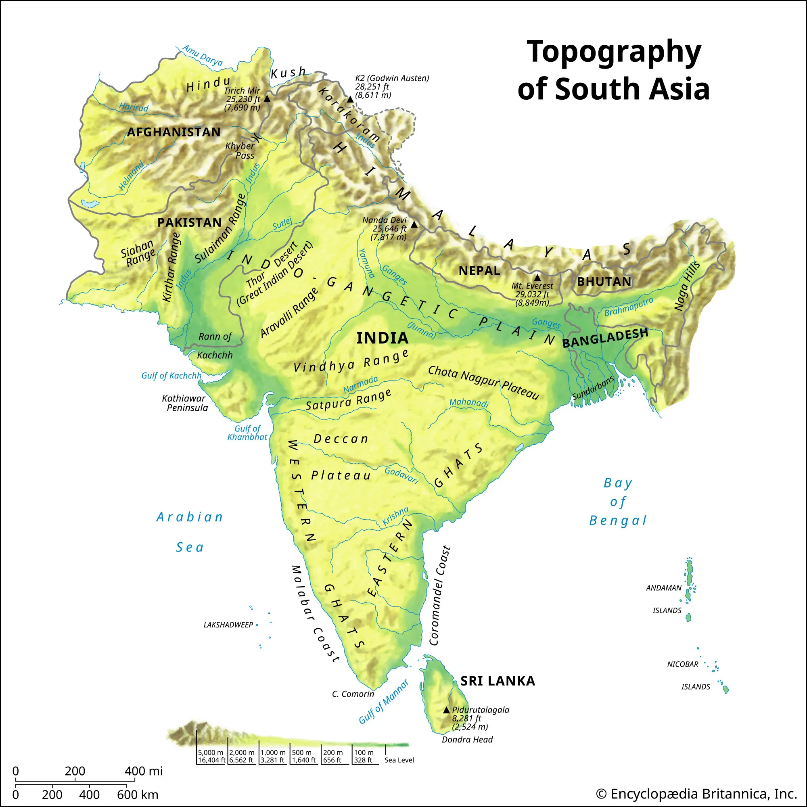
In south Asian region, Sri Lanka and Bangladesh are countries that location in same linearity. Both countries face the Indian Ocean in an easterly direction, and the Bay of Bengal borders both countries.
Economic and political Relationship between Sri Lanka and Bangladesh
Since establishing diplomatic relations in 1972, Bangladesh and Sri Lanka’s partnership was largely built on trade deals, shipping arrangements, and modest people-to-people exchanges. The Sri Lanka High Commission opened in Dhaka in June 1979, followed by the Joint Commission for Economic Cooperation in 1985. Key agreements include the General Trade Agreement (1977), Economic and Technical Cooperation Agreement (1979), and Double Taxation Avoidance Agreement (1992). Recent efforts have expanded ties significantly.
The fourth Foreign Office Consultations were held in Colombo in 2025 after an eight-year gap. Bangladesh now ranks as Sri Lanka’s 12th largest export destination, with exports reaching USD 241.54 million and imports at USD 83.79 million in 2024*
Beyond the political strategy to economic growth
Approximately 80 Sri Lankan investment projects are currently operating in Bangladesh across sectors including Banking, Finance, Textiles, Apparel, Power, Hospitality, Logistics, Food Processing, and Tourism. Sri Lanka has made significant contributions to Bangladesh’s economic development. Opportunities for Bangladesh Investments, Opportunities exist for Bangladeshi investors in Sri Lanka’s pharmaceutical, IT, textile manufacturing, construction, and tourism sectors. The strategic textile manufacturing investment zone in Eravur, Batticaloa is particularly attractive for Bangladeshi investors.
Flexible Policy arrangements make sustainable ocean economy
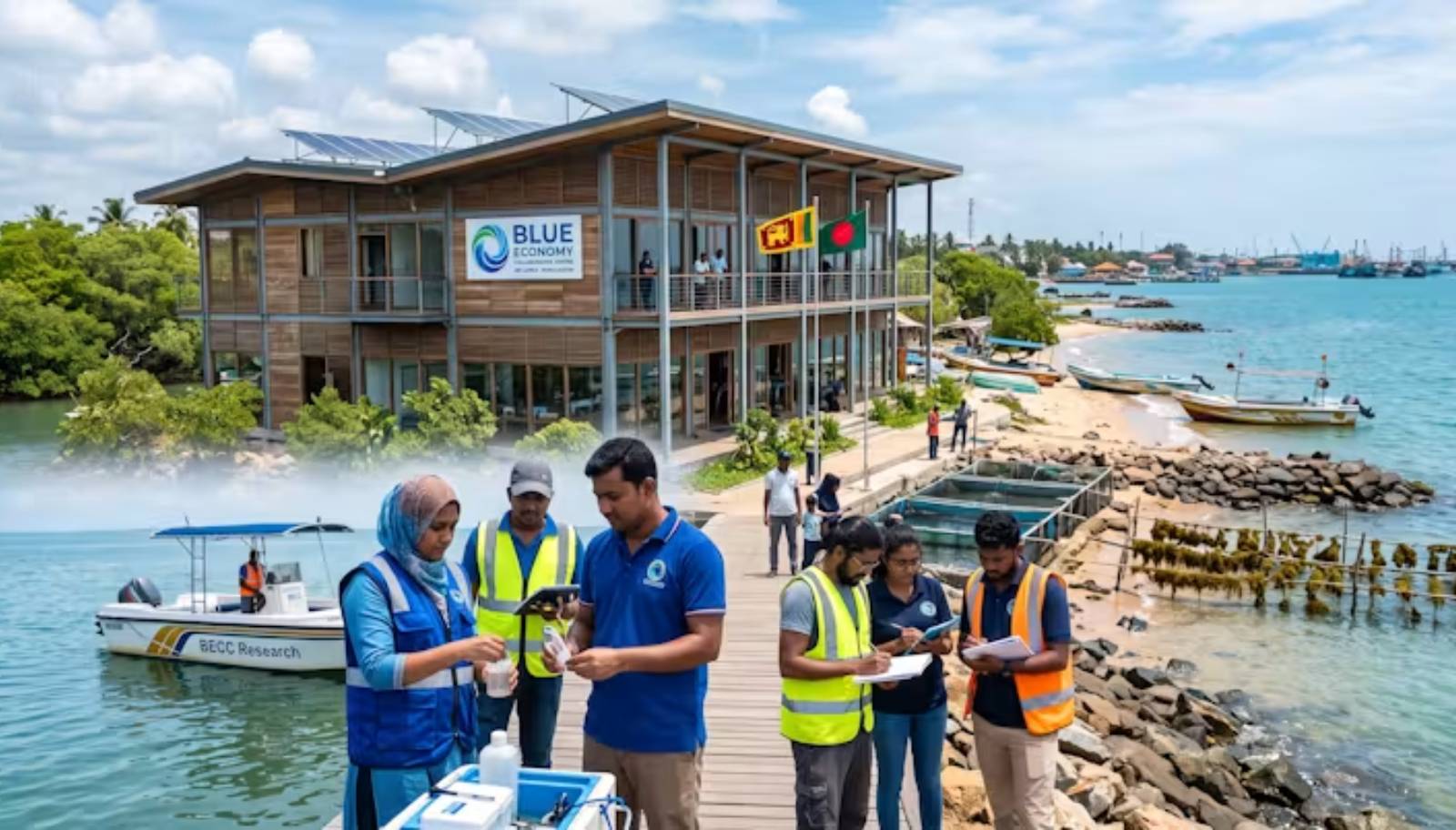
Bangladesh and Sri Lanka already grew up their economic collaboratives. But as the countries which located in Indian ocean, both countries can step to the ocean-based activities to grow themselves.
Develop transportation between Bangladesh and Sri Lanka
More important think is identifying the topography of both countries. Bangladesh and Sri Lanka are located in eastern side of Indian ocean, and it is very remarkable location for profitable ocean trade. Especially maritime transport is more affordable transport way. Sri Lanka has spent years building deep water port capacity and positioning itself as a regional transshipment and marine services hub, while Bangladesh brings a much larger population, a fast-growing manufacturing export base that depends on efficient sea freight, and a fisheries sector employing millions of people along its coast. A large share of Bangladeshi cargo currently moves through third country transshipment points before reaching global markets, adding cost and time.
The expansion of the eastern Indian Ocean region, including the Bay of Bengal, and the fact that the Trincomalee port is equipped with large natural harbours and is connected in parallel with the ports of Chittagong and Praiya, make transportation and trade more profitable. The direct port connectivity between Colombo and Chittagong now under discussion could shorten that route considerably, cutting shipping costs for Bangladeshi exporters while giving Sri Lankan ports additional cargo volume to justify further investment. Alongside Hambantota port is also locate in same way. Internal trade and transportation can make easily from this ocean linearity.
Bangladesh Sri Lanka tourism belt as the economic development door
Between Bangladesh and Sri Lanka territories and ocean region can make sustainable economic oriented economic way. Between Sri Lanka and Bangladesh sea region surrounding by east Sri Lanka Sea, south Bangladesh sea and east northwest Indian sea. This very belongs to land area. So, since the shallow sea area is very large, the formation of coral reef and the increase in the number of species are constantly occurring.
Both countries can make tourism belt like ‘Bangladesh Sri Lanka tourism belt’. And special thing is Sri Lankan east sea belongs to Trincomalee port is a whale area. So, beside promotion that promote Bangladesh’s less developed but promising coastline around Cox’s Bazar and the Sundarbans. Sri Lankan current youth generation willing to travel. But from this tourism belt can promote travelling within Sri Lanka and Bangladesh.
Develop Fisheries Activities
Although Bangladesh must share its exclusive economic zone with other south Asian countries, Sri Lanka being a single island that has large exclusive economic zone. The Exclusive Economic Zone (EEZ) of Bangladesh is covering roughly 166,000 square kilometres. Sri Lanka’s Exclusive Economic Zone (EEZ) covers an area of about 532,619 square kilometres in the Indian Ocean. So, Sri Lanka’s EEZ is about 3.1 times larger than Bangladesh’s EEZ. Sri Lanka has natural resources but lacks physical and trained human resources. Bangladesh has limited natural resources but is already generating significant profits.
Bangladesh has built itself into one of the world’s largest producers of farmed fish and shrimp but continues to underuse its offshore waters beyond the coastal zone. In 2025, within bilateral discussions, agreements were reached to exchange expertise in deep-sea fishing, livestock, and water resource management. Joint research, shared training programs and coordinated approaches to sustainable deep-sea fishing could let both countries extract more value from waters they already legally control without depleting the stocks depends on. This also gives both countries the ability to build fish processing factories in deep sea, processing fish, processing caned fish and import profitably.
Conclusion
The geographic alignment of Sri Lanka and Bangladesh along the Indian Ocean presents a strategic opportunity for collaborative blue economy development. By integrating port connectivity, tourism, and fisheries expertise, both nations can unlock sustainable economic growth, transforming their traditional partnership into a dynamic, ocean-based economic alliance for mutual prosperity.
References
Export Development Board [EDB]. (2025). Bangladesh market profile 2025. Sri Lanka Export Development Board.
Daily FT. (2025, June 21). Sri Lanka charts bold course in global trade with strengthened Bangladesh ties. Daily FT.