
Farah Zahir
Managing Editor, Oniket Bulletin
Bangladesh does not lack a framework for honouring its heroes. On paper, the country maintains a tiered structure of civilian and military recognition: the Swadhinata Padak at the top, the Ekushey Padak just below it, and a set of wartime gallantry awards, Bir Sreshtho, Bir Uttom, Bir Bikrom, and Bir Protik, modelled on the honour systems of any modern state. What Bangladesh lacks is not the architecture of recognition but the discipline to use it while the people it is meant for are still alive to feel its weight.
A recent piece in this Bulletin traced how Azam Khan, Ayub Bachchu, Helal Hafiz, and Rudra Mohammad Shahidullah were each honoured only after death, sometimes decades after the work that earned the honour was already finished. That pattern is not confined to music and poetry. It runs through how Bangladesh treats its wartime heroes as well, and comparing the two systems, cultural and military, against India’s approach exposes something the country has been reluctant to name directly: recognition delayed is recognition that stops functioning as an incentive.
Two Models of Honour
India’s Padma Awards, the Sangeet Natak Akademi Awards, the Sahitya Akademi Award, and similar sector specific honours are distributed annually, through standing panels that actively scout practicing artists, scholars, and public figures across the country. A classical vocalist, a folk sculptor, or a regional novelist can reasonably expect that sustained, visible work will eventually be noticed by an institution built to notice it. The award functions as encouragement mid-career, not commemoration after it.
Bangladesh’s civilian awards operate on a comparatively passive model. The Ekushey Padak is presented annually, but the pattern the Bulletin previously documented suggests nomination often depends on public campaigning or posthumous sentiment rather than proactive institutional scouting. There is no equivalent to a standing committee tasked with reviewing working artists on a fixed cycle, no mechanism that treats recognition as a career milestone rather than a memorial gesture.
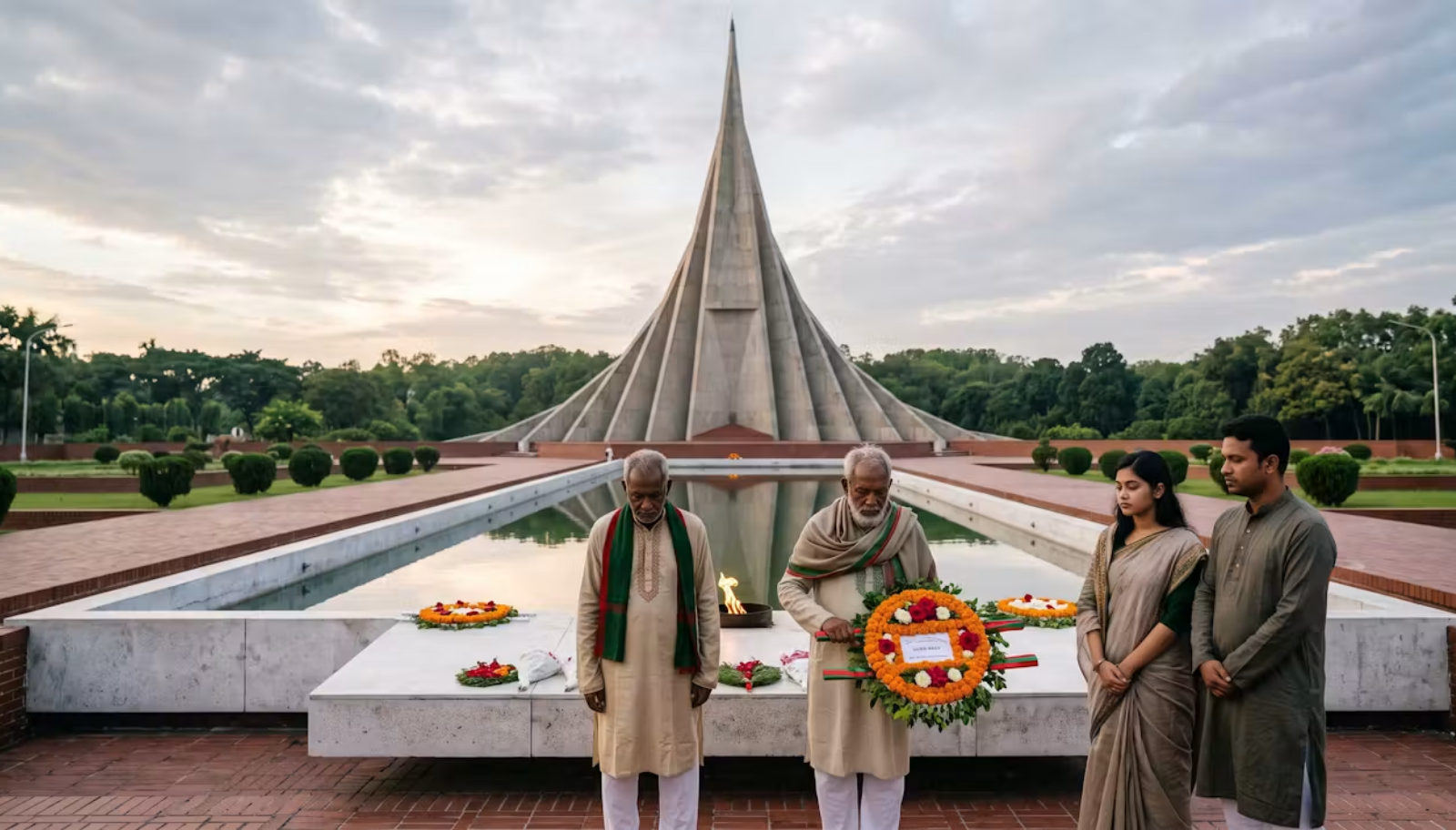
The contrast sharpens further with gallantry awards. Bir Sreshtho, Bangladesh’s highest military honour, was given posthumously to seven freedom fighters who died in the 1971 Liberation War, a use of the award that fits its purpose. But the broader pattern of delayed state attention toward living veterans, and toward the cultural figures who carried the nation’s post-independence identity, suggests the posthumous instinct has migrated well beyond the battlefield honours where it originally made sense.
What Timely Recognition Actually Buys a Country
The value of recognising a hero while they are alive is not sentimental. It is functional. An artist who receives institutional validation mid-career gains more than prestige: publishing contracts, performance fees, and public platforms that depend on that validation become accessible while the artist can still use them. A soldier or public servant who sees peers honoured for exceptional service understands that sustained excellence is visible to the state, not merely convenient to praise once it is safely in the past.
India’s global visibility in classical music, cinema, and the arts owes something to this structure. When the state treats living cultural output as worth investing in immediately, it signals to the next generation that a path exists between labour and recognition. Bangladesh’s equivalent signal, based on the pattern of its most prominent posthumous honours, tells young artists and public servants the opposite: that the state’s attention arrives reliably only once it can no longer change anything.
The Cost of Getting This Wrong
Azam Khan spent his final years in financial difficulty before an Ekushey Padak arrived eight years after his death. Ayub Bachchu received no state support for medical treatment despite defining the sound of an entire generation. Helal Hafiz lived in modest circumstances for decades before recognition came, and even then, it read as an overdue correction. These are not isolated administrative oversights. They describe a system where honour and material support have become detached from the years when a recipient could use either.
What Bangladesh Should Build
A structural fix does not require inventing new categories of award. Bangladesh already has the Independence Award, the Ekushey Padak, the Shilpakala Padak, and the Bangladesh National Film Award. What is missing is the proactive machinery India uses to fill them: fixed nomination cycles, panels required to actively review working artists and public servants rather than wait for petitions or obituaries, and support attached to the honour, healthcare access, housing assistance, or performance grants, that functions as an investment in ongoing work rather than a tribute to finished work.
Until that machinery exists, Bangladesh will keep discovering its heroes at the exact moment it is too late to do anything for them. The country has never lacked artists willing to define its culture or soldiers willing to defend it. What it has lacked is the institutional will to notice either while noticing could still matter.
Reference:

