
Sumaiya Hasi
Oniket Research Group
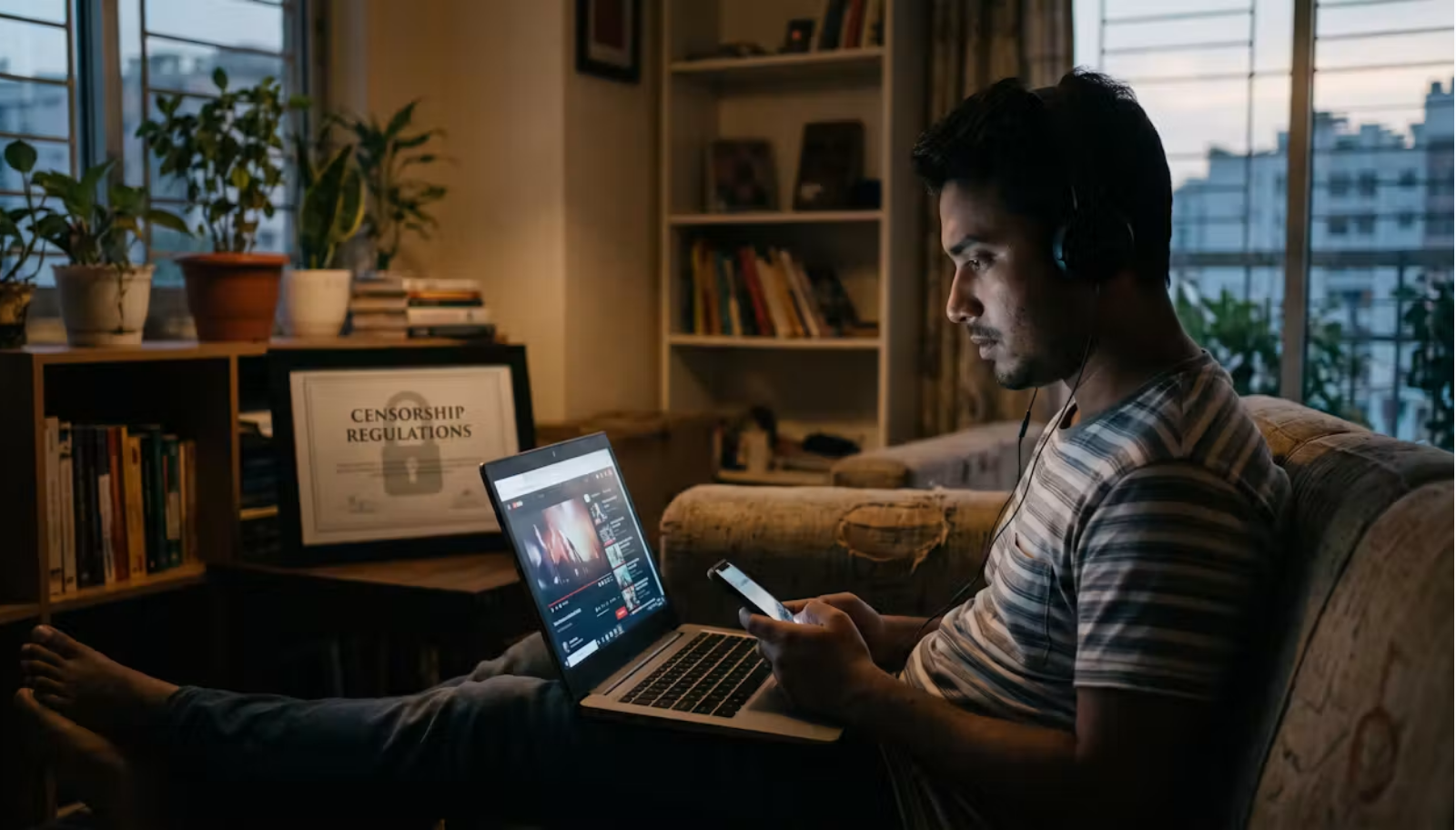
Over the past decade, Bangladesh’s entertainment landscape has undergone a quiet but significant transformation, migrating from cinema halls and television screens, once governed by a censor board, to smartphones and laptops that answer to almost no oversight at all. Online streaming platforms, both domestic and international, have opened up a route around the traditional vetting process that once scrutinized films and dramas before they reached the public.
What started out as little more than a technical loophole has, for many creators, since evolved into a deliberate strategy: content that would never make it past the censor board can now reach millions of viewers instantly, and the controversy such content stirs up often ends up serving as free marketing in its own right. This article is intended to prompt a more critical examination of this issue within the media.
A Decade of Crime, Corruption, and Division on Screen
Bangladeshi OTT dramas and web films of the last decade have increasingly explored subject matter once considered too sensitive for mainstream release, including organized crime, custodial torture, political corruption, communal tension, and domestic abuse, often depicted with striking candor. Much of this reflects genuine artistic ambition to engage with uncomfortable truths that state controlled media had long tended to avoid.
At the same time, a notable portion of this content appears to prioritize shock value over storytelling. Torture scenes are sometimes filmed with a lingering attention to detail that goes beyond narrative necessity, corrupt officials are occasionally portrayed with a swagger that risks reading as admiration, and communal or class divisions are at times dramatized in ways that seem more likely to inflame sentiment than to offer genuine insight. Without a formal review process in place, there is often no institutional mechanism to assess whether a given scene serves the story being told or simply caters to the kind of shareable shock value that algorithms tend to reward.
Where Human Rights Enter the Frame
This is where the conversation moves beyond artistic freedom into human rights territory. Several patterns raise serious concern. First, many true crimes inspired dramas dramatize real victims and real perpetrators with minimal consent or dignity protection, effectively re victimizing survivors and their families for entertainment. Second, graphic depictions of torture, sexual violence, and custodial abuse are frequently presented without context, consequence, or accountability for perpetrators within the narrative, which risks normalizing rather than condemning these acts.
Third, marginalized communities, including religious minorities and women, are sometimes portrayed through reductive or stigmatizing stereotypes that reinforce the very prejudices human rights frameworks exist to dismantle. When content bypasses review specifically to include material that a censor board would flag, the underlying human right being eroded is not free expression but the right of ordinary citizens, especially vulnerable ones, to not have their trauma or identity commodified without protection.
Is Content Rating a Reasonable Solution?
A voluntary content rating system, like those used for films elsewhere, is often proposed as a middle path between censorship and lawlessness. It has merit, respecting adult autonomy while letting parents and vulnerable audiences opt out.
But rating alone cannot address deeper issues. It does nothing to protect real crime victims whose stories are dramatized without consent and does little to prevent normalization effects documented in media violence research, especially among younger viewers who access adult rated content through shared family devices anyway. Rating supports audience choice but is no substitute for ethical production standards or legal accountability.
Does True Crime Prevent Crime, or Glamorize It?
Proponents argue that true crime thrillers expose corruption and criminal networks, building public awareness and pressure for reform. There is some truth here; certain dramas have sparked genuine public debate about institutional failures. Yet cinematic treatment often works against this goal. When violence is stylized, when criminals are given charismatic arcs, and when consequences are minimized in favor of dramatic tension, the net effect can be aspirational rather than cautionary.
Studies on media effects consistently suggest that repeated, glamorized exposure to violence can desensitize audiences and, in some cases, correlate with increased tolerance for aggressive behavior, particularly among impressionable viewers. The uncomfortable truth is that raw cinematic crime content may educate a minority of viewers about systemic failures while simultaneously making crime and moral transgression feel more exciting than the quieter, harder work of protecting rights and dignity.
What the Government Should (or could) Do
Addressing this responsibly requires more than reviving an outdated censor board for the digital age. The government should first establish a co-regulatory body involving streaming platforms, filmmakers, and human rights experts to set enforceable ethical production guidelines, particularly around depicting real crimes and vulnerable groups. Second, mandatory consent and dignity protections should be legislated for any content based on real victims, with penalties for exploitative dramatization.
Third, a national media literacy curriculum should be introduced in schools, teaching young people to critically analyze violence, crime, and moral messaging in the content they consume rather than relying on restrictions alone. Together, these steps could preserve creative freedom while ensuring that Bangladesh’s storytelling boom does not come at the cost of the very human rights it often claims to expose.
Reference: