
Farah Zahir
Managing Editor, The Oniket Bulletin
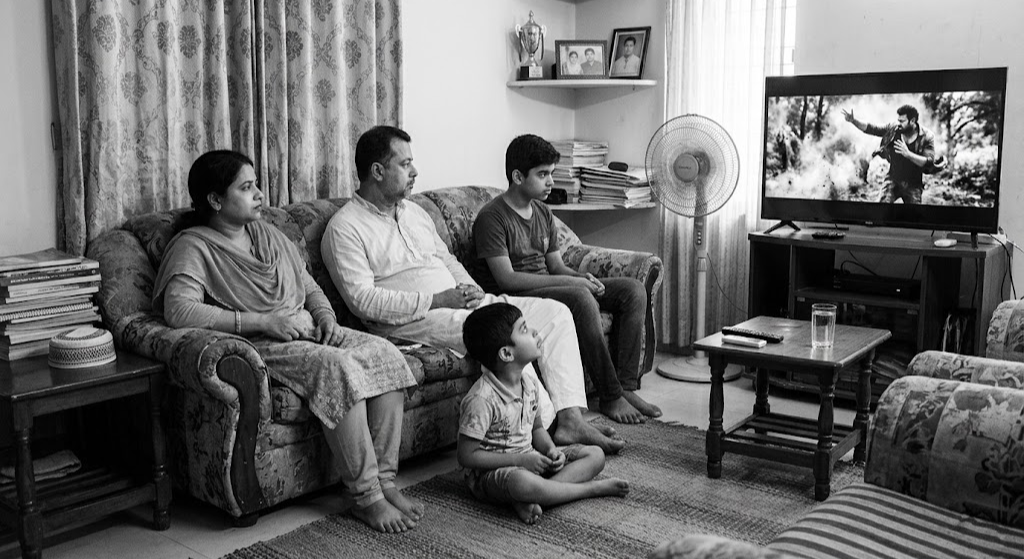
Bangladeshi cinema and streaming have changed fast. Not long ago, a hero was expected to carry some moral weight. Today, leads light cigarettes in slow motion, drink, take drugs and drift through relationships, and the camera treats it all as style. Many also beat dozens of opponents and settle every dispute with fists or weapons. A small warning flashes on screen and the story moves on. The concern is not that these things exist in society. It is how they are shown, to whom, and with what consequence.
Reality, or a new reality
Producers say they hold up a mirror to society, and honest art should show uncomfortable truths. But a mirror only reflects, while cinema also shapes. When the most admired star smokes, drinks and breaks rules at no visible cost, viewers receive a model of how a successful person behaves.
Studies from many countries link smoking on screen to young people taking up the habit, especially when a charismatic lead is the smoker. Teenagers copy hairstyles, dialogue and clothes from favorite stars, so it would be odd if they did not copy habits too. The same question arises when stories show characters, male or female, running honey traps, committing fraud or using relationships as a route to wealth. When such conduct earns money and applause, the lesson is plain. Direct cause is hard to prove, but where public health and young people’s safety are at stake, caution is reasonable.
Heroes who replace the law
Violence deserves special attention. Many recent films feature a hero who distrusts police and courts and wins cheers by taking revenge in person. Bloodshed is shown in loving detail, set to music that invites the audience to applaud. A crowd beats a suspect and the film calls it justice, while the legal system appears corrupt, comic or useless.
In a country where mob violence has already killed people, this message is dangerous. Told again and again that courts are pointless and the armed strongman is the true protector, viewers grow impatient, and young men learn to read aggression as courage and restraint as weakness. The harm lies not in showing violence, which serious cinema sometimes must, but in showing it without pain, accountability or doubt.
What the screen leaves out
The hero who smokes and fights is rarely the one who trains at a gym, plays a sport, helps a neighbor or reports a crime to the proper authority. Consequences vanish too. Addiction, injury, trauma, debt, legal trouble and broken families seldom appear, and when they do, they arrive as a brief moral tag at the end. Young viewers remember what a story celebrates, not what its closing caption says.
Where the system falls short
Film law has been changing. The Film Certification Act of 2023 replaced the Censorship of Films Act of 1963, and a Film Certification Board replaced the Censor Board in September 2024. The older rules and code that guided the censor board focused on obscenity, political sensitivity and national image. Glamorized smoking, drinking, manipulation or celebrated bloodshed often passes because no single scene is explicit enough to cut, even when the overall effect harms. A health warning satisfies the rule without softening the impact.
Streaming has no content law of its own. Years of drafting by the telecom regulator and the information ministry, prompted by a 2020 court petition, did not produce a stand-alone OTT act. The Telecommunication (Amendment) Ordinance, approved by the Advisory Council in December 2025, brings OTT and streaming services within the remit of the Bangladesh Telecommunication Regulatory Commission. That puts platforms under a regulator, but it is a telecom measure, not a system of age ratings, and rights groups have warned that broad terms such as public welfare and national security could be misused. Platforms still rate their own content, so a child on a shared family login can watch what an adult watches. Once online, a violent scene or a stylish smoking clip is replayed endlessly on social media, far from any context or warning.
The deeper gap is enforcement. The Smoking and Tobacco Products Usage (Control) Act of 2005, amended in 2013, restricts the depiction of tobacco use in entertainment media, and the 2015 rules allow such scenes only under conditions, including an on-screen health warning. Anti-tobacco groups still find violations in films. Bangladesh joined the WHO Framework Convention on Tobacco Control in 2005 and has pledged to meet the Sustainable Development Goals, but film certification is tied to neither. Nor is there local research on what Bangladeshi viewers, young ones especially, take from these portrayals. Without data, every debate rests on opinion.
What the law and the certification board should do
The starting point is one clear framework that treats cinema, television and streaming as a single field, since the same story can face strict scrutiny in a theater and almost none on a phone. The telecom regulator should handle licensing and technical compliance, while the certification body handles content. An independent board, including health experts, educators, child psychologists, women’s representatives, parents, lawyers and filmmakers, should oversee classification, with real age ratings backed by profile locks, PIN controls and age verification.
The rules should also be tied to the SDGs. Target 3.a, on tobacco control, supports linking certification to the tobacco act. Goal 16 calls for less violence (16.1), the rule of law (16.3) and accountable, transparent institutions (16.6), which fits both curbing the glorification of mob justice and giving the board clear procedures. Target 4.7 backs media literacy in schools and at home. The board should publish annual audience studies so progress can be tracked.
Guidelines should target glamorization, not mere presence. A harmful act shown honestly, with its consequences, differs greatly from one presented as cool and aspirational. Rules should discourage stylized smoking and drinking, product placement, celebrations of mob justice and revenge, and stories that glorify fraud or exploitation, while protecting serious drama about these problems. Health messages should stay visible for the whole scene, and stars should join awareness campaigns, since their influence works in both directions.
Regulation alone will not produce better stories, so the system should reward them. Tax benefits, grants and awards can encourage protagonists such as athletes, scientists, teachers, police officers and entrepreneurs, shown as exciting and not merely virtuous. Throughout, regulation needs clear criteria, published decisions and a right of appeal, so that it protects the public without becoming a tool of arbitrary or political control.
What government policy should be
The government should adopt a single national policy for screen content that covers cinema, television and streaming under common age ratings, with platforms registering and rating their own titles under published rules, not seeking approval for each one. The certification board should own content classification and the telecom regulator should own licensing, so that neither role becomes a lever for the other. Rules should judge glamorization, not presence, and should be backed by monitoring of tobacco scenes, penalties for repeat violators, parental controls on every platform, and a right of appeal against any takedown or rating. The policy should fund yearly audience research and reward constructive stories through tax relief, grants and awards, and the government should report each year on progress against the SDG targets it has pledged to meet.
A shared responsibility
Creative freedom and social responsibility are not enemies. The most lasting cinema has always been honest about human weakness while believing in human dignity. Filmmakers, platforms, regulators and families each hold part of the answer. If they act together, Bangladeshi screens can stay bold and truthful while giving young people heroes worth following.