
Arza Sait
University of Birmingham Dubai
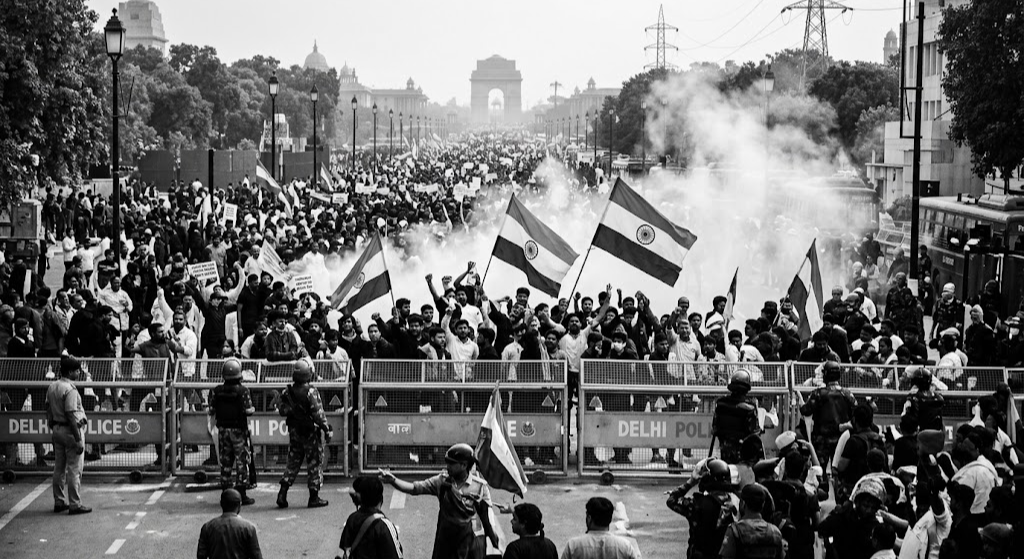
Political unrest has gripped Delhi since the student-led protests began, with effects felt as far as Bangladesh. The protests have intensified again as young demonstrators demand a revision of the electoral rolls, directing their anger at India’s Chief Election Commissioner. Throughout October, Delhi Police have tried to contain the situation: several metro stations have been closed, prohibitor orders are in force across the city centre, and more than 2,000 protesters have been detained. Among them are two leaders of the Cockroach Janta Party, who were arrested for demonstrating at a historic protest venue in defiance of a ban.
Having experienced a similar crisis in 2024, when student-led protests brought down Sheikh Hasina’s government and she fled to India, Bangladesh understands the pressure that sustained unrest places on a ruling party. For this reason, Dhaka would be wise to maintain a quiet and measured approach rather than commenting publicly on India’s unrest, since any official remark could be amplified by the media and on social media. However, one key concern is the effect on Bengali-speaking Muslims in India’s border states. Voter-roll revisions are linked to accusations of illegal immigration, and this group faces the greatest suspicion and the most document checks. Any mistreatment of this group would give Bangladeshi politicians an easy argument against compromise at a time when relations are already strained by the stalled visit of Prime Minister Tarique Rahman and the unresolved question of Hasina’s extradition.
Bangladesh has sought Hasina’s extradition since her departure to India in 2024; however, tensions intensified following her press conference from Indian soil in August. The event provoked considerable backlash in Dhaka and led to the postponement of Prime Minister Tarique Rahman’s first official visit to New Delhi, with Dhaka indicating that it needed more time before the visit could proceed. Her extradition remains the most disputed issue in bilateral relations, as an Indian government facing domestic pressure is unlikely to accommodate a neighbouring state’s demands. Nevertheless, New Delhi’s willingness to re-engage is evident in the Indian High Commissioner’s meeting with Prime Minister Modi. In light of this, Dhaka should keep the Prime Minister’s visit on the agenda and work towards the November window under discussion.
However, the question of Sheikh Hasina’s extradition must be carefully managed so that it does not overshadow every other aspect of the relationship and stall progress in areas of mutual interest, such as water sharing, trade and border management. The Ganges Water Treaty, signed in 1996, expires in December 2026, and a new agreement must be negotiated before then. Allowing the Hasina issue to dominate relations at such a critical moment could jeopardise this vital interest for Bangladesh. Dhaka can instead pursue her extradition through formal legal channels while keeping broader cooperation on track.
The political unrest in New Delhi and the dispute over the revision of electoral rolls should not be allowed to disrupt cooperation along the border. Instead, border issues should be addressed through a separate humanitarian and consular approach. Voter-roll revisions should not affect citizens and visitors who cross the border lawfully. A better approach would be quiet, working-level talks between the Border Guard Bangladesh and India’s Border Security Force, supported by a transparent process for verifying nationality. This would allow genuine Bangladeshi nationals to be received back lawfully, while protecting Indian citizens from being wrongly expelled.
Geography makes India and Bangladesh permanently interdependent. They share one of the longest land borders in the region, their economies and river systems are closely intertwined, and India’s northeastern states rely on access through Bangladesh for trade and transport. The protests in Delhi are unlikely to transform this relationship, but they do make missteps more costly. For Bangladesh, the wisest course is restraint and patience: it should avoid being drawn into India’s domestic disputes, safeguard its citizens and interests through discreet diplomatic channels, and keep the possibility of a prime ministerial visit alive, provided that visit produces tangible outcomes. Lasting stability between the two neighbours will depend on consistent, measured diplomacy rather than reactions to each new headline.


