
Dr. Naima Parvin
Coventry University, UK
A Ramadan Economy Under Pressure
Ramadan is not only a spiritual season in Bangladesh; it is also one of the country’s most significant economic periods. Demand for essential food commodities rises sharply, testing the resilience of supply chains, market governance, and social protection systems. With Ramadan 2027 expected to begin in early February, policymakers face a critical challenge: ensuring that the holy month does not become synonymous with financial hardship for millions of households.
The question is no longer whether prices will increase during Ramadan, but whether Bangladesh can prevent excessive volatility and maintain affordability for ordinary consumers. Addressing this challenge requires moving beyond short-term market interventions and adopting a more comprehensive strategy focused on preparedness, transparency, and resilience.
Inflation’s Lasting Impact on Households
Although inflation has eased from recent peaks, its effects continue to be felt across society. Years of elevated prices have eroded purchasing power, particularly among lower- and middle-income households. As a result, even modest increases in the cost of essential goods can create significant hardship during Ramadan.
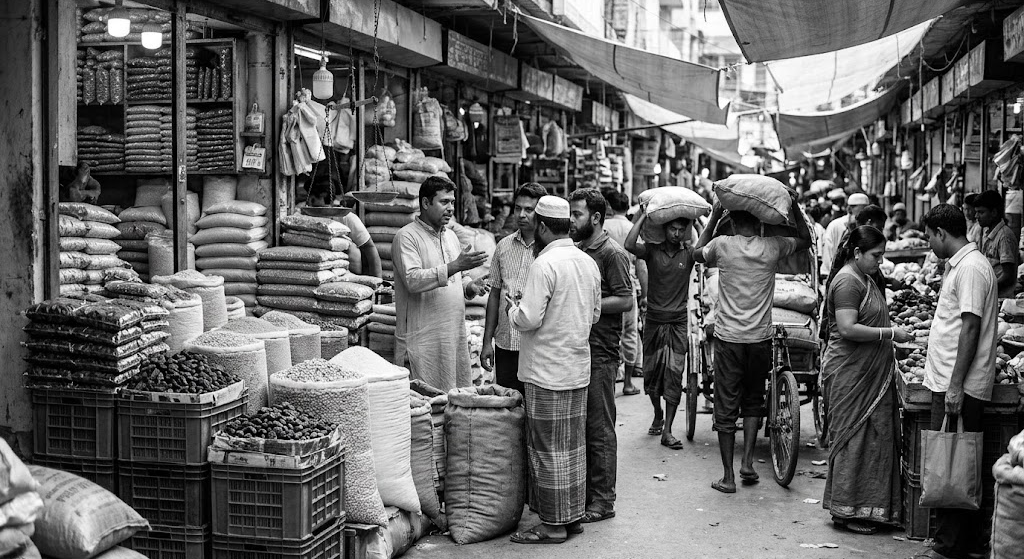
The pressure is especially evident in food markets. Many Ramadan staples, including edible oil, sugar, lentils, chickpeas, dates, and wheat-based products, depend heavily on imports. At the same time, households continue to face rising costs related to transportation, housing, utilities, healthcare, and fuel. This combination of food and non-food inflation has generated a persistent squeeze on family budgets, leaving many vulnerable to seasonal price spikes.
External Risks and Domestic Market Challenges
Bangladesh’s dependence on imported commodities makes it particularly sensitive to global economic disruptions. Geopolitical tensions, fluctuations in energy prices, shipping bottlenecks, and exchange-rate pressures can all raise import costs and ultimately affect domestic consumer prices.
Yet external shocks are only part of the challenge. Domestic market dynamics often amplify price pressures. In several key commodity markets, a limited number of importers and wholesalers control significant portions of supply, while information regarding inventories, import volumes, and market conditions remains insufficiently transparent. Under such circumstances, uncertainty can create opportunities for speculative pricing and excessive profit margins. Consequently, prices often rise faster than actual costs would justify.
Building Confidence Before Ramadan
The success of Ramadan 2027 will depend largely on confidence. Consumers must be assured that essential goods will remain available, businesses need confidence in uninterrupted supply chains, and market participants must recognize that manipulation will be detected and discouraged.
To achieve this, preparation should begin months before Ramadan. A coordinated Ramadan Preparedness Framework involving the ministries responsible for commerce, food, agriculture, finance, transport, and local government could help monitor supply conditions, identify potential shortages, and address logistical bottlenecks well in advance. Such an approach would allow authorities to move from reactive crisis management to proactive policy planning.
A forward-looking commodity forecasting system should also become a priority. Accurate demand projections for major Ramadan products would help businesses plan imports more effectively and reduce the risk of shortages and panic buying. Close coordination between government agencies and private-sector importers would further strengthen supply stability during peak demand periods.
Since many essential commodities are imported, ensuring access to foreign exchange and trade financing is equally important. Delays in opening letters of credit or disruptions in foreign exchange availability can quickly translate into higher retail prices. Maintaining smooth financing mechanisms for essential imports should therefore be considered a key component of inflation management.
Transparency and Competition Matter
Greater transparency can significantly improve market outcomes. A real-time digital monitoring system that regularly publishes information on imports, inventories, stock levels, and prices would reduce uncertainty and discourage speculative behavior. When consumers, businesses, and regulators have access to the same information, opportunities for misinformation and market manipulation decline.
At the same time, regulators should complement traditional market inspections with data-driven surveillance systems capable of detecting unusual pricing patterns, inventory accumulation, and supply disruptions. Stronger competition policies are also essential. Monitoring anti-competitive practices and excessive intermediary margins would help ensure that prices reflect actual costs rather than market concentration.
Protecting Vulnerable Households
Inflation management alone cannot guarantee a successful Ramadan. The ultimate measure of success lies in how effectively vulnerable households are protected from sudden declines in purchasing power.
Targeted food assistance programs should be strengthened before Ramadan begins rather than after prices have already risen. Improved digital beneficiary databases can enhance targeting and delivery, while subsidized food sales and open-market operations should concentrate on low-income urban communities and inflation-prone regions.
Beyond temporary assistance, policymakers should focus on improving household resilience through employment support, wage protection, and income-enhancing measures. Families with stable incomes are better equipped to cope with temporary price fluctuations and less dependent on emergency interventions.
From Seasonal Response to Long-Term Resilience
Bangladesh should aim to transform Ramadan market management from a recurring annual challenge into a predictable and institutionally managed process. Achieving this goal requires investments in warehousing, cold-chain facilities, strategic food reserves, and more efficient commodity storage systems. Diversifying import sources would also reduce vulnerability to global disruptions.
Energy policy must form part of this broader strategy. Since fuel and electricity costs influence production, processing, transportation, and retail distribution, more predictable energy pricing and greater logistical efficiency can contribute significantly to long-term price stability.
Ultimately, Ramadan 2027 presents an opportunity to strengthen economic governance. By improving coordination, enhancing transparency, supporting competition, and protecting vulnerable consumers, Bangladesh can move beyond seasonal crisis management toward a more resilient economic framework. Such reforms would not only help ensure an affordable Ramadan but also contribute to a more inclusive, competitive, and economically secure future.


