
Md. Awlad Hossain
University of West London, UK
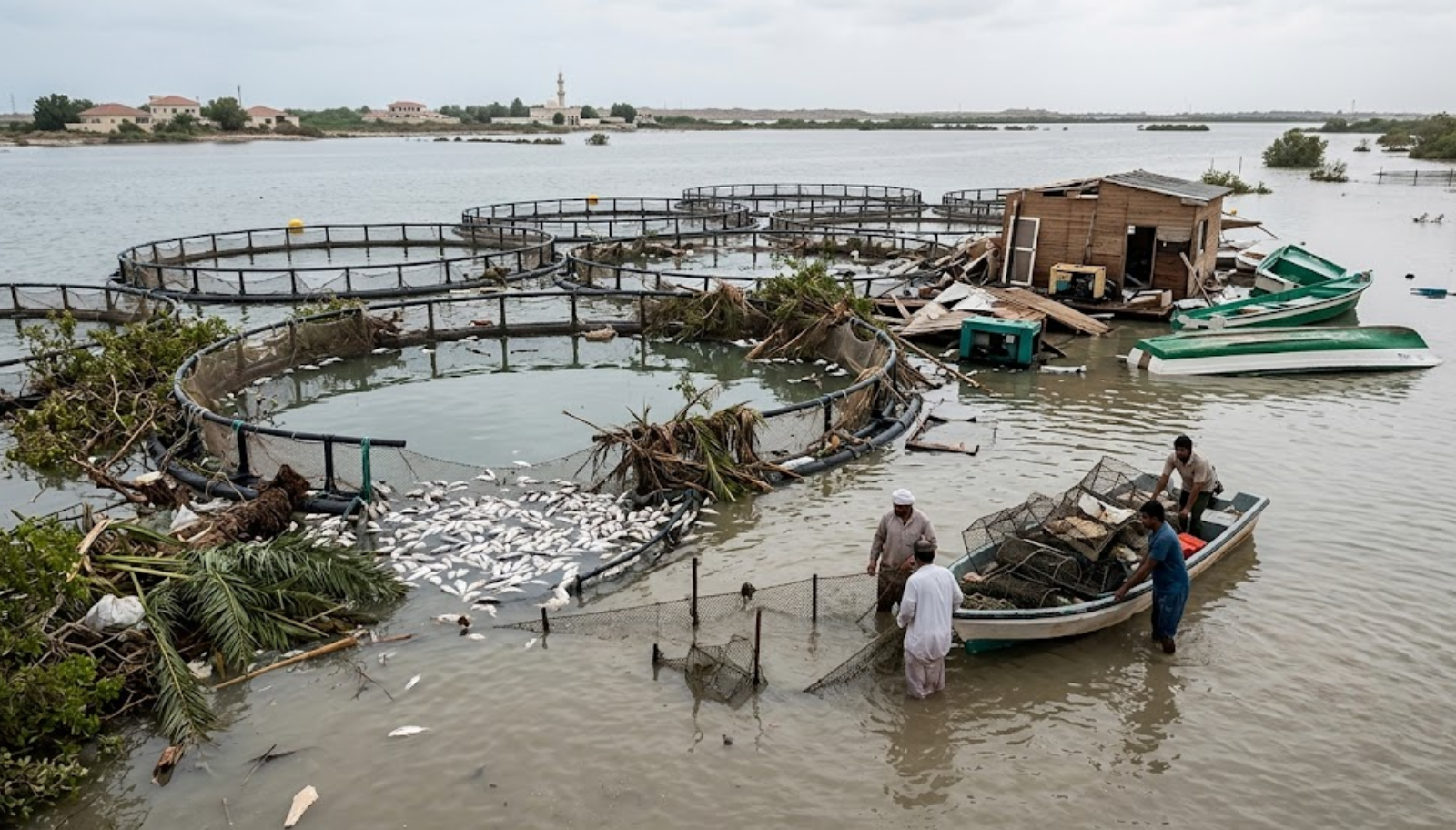
The flooding of 7,400 fish farms and ponds across Chattogram, with losses already exceeding Tk 39 crore, is not merely a seasonal misfortune. It is a structural reminder that Bangladesh’s fisheries sector, its second-largest export earner after garments, operates on foundations that cannot withstand the climate realities now upon the country. The damage figure, as the Department of Fisheries itself acknowledges, is preliminary and certain to rise. What is submerged is not only fish and shrimp but the viability of a production model that treats climate adaptation as optional.
Impact on the Fisheries Industry
The geographical pattern of destruction reveals the sector’s concentrated vulnerability. Patiya alone lost roughly 1,400 water bodies, Anwara 1,100, and Banshkhali 450. In Hathazari, around 145 fish farms were inundated. These are farms that specialise in fish fry produced from naturally collected Halda River carp eggs, among the most economically valuable products in Bangladesh’s inland aquaculture chain.
One farmer reported losing fish fry worth over Tk 300,000 at current market prices of Tk 4,000 per kg. These are not marginal losses; they represent the destruction of the broodstock pipeline that supplies fish cultivation across the district and beyond. When fry production collapses, the consequences cascade through subsequent production cycles, depressing output not just this season but potentially for the year ahead.
The shrimp farms tell a parallel story. At least 55 shrimp farms in Banshkhali and Anwara were flooded. Shrimp aquaculture in southern Chattogram operates on capital-intensive cycles with feed, seed, and labour costs front-loaded months before harvest. A flood that arrives weeks before the harvest does not merely destroy the crop; it wipes out the working capital that small farmers borrow at high interest, creating debt traps that persist long after the floodwaters recede.
Another farmer in Chhanua reported losses of Tk 6 lakh across three farms. Multiplied across hundreds of affected operators, the aggregate financial shock will depress investment, reduce stocking density in subsequent cycles, and push marginal producers out of the industry entirely.
Export Market Consequences
Bangladesh’s frozen fish and shrimp exports are a significant foreign exchange earner, and Chattogram is a critical production and processing hub. Supply disruptions in this region translate quickly into shipment shortfalls and contract defaults with international buyers. The global shrimp market is competitive: Vietnam, India, and Ecuador stand ready to fill any supply gap that Bangladesh leaves. Buyers who shift sourcing in response to a disruption do not necessarily return.
Bangladesh’s export reputation already suffers from intermittent quality and consistency problems; a climate-driven supply shock compounds this fragility. The Tk 39 crore headline figure captures direct farm losses, but the downstream losses (e.g idle processing capacity, forfeited export contracts, and buyer attrition) could multiply the economic damage several times over.
Sustainability and the Infrastructure Deficit
The most telling detail in the reporting is not the rainfall volume (214 mm in 24 hours) but the broken sluice gate at Madhukhali in Chhanua. A single unusable drainage gate prevented floodwater from draining into the sea, directly causing the inundation of homes and fish farms. This is not a climate event; it is a maintenance failure.
Bangladesh’s coastal aquaculture infrastructure (sluice gates, embankments, drainage channels) was built to specifications that assumed historical rainfall patterns. Those assumptions no longer hold. Climate projections for Bangladesh consistently indicate intensifying monsoon variability and increased extreme precipitation events. The infrastructure deficit is therefore not static but widening: each year, the gap between design capacity and actual climate stress grows larger.
Sustainability in the fisheries sector cannot be achieved through farm-level practices alone. It requires infrastructure resilience including functional drainage, reinforced embankments, flood-resilient pond designs, and early warning systems linked to farm-level response protocols. It requires insurance and credit mechanisms that allow farmers to absorb flood losses without liquidating their operations. And it requires that the government treat aquaculture infrastructure with the same urgency it devotes to road and energy projects.
The Chattogram floods are a warning that the cost of inaction is no longer theoretical. It is quantifiable, it is recurring, and it is accelerating.
Read also –