
Mehran Sajjad
North South University
Every year on 16 August, Bangladesh pauses to honour a man whose guitar strings carried the restlessness, heartbreak, and hope of an entire generation. Ayub Bachchu, known simply as AB, was born in 1962 in Patiya, Chattogram, and passed away on 18 October 2018, yet he remains the country’s most enduring rock icon. He was not merely a performer of songs; he was the architect who built Bangladeshi band culture from the ground up. This article is a tribute to that legend of Bangla rock music.
A Philosophy Rooted in Honesty and Craft
AB’s music philosophy was never about spectacle for its own sake. Influenced by guitarists like Jimi Hendrix and Joe Satriani, he treated the guitar as an instrument of emotional truth rather than technical display, insisting that feeling had to come before flash. Even his most intricate solos were built to serve a song’s mood, never to overshadow it.
He spoke often about wanting Bangladeshi musicians to master their instruments with the same seriousness as their international counterparts, and he spent years actively promoting instrumental musicianship in a scene that had long treated singers as the sole focal point of a band. This conviction, that every member of a band deserved respect for their craft, quietly reshaped how Bangladeshi audiences understood what a band was … not a singer backed by nameless players, but a collective of equally vital voices.
Reshaping the Rock Genre and Band Culture
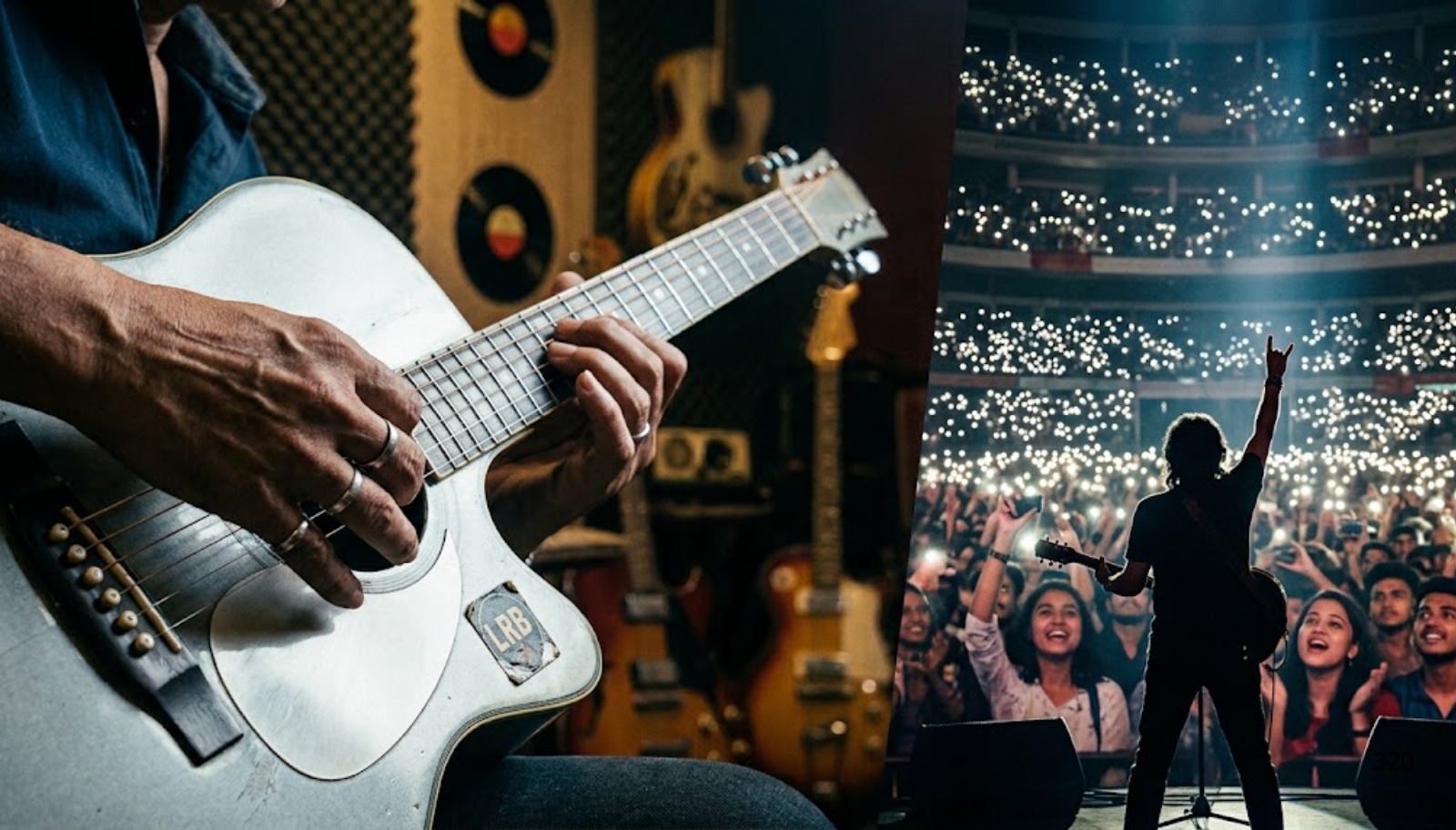
AB’s musical journey began with Spider in 1974, moved through Ugly Boys and Feelings, and matured across a decade with Souls starting in 1980, where he appeared on four studio albums. In 1991 he formed his own band, first known as Little River Band and later as LRB, Love Runs Blind, a name that would come to define an era.
Across its lifetime from 1991 to 2018, LRB released thirteen studio albums, one live album, and two compilation albums, and became the only Bangladeshi rock band to perform at Madison Square Garden in New York, a milestone that placed Bangladeshi rock on a genuinely international stage. Alongside his band work, AB built a substantial solo catalogue of sixteen albums, including Rokto Golap, Moyna, and the enormously popular Koshto, and composed unforgettable film scores such as Ammajaan and Sagorika.
Together, this body of work did not merely add to Bangladeshi rock, it defined the genre’s sound, structure, and ambition for decades to come, giving countless bands that followed a template for what a serious, self-contained rock outfit could achieve.
A Voice for Bangladeshi Youth
For young Bangladeshis navigating the anxieties of adolescence, heartbreak, and a rapidly changing society, AB’s lyrics and guitar lines felt like a companion rather than a performance. Songs such as Koshto Pete Valobashi and Cholo Bodle Jai spoke plainly about longing and change in language ordinary listeners could carry with them, while his guitar solos gave young musicians something concrete to aspire toward.
Generations of Bangladeshi teenagers picked up a guitar for the first time because of him, and music schools and instrument shops across the country still cite his influence as the reason rock became a viable, respected pursuit rather than a fringe hobby.
Recognition Withheld, Then Restored
Here lies the uncomfortable truth beneath the celebration. During his lifetime, Bangladesh’s formal institutions, government cultural bodies and much of the commercial music industry alike, were slow to extend AB the recognition his influence plainly warranted. He built AB Kitchen, his own studio and production house in Dhaka’s Moghbazar, largely through his own resources and determination, at a time when institutional support for rock musicians remained thin and cultural funding favoured more traditional genres.
It was only years after his death that the state awarded him the Ekushey Padak, one of Bangladesh’s highest civilian honours, a recognition that, however meaningful, arrived posthumously rather than while he could still feel its weight. That delay says as much about how Bangladesh has historically valued its rock musicians as any tribute written since.
A Legacy That Keeps Playing
Today, AB Kitchen continues to operate as a living archive of his work, releasing archival recordings and preserving his catalogue for new listeners. LRB continues to perform under the legacy he built, and musicians across Bangladesh and West Bengal continue to cite him as a foundational influence. On his birth anniversary each year, tributes from band legends, former collaborators, and fans reaffirm what the country was slow to formally acknowledge while he lived, that Ayub Bachchu did not just play rock music in Bangladesh, he built the stage on which it still stands.