
Dr. Naima Parvin
Coventry University
Bangladesh’s economic transformation over recent decades has drawn considerable attention in development economics. Sustained growth, export expansion, and notable human development gains have repositioned the country as a lower-middle-income economy. Yet contemporary research increasingly emphasizes a transition from growth-led development to inclusion-led development, where gender equity, particularly through education policy, becomes central to long-term prosperity.
Growth Without Full Inclusion
From a structural perspective, Bangladesh reflects a classic development pattern: rapid GDP growth alongside persistent labour market segmentation. Female labour force participation has risen over time but remains significantly lower than that of men, approximately 38–43% compared to over 80% for males. This gap illustrates a fundamental inefficiency: nearly half of the country’s human capital is underutilised.
The literature on labour economics identifies several constraints. Women are disproportionately concentrated in informal employment, over 96% of employed women work in informal sectors lacking job security and social protection. Informality limits productivity gains, depresses wages, and perpetuates inequality. Moreover, social norms, discrimination, and unpaid care burdens systematically restrict women’s economic participation.
From an economist’s viewpoint, this is not merely a social issue but a macroeconomic one: gender inequality distorts labour allocation and suppresses aggregate productivity.
The Gender-Education Paradox
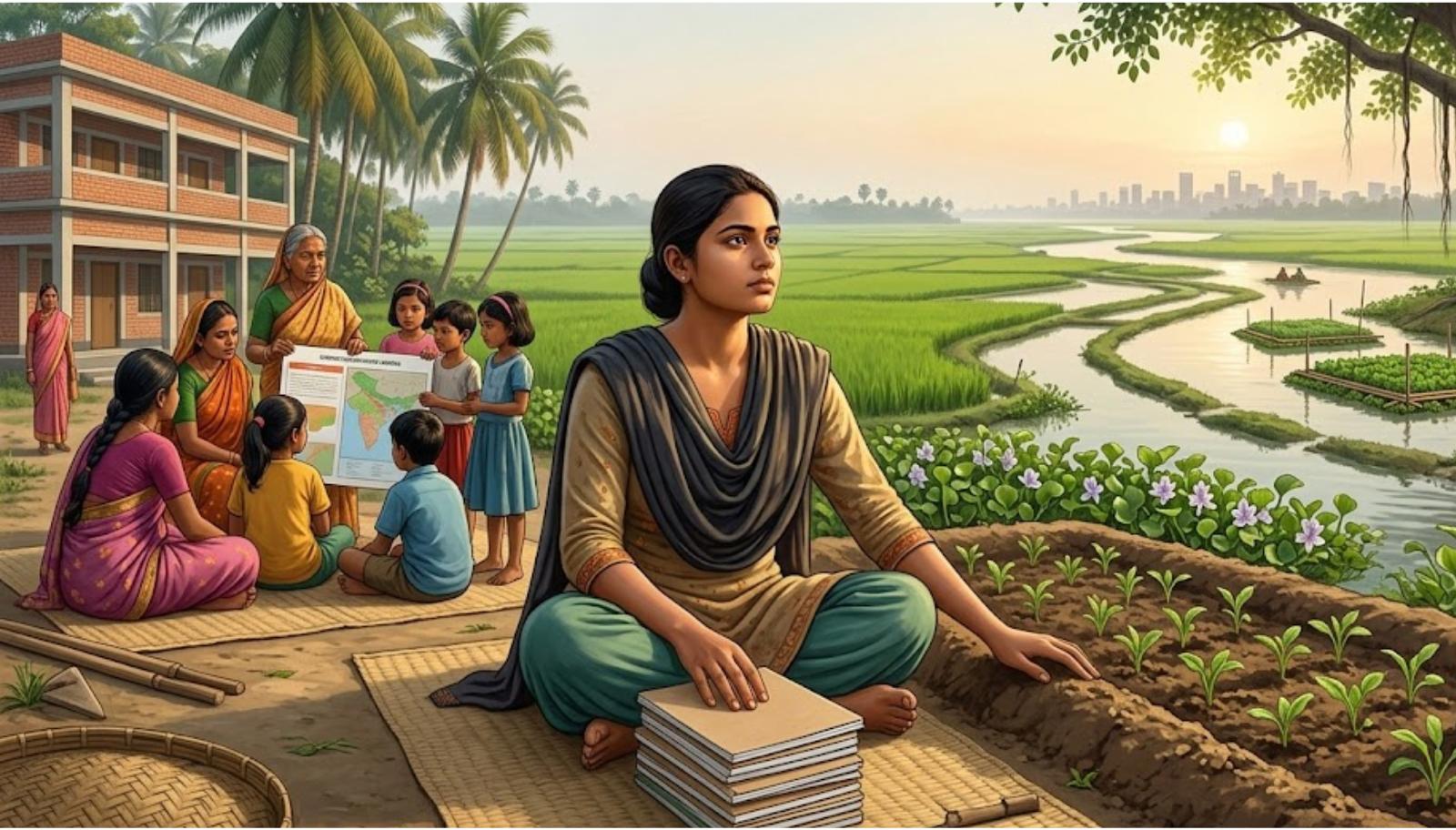
One of the most striking patterns in Bangladesh is the gender-education paradox. The country has made remarkable progress in expanding education access, particularly for girls. Lower secondary completion rates for girls now exceed those for boys, and educational mobility has improved significantly across generations.
However, this progress has not translated proportionately into labour market outcomes. Research confirms that educational gains alone do not guarantee employment equality; labour demand, social norms, and structural barriers intervene.
Economic theory provides insight here. Human capital models predict that education increases productivity and wages. Indeed, empirical studies show that returns to education are often higher for women than men, making female education a powerful lever for economic growth. Yet these returns materialise only when labour markets allow women to participate fully.
Thus, Bangladesh faces a critical policy challenge: converting educational parity into economic parity.
Climate Vulnerability and Gendered Risks
An often-underexplored dimension of Bangladesh’s development is the intersection between gender and climate vulnerability. Bangladesh is among the most climate-exposed countries globally, facing recurrent floods, cyclones, and rising sea levels. These environmental risks disproportionately affect the poor and marginalised, especially women.
From an economic perspective, climate shocks act as regressive forces, eroding assets, reducing income stability, and increasing poverty risks. Women are particularly vulnerable because they are more likely to depend on climate-sensitive sectors such as agriculture, have limited access to resources like land and credit, and bear the burden of unpaid care during crises.
Moreover, climate-induced disruptions often lead to school dropouts among girls, early marriage, and reduced labour market participation, thereby reinforcing existing gender inequalities. Thus, climate resilience must be integrated into education and labour policies, for example through climate-adaptive schooling infrastructure, targeted social protection, and green skill development for women.
Education Policy as a Driver of Gender Equity
Education policy plays a transformative role not only in building skills but also in reshaping social norms and labour market outcomes. The literature identifies several key mechanisms:
1. Expanding Human Capital and Economic Growth
Investments in female education have a direct positive impact on GDP growth and productivity. Cross-country evidence shows that reducing gender gaps in education significantly raises output per capita. This aligns with endogenous growth theory, where human capital accumulation drives long-term economic expansion.
2. Changing Gender Norms and Expectations
Education systems can either reinforce or challenge societal norms. Gender-transformative education, incorporating inclusive curricula, teacher training, and safe learning environments, has been identified as essential to shifting attitudes that constrain women’s roles. In Bangladesh, where social perceptions still discourage women’s work, this function is crucial.
3. Facilitating School-to-Work Transitions
A major limitation of Bangladesh’s education system is weak alignment with labour market needs. Vocational training, STEM education, and digital skills programmes targeted at women can improve employability and access to higher-value sectors.
4. Reducing Structural Barriers
Education policy must address dropout rates, early marriage, and safety concerns, factors that disproportionately affect girls. Although Bangladesh has reduced these barriers significantly, challenges remain, particularly at higher education levels.
5. Intergenerational Effects
Female education produces strong spillover effects, including improved child health, education, and nutrition outcomes. These intergenerational returns reinforce the case for prioritising gender equity in education.
Beyond Education: Complementary Policie
While education is necessary, it is not sufficient. Evidence shows that gender inequality in labour markets is deeply rooted in institutional and cultural structures. For example, unpaid care responsibilities limit women’s time for paid work, while employer biases reduce hiring opportunities.
Therefore, education policy must be complemented by:
- Labour market reforms promoting formalisation
- Childcare and social protection systems
- Anti-discrimination enforcement
- Safe transport and workplace environments
Gender Equality as a Development Imperative
The Sustainable Development Goals (SDGs) place gender equality at the centre of development strategy, recognising that it is both a driver and outcome of inclusive growth. Econometric evidence further confirms that education, economic freedom, and gender equality are mutually reinforcing in reducing inequality over time.
For Bangladesh, the implication is clear: achieving inclusive growth requires integrating gender equity into all aspects of economic policy, particularly education.
Conclusion
Bangladesh stands at a critical juncture in its development journey. While past success has been driven by growth and structural transformation, future progress will depend on inclusion and resilience.
Gender equity, anchored in robust education policy and supported by climate-conscious development strategies, represents one of the highest-return pathways for sustaining progress. By integrating these dimensions, Bangladesh can move beyond growth toward a model of development that is not only prosperous, but also equitable and sustainable.
References
World Bank Gender Data Portal [genderdata…ldbank.org]
UNESCO Global Education Monitoring Report (2026) [unesco.org]
ILO Working Paper on Female Labour Force Participation [researchre…ry.ilo.org]
VoxDev (2024) on gender and labour markets [voxdev.org]
OECD / Thévenon et al. on gender and growth [jstor.org]
Seehuus & Strømme (2025) on returns to education [journals.sagepub.com]
UNGEI (2025) Gender-transformative education [ungei.org]
UN Women SDG analysis [unwomen.org]
Academic studies on Bangladesh labour participation [idosi.org]