
Caroline Mwende
Kenyatta University, Kenya
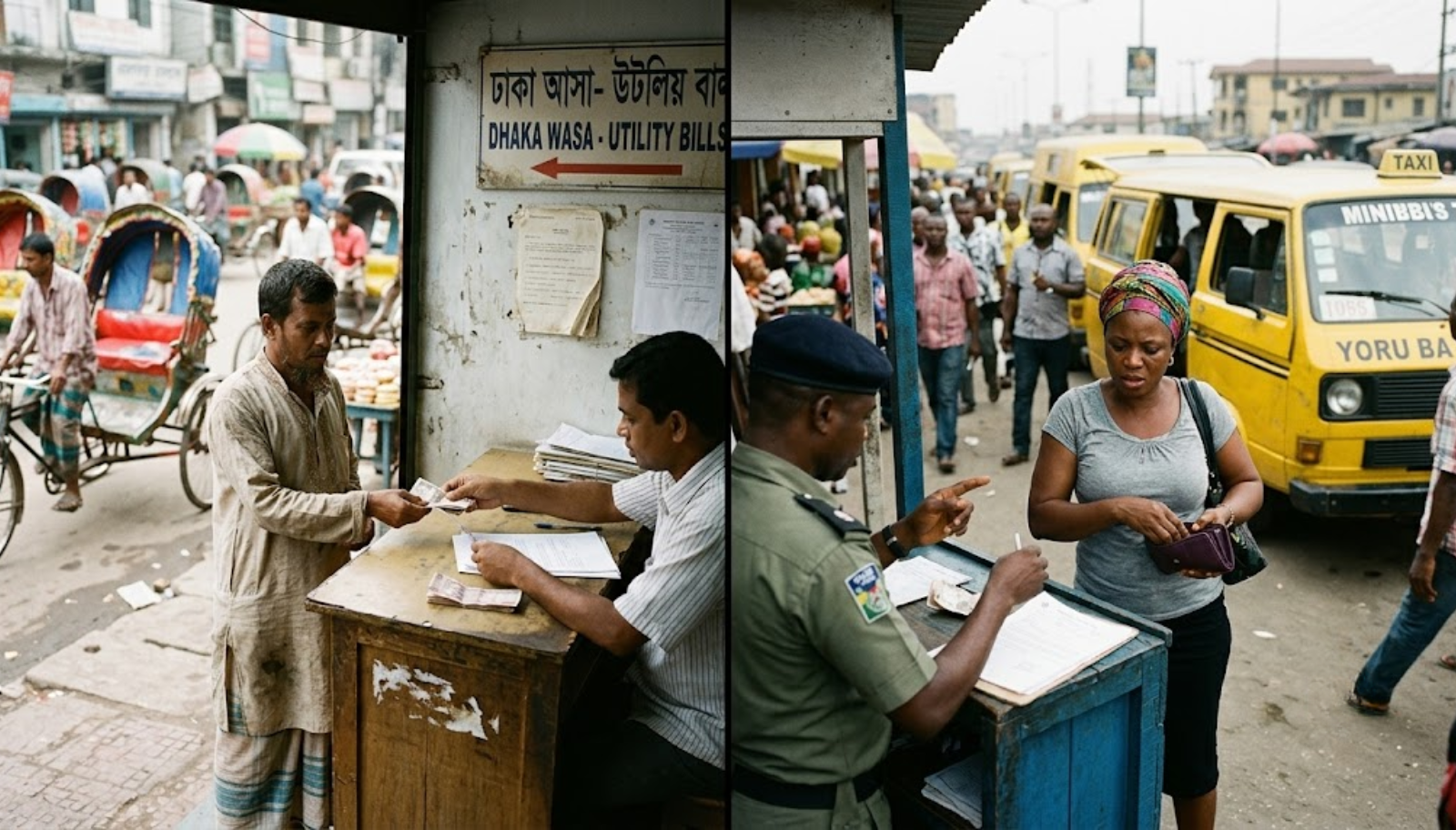
What if the world’s perception of corruption and informality is only telling half of the story? Bangladesh and Nigeria are often judged by corruption rankings and headlines that portray them as economies crippled by graft and informality. However, beneath these narratives, both countries demonstrate economic dynamism, innovation, and adaptation. Their reality reveals that we cannot make conclusions on economic performance from transparency assessments. We should therefore look beyond perception.
The Perception of Corruption
The global perception of corruption in Bangladesh and Nigeria is largely shaped by international indices, particularly the Transparency International Corruption Perceptions Index (CPI), which measures perceived levels of public-sector corruption based on expert assessments and surveys. This year, Nigeria ranks at 142nd out of 182 countries with a score of 26 out of 100 points, maintaining the same score as in 2025. Bangladesh ranks as the 13th most corrupt country with a score of 24, a slight improvement from 2025. Both countries continue to face significant governance concerns in the eyes of the international community.
The Reality of Corruption: Beyond the Rankings
While corruption remains a significant challenge in both Bangladesh and Nigeria, the reality extends beyond international rankings and negative perceptions. It is true that corruption weakens institutions, increases the cost of doing business, reduces public trust, and limits the effectiveness of government policies. However, it is important to recognize that corruption does not fully define the economic story of either country.
Bangladesh, despite persistent governance concerns, has achieved remarkable economic transformation through export-led growth, particularly in the ready-made garment industry, agriculture, and overseas remittances. Similarly, Nigeria faces persistent corruption challenges in public resource management and accountability, yet remains a major economic hub driven by sectors such as telecommunications, technology, agriculture, oil and gas trade. These experiences demonstrate that corruption is a serious obstacle to development, but its presence does not entirely determine a country’s economic performance.
Perception of Informality
Beyond corruption, another issue that shapes perceptions of developing economies is the size of their informal sectors. Informal economies are associated with tax avoidance, weak regulation, and limited economic opportunities. However, this perspective overlooks the important role that informal activities play in providing livelihoods, creating employment, and supporting local economies.
In many developing countries, informality is not simply a choice but a response to structural challenges such as unemployment, limited access to finance, complex registration processes, and barriers to entering the formal economy. The cases of Bangladesh and Nigeria demonstrate that while informality presents hardships for government revenue collection, and economic planning, it also reflects the resilience and adaptability of millions of people seeking economic opportunities.
Informality Within a Growing Economy (Bangladesh)
The informal economy in Bangladesh accounts for roughly 85% of total employment and contributes about 43% to the country’s gross domestic product. It covers agriculture, roadside shops, transport like rickshaws, and home-based work. This experience demonstrates that a large informal sector can exist alongside significant economic progress. However, continued informality also creates challenges, including limited worker protections, reduced access to social security, and lower productivity among small businesses.
Informality as Economic Survival (Nigeria)
Nigeria presents another example of how informality reflects both economic challenges and resilience. With a rapidly growing population and limited formal employment opportunities, millions of Nigerians rely on informal activities such as small-scale trading, transport services, agriculture, and micro-enterprises for their livelihoods, accounting for 65% of the gross domestic product. The dominance of informal activities creates problems, but it’s not a sign of economic failure but rather a reflection of institutional limitations and employment pressures.
Lessons from Bangladesh and Nigeria
The experiences of Bangladesh and Nigeria demonstrate that perceptions, while important, do not always capture the full reality of a country’s development journey. Both nations continue to face significant challenges related to corruption, institutional weaknesses, and large informal economies. However, viewing them solely through the challenges risks overlooking the economic progress, entrepreneurship, and resilience that coexist with these difficulties.
Both corruption and informality remain serious obstacles to effective governance. Also, they reveal individuals’ ability to create opportunities where formal systems fall short. Moving beyond perceptions requires a deeper understanding of the historical, social, and economic factors shaping each country. The cases of Bangladesh and Nigeria remind us that development cannot be measured by perceptions alone; it requires examining evidence, recognizing progress, and addressing the underlying structures that influence economic outcomes.