
Farah Zahir
Oniket Research Group
The purpose of this article is to examine why Bangladesh consistently hosts foreign culinary diplomacy initiatives but rarely promotes its own cuisine through equivalent platforms abroad. While international food festivals are often presented as cultural celebrations, they are also instruments of trade promotion, tourism marketing, and economic diplomacy.
The article argues that Bangladesh’s position is largely one sided. Countries such as Thailand have developed an integrated system that links embassies, businesses, airlines, hotels, and food exporters to promote their national cuisine overseas. Bangladesh has welcomed these initiatives but has not built comparable institutions or negotiated reciprocal opportunities for its own food culture.
Bangladesh should not discourage foreign culinary events. Instead, it should pursue reciprocal arrangements through trade negotiations, strengthen culinary diplomacy as part of its commercial strategy, and invest in the product standards and institutional capacity needed to take Bangladeshi cuisine to international markets.
The Thai Gourmet Gala Vol. 3, hosted by Pan Pacific Sonargaon Dhaka in collaboration with the Commercial Wing of the Royal Thai Embassy, demonstrates how effectively a country can combine culture with commerce. A celebrity chef from Chiang Mai, traditional performances, diplomatic participation, and corporate sponsorship from Mutual Trust Bank, Thai Airways, and Coca-Cola Bangladesh transform the event into far more than a hotel promotion. Running alongside the Top Thai Brands Trade Exhibition, the festival showcases Thailand’s ability to market its cuisine, consumer products, and national identity through a coordinated strategy.
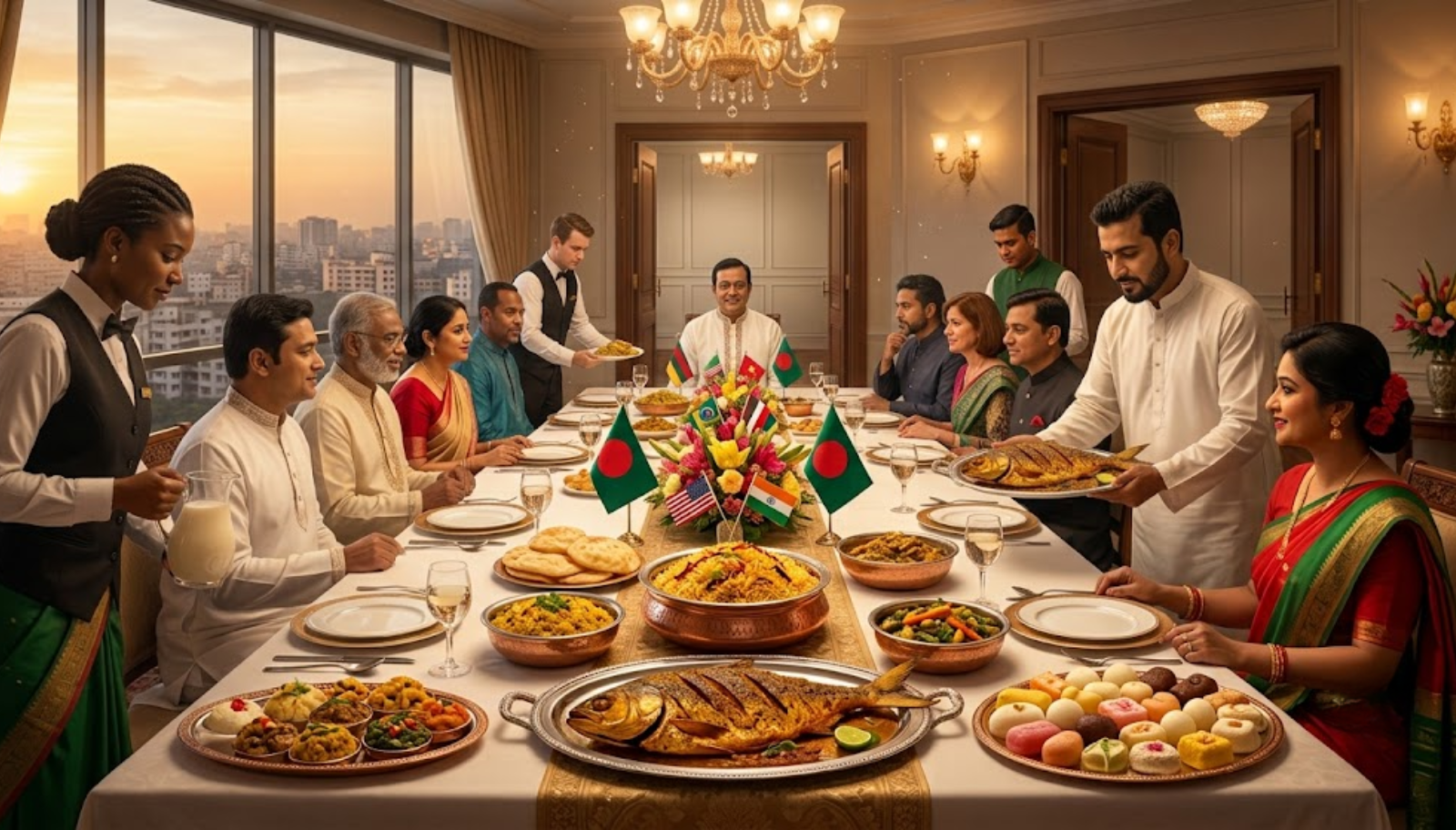
The more revealing question, however, is what Bangladesh receives in return. No hotel in Bangkok hosts a Bangladeshi Gourmet Gala. No Bangladeshi embassy organises a large-scale celebration of biryani, pitha, hilsa, or traditional Bengali cuisine with similar institutional backing. Bangladeshi chefs are rarely invited to lead culinary showcases abroad under government supported initiatives. The exchange remains overwhelmingly one directional, raising an important policy question about reciprocity in economic and cultural diplomacy.
Culinary Diplomacy Is Economic Diplomacy
Food diplomacy is often viewed as cultural engagement, but its economic impact is equally significant. Culinary festivals create demand for agricultural products, processed foods, restaurant franchises, tourism, and national brands. A successful food promotion encourages consumers to purchase imported ingredients, choose restaurants serving that cuisine, and even consider travel to the country itself.
Thailand has refined this model over several decades. Embassy initiatives are linked with trade exhibitions, airlines, hotels, banks, and exporters, creating a coordinated promotional ecosystem. A visitor attending a dinner also encounters Thai consumer products, travel opportunities, and commercial partnerships. Cultural familiarity gradually becomes commercial preference.
Reciprocity is what gives such arrangements their greatest value. When two countries actively promote each other’s cuisines, they both gain access to new consumers, strengthen demand for agricultural exports, and deepen people to people connections that support broader trade relations. Bangladesh has hosted the Thai Gourmet Gala for several consecutive years, helping Thai cuisine become increasingly familiar within the country’s hospitality market. Comparable opportunities for Bangladeshi cuisine abroad remain largely absent.
Why Bangladesh Falls Behind
The first challenge is institutional capacity. Thailand’s culinary diplomacy is coordinated through its embassy’s commercial wing in partnership with hospitality businesses, airlines, financial institutions, and trade organisations. Bangladesh has no comparable programme operating consistently through its diplomatic missions. Food has not been treated as a strategic export sector deserving dedicated promotion alongside traditional trade priorities.
The second challenge is product readiness. Thai cuisine travels successfully because Thailand has invested for decades in internationally standardised food products. Curry pastes, sauces, rice varieties, frozen meals, and packaged ingredients are widely available and meet global quality requirements. Restaurants abroad can recreate authentic Thai dishes through reliable commercial supply chains.
Bangladeshi cuisine lacks much of this supporting infrastructure. Standardised spice blends, export ready processed food products, frozen pitha, premium seafood products, and internationally recognised branding remain limited. Even where demand exists, overseas hotels and restaurants often struggle to source consistent Bangladeshi ingredients. Without commercially scalable products, cultural promotion cannot translate into sustained export growth.
The third challenge is diplomatic strategy. Many successful culinary diplomacy programmes are embedded within broader trade and investment partnerships. Bangladesh has signed numerous trade and economic cooperation agreements, but reciprocal culinary promotion has rarely formed part of those discussions. As a result, Bangladeshi cuisine continues to rely primarily on diaspora restaurants and community festivals rather than institutional support from government and business.
There is also a branding challenge. Countries that succeed in culinary diplomacy present a clear national food identity supported by certification, storytelling, and coordinated marketing. Bangladesh possesses an exceptionally rich culinary heritage, but no unified international brand currently represents its regional diversity, traditional ingredients, and distinctive cooking traditions.
From Host to Partner
Bangladesh does not need to oppose international culinary festivals hosted within its borders. Such events contribute to cultural exchange and strengthen bilateral relations. The real objective should be reciprocity.
Future trade and commercial discussions with partner countries should include provisions for promoting Bangladeshi cuisine, food products, and culinary tourism overseas. The Ministry of Commerce, working closely with the Ministry of Foreign Affairs, could establish a dedicated culinary diplomacy programme to coordinate embassies, exporters, chefs, tourism authorities, and private sector partners.
At the same time, hotels, airlines, food processing companies, and agricultural exporters should invest jointly in internationally certified products, stronger supply chains, and professional branding. Culinary diplomacy succeeds only when cultural presentation is supported by commercially reliable products.
The Thai Gourmet Gala demonstrates what an effective national strategy can achieve. The issue is not that Thailand promotes its cuisine in Bangladesh. The larger question is why Bangladesh has not developed the institutions, products, and diplomatic frameworks necessary to present its own cuisine with equal confidence abroad.
A country that exports garments, pharmaceuticals, leather goods, and agricultural products should also be capable of exporting one of its greatest cultural assets. Bangladeshi cuisine deserves a place at the global table. Reaching that position will require strategic planning, institutional commitment, and the confidence to negotiate as both a host and an equal partner.