
Ruksana Akhter
Freelance Architect
The recurrence of floods across northern and northeastern Bangladesh is not a surprise. It is an annual certainty with worsening intensity. The latest warnings from the Flood Forecasting and Warning Centre forecast flash flooding over low lying areas of Sylhet, Sunamganj, Lalmonirhat, Nilphamari, Rangpur, Gaibandha, Kurigram, and Naogaon, arrived after communities had already suffered extensive damage. Nearly twelve kilometers of earthen roads in Kalmakanda were destroyed, fish from approximately seventy ponds were washed away, Aman seedbeds belonging to hundreds of farmers were ruined, and road infrastructure across Bagerhat and Jashore collapsed.
The damage is real, measurable, and recurring. What remains absent is a systematic local government framework that treats flood preparedness and post flood recovery as continuous obligations rather than emergency reactions. This article is aimed at triggering this important discussion.
Pre Flood Preparedness: Actions Before the Water Arrives
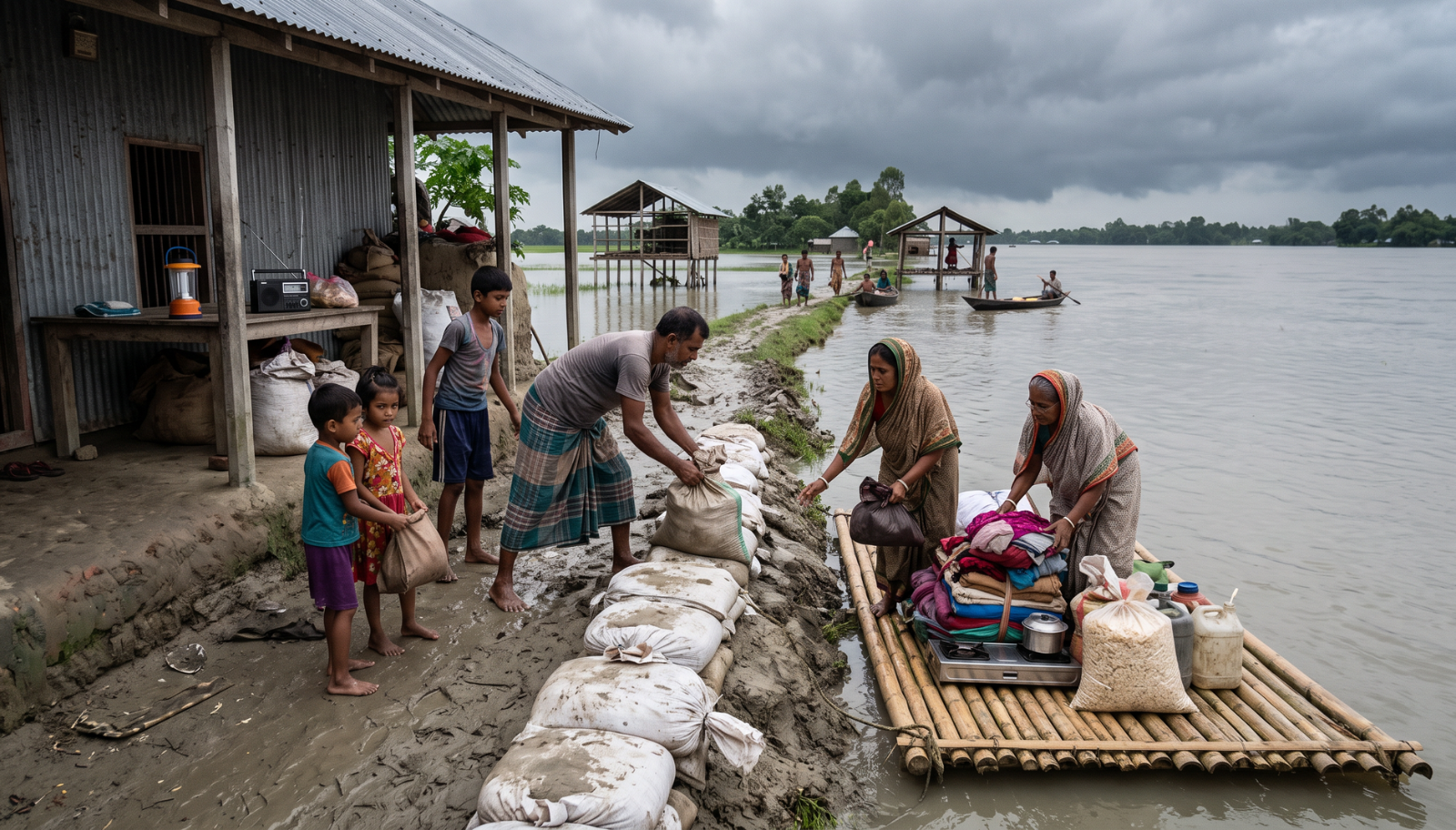
The most critical failure of local government is the absence of pre-positioned relief infrastructure. When floodwaters rise, communities discover that shelters are insufficient, supplies are absent, and evacuation routes are already submerged. Every union parishad in a flood prone zone must maintain designated flood shelters equipped with clean drinking water, sanitation facilities, dry food rations, and medical supplies.
These shelters should be mapped, publicized, and accessible to the most vulnerable populations before the monsoon season begins. Stockpiling relief materials after flooding start is not preparedness; it is crisis management by another name.
Early warning dissemination at the local level remains dangerously weak. The Flood Forecasting and Warning Centre issues forecasts, but these forecasts rarely reach the char dweller in Kurigram or the haor farmer in Sunamganj in a language or format that prompts action. Local government must establish ward level warning systems using mosque loudspeakers, community radio, SMS networks, and volunteer chains that translate national forecasts into immediate local instructions. The warning must specify what to do, where to go, and what to carry. A forecast without an operational response plan is merely information.
Embankment and drainage maintenance must be treated as a year-round responsibility rather than a seasonal scramble. Local government bodies should conduct pre monsoon audits of embankments, sluice gates, drainage canals, and culverts, identifying weaknesses and completing repairs before the rain arrives.
The collapse of the Khamarbari Bridge section and the erosion of road embankments in Jashore illustrate what happens when infrastructure oversight is deferred until damage becomes visible. Preventive maintenance is far less costly and less disruptive than post disaster reconstruction.
Local agricultural planning must also incorporate flood risk. The destruction of Aman seedbeds across two hundred to two hundred fifty farms in a single upazila demonstrates that current planting cycles are misaligned with flood patterns.
Local government agricultural extensions should work closely with farmers to promote flood resilient crop varieties, staggered planting schedules, and raised seedbed techniques that reduce the likelihood of total loss. Livestock and fisheries planning must likewise include elevated shelter structures and pond protection measures to prevent the kind of systematic washout of fish stocks that occurred in Netrokona.
Post Flood Recovery: Rebuilding with Resilience
When floodwaters recede, the impulse is to restore what was lost. This impulse must be resisted. Reconstruction that replicates pre flood vulnerability is not recovery; it is the organization of the next disaster. Roads must be rebuilt to elevated standards, not merely to their previous specifications. The one hundred eighty kilometers of road damaged in Bagerhat and the extensive damage across Jashore demand reconstruction that accounts for the drainage capacity required during sustained rainfall, not merely for dry season traffic loads.
Post flood damage assessment must be swift, transparent, and systematic. The current practice of ad hoc assessment by local officials, often delayed and inconsistently applied, leaves affected populations without the support they need during the critical window between recession and recovery. Union parishads should maintain pre prepared assessment templates and trained teams that can document damage within forty-eight hours of water recession, enabling rapid disbursement of agricultural input support, housing repair grants, and livelihood recovery assistance.
Health surveillance must begin immediately after flooding. Stagnant water creates conditions for waterborne diseases that can claim more lives than the flood itself. Local government health units must deploy mobile medical teams to flood affected areas within days of recession, distributing water purification supplies, conducting disease surveillance, and ensuring that sanitation infrastructure is restored before contamination spreads.
Financial instruments for post flood recovery need local government advocacy and coordination. Crop insurance, livestock insurance, and microcredit holiday programmes should be activated through local government channels that understand community level needs. The absence of financial safety nets forces farmers like those in Durgapur and Kalmakanda to absorb total losses that push them deeper into poverty with each successive flood.
From Reaction to Governance
The transformation required is fundamentally one of institutional habits. Local government in Bangladesh treats floods as external shocks that disrupt normal governance. In flood prone regions, flooding is normal governance. Budgets must allocate dedicated funding for pre monsoon preparedness and post monsoon recovery.
Staff must be trained and assigned to disaster management as a standing function, not an emergency deployment. Coordination between union parishads, upazila administrations, and district authorities must be formalized in protocols that are tested annually through simulation exercises.
Until flooding is treated as a governance constant rather than an exceptional event, the cycle of damage, displacement, and reconstruction will continue with mounting human and economic cost.

