
Parvez Babul
Executive Editor: News Now Bangla
Rangpur, located in the northwestern corner of Bangladesh, is one of the country’s most historically overlooked regions. Despite its vast agricultural base, significant population, and strategic geographic position, it has long lagged Dhaka, Chattogram, and Sylhet in terms of infrastructure, investment, and economic development. This disparity is not a reflection of the region’s potential but rather of the government’s neglect. The time has come for policymakers to turn their attention north and unlock the enormous economic possibilities that Rangpur holds.
A Powerhouse of Agricultural Wealth
Rangpur is the heartland of Bangladesh’s agricultural economy. The region is the largest producer of potatoes in the country, contributing a significant share of the national harvest. It is also a leading producer of tobacco, maize, jute, and rice. The fertile floodplains of the Teesta and Brahmaputra rivers create ideal conditions for year-round cultivation.
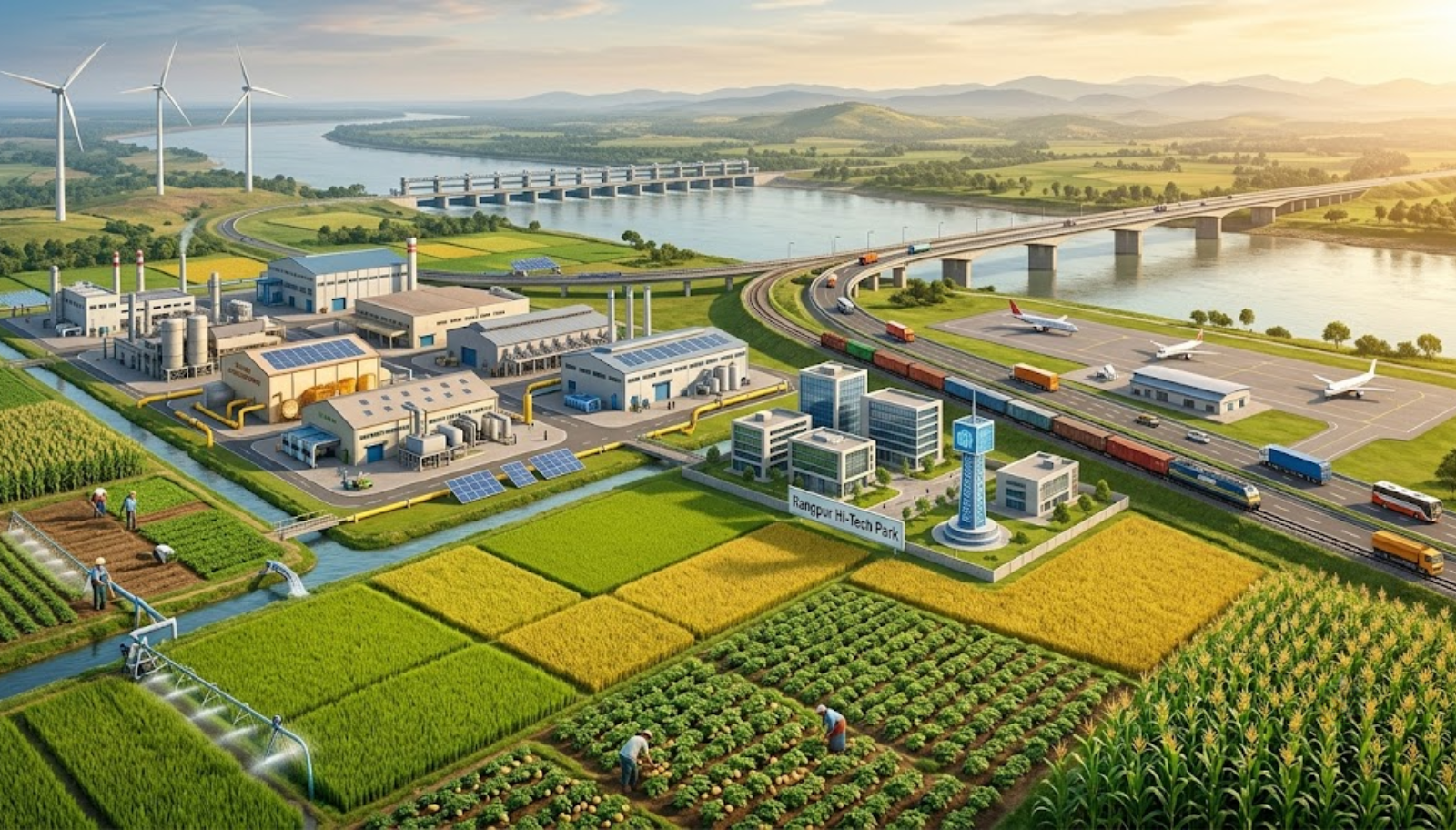
Yet, farmers in Rangpur consistently receive some of the lowest market prices in the country due to poor road connectivity, a lack of cold storage facilities, and the dominance of exploitative middlemen. With targeted government investment in post-harvest infrastructure, food processing industries, and export-oriented agricultural supply chains, Rangpur could transform from a subsistence farming zone into a major agro-industrial hub serving both domestic and international markets.
A Gateway to Regional Trade
Geographically, Rangpur sits at a critical crossroads. It shares proximity with India’s northeastern states, Nepal, and Bhutan, making it a natural corridor for regional trade under the BBIN (Bangladesh, Bhutan, India, Nepal) initiative. The Burimari land port, located in the Lalmonirhat district adjacent to Rangpur, is one of Bangladesh’s busiest international land ports and handles substantial bilateral trade with India.
Developing Rangpur as a logistics and trade facilitation center could dramatically increase customs revenue, create thousands of jobs, and stimulate local commerce. A well-planned special economic zone (SEZ) in the region, combined with improved road and rail links to Dhaka and the ports of Chattogram and Mongla, would make Rangpur an attractive destination for domestic and foreign direct investment.
An Untapped Industrial Sector
Rangpur currently has minimal industrial presence compared to other major cities in Bangladesh. The ready-made garment (RMG) industry, which drives the national economy, is almost entirely concentrated in Dhaka and its surrounding areas. Decentralizing industrial activity to Rangpur would reduce pressure on the capital, lower production costs due to cheaper land and labor, and bring employment directly to the economically vulnerable monga-affected communities of the north.
The government has already announced plans for several economic zones near Rangpur, but implementation has been slow. Accelerating these projects with dedicated budgetary allocations and investor incentives would catalyze industrial growth across the entire northern belt.
Human Capital and Urban Development
Rangpur is home to Begum Rokeya University, several medical colleges, and a growing base of educated youth. However, the lack of employment opportunities forces many graduates to migrate to Dhaka, creating a brain drain that perpetuates the region’s underdevelopment. Investing in digital infrastructure, technology parks, and startup ecosystems in Rangpur city would retain talent and foster entrepreneurship. Moreover, upgrading the city’s water supply, sanitation, roads, and public transport system would elevate the quality of life and make it more attractive to businesses and residents alike.
Addressing Inequality Through Strategic Focus
Bangladesh has made remarkable strides in reducing national poverty, but regional inequality remains a serious concern. The northern districts, including Rangpur, continue to experience higher rates of poverty and food insecurity than the rest of the country. A government that is serious about inclusive growth must treat Rangpur not as a peripheral concern but as a central development priority. By investing in agriculture, industry, trade, and urban infrastructure, policymakers can transform Rangpur into one of Bangladesh’s next great economic engines and ensure that the fruits of national progress reach every corner of the country.

