
Farah Zahir
Managing Editor, The Oniket Bulletin
Speaking after the inauguration of an orientation course for 49th BCS general education cadre officers at the Rural Development Academy in Bogura on Tuesday, 13 October, Education Minister Dr A.N.M. Ehsanul Hoque Milon outlined a new approach to SSC failure. Students who fail in up to two subjects would sit a retake within 15 days of the results. Those who fail again would be moved to technical and vocational education. The minister said the cycle of failure cannot continue year after year, and that drop-out students need attention as much as those who pass.
The intent to end the long wait for a retake deserves support. The second part of the plan, however, needs a closer look.
What the global framework says
UNESCO and the Sustainable Development Goals treat technical and vocational education and training (TVET) as part of quality education, not as a lower track. SDG 4 carries it in three targets. Target 4.3 promises equal access to affordable technical, vocational and tertiary education. Target 4.4 aims to raise the number of youth and adults with relevant skills for jobs and entrepreneurship. Target 4.5 calls for removing discrimination and ensuring equal access for vulnerable groups, including people with disabilities. SDG 8 adds the link to decent work and youth employment.
UNESCO’s TVET Strategy for 2022 to 2029 builds on this. It stresses inclusion, green and digital transitions, and employability. Its guidance on pathways asks countries to make routes permeable, so that a learner can move between vocational and general education and carry credits across. The idea underneath all of it is learner choice and lifelong movement, not sorting children by exam results.
The gap in the current proposal
A student who fails SSC twice is, in the minister’s framing, moved to the vocational stream. That is where the policy and the global framework part ways.
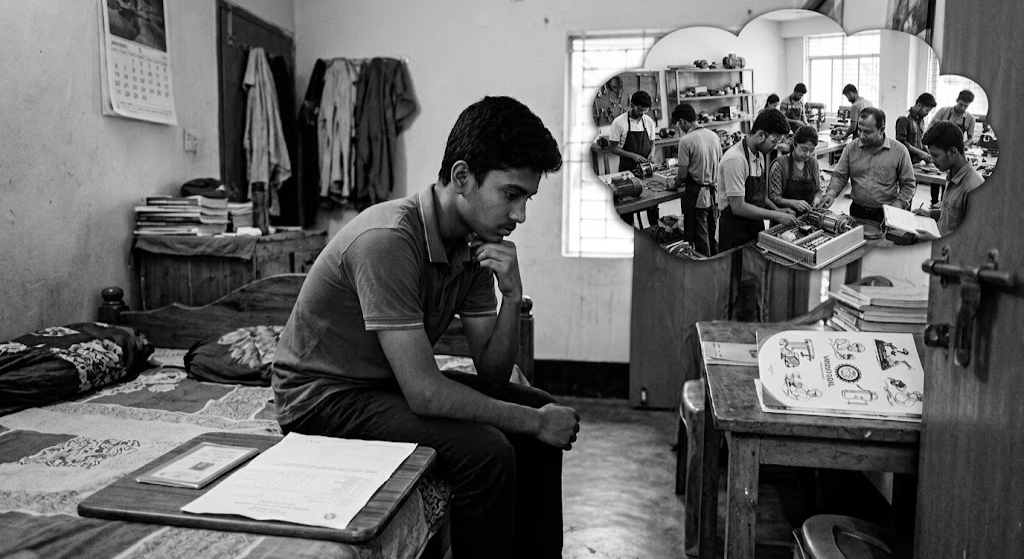
First, it makes vocational education a destination for those who fail. Bangladesh already struggles with the social standing of technical schooling, and a failure-triggered transfer will deepen it. Students may carry the label of “failed and sent away”, which invites bullying, shame and a drop in confidence at an age when both matters.
Second, it ignores ambition. Many of these students want college and university. A transfer imposed after an exam result removes that choice now; they are most vulnerable.
Third, a short retake window helps only if the system behind it works. A fortnight is brief for a student who has just absorbed a failure, and the quality of teaching and support in that period will decide the outcome.
Fourth, one or two failed subjects say little about a child’s talents. The minister himself said he does not know how to separate a pass from a failure by a single point. A policy that sends a child into a different life path on that margin rests on weak ground.
How it should be built
Make vocational entry voluntary: After a failed retake, the student should be offered options: repeat the subjects, enter a technical stream, or join a bridging programme. The decision should rest with the student and family, guided by a counsellor.
Introducing choices early: The better route is to let students explore practical subjects from the lower secondary years, with career guidance at the end of Class 8. Those who find their strength in technical work will then arrive by interest, which is the UNESCO ideal and the best defence against stigma.
Build permeable pathways: Bangladesh has a National Technical and Vocational Qualifications Framework and a National Skills Development Policy. These should guarantee credit transfer, so that a vocational certificate can lead to a diploma, then to a degree, and a student can return to general education if interests change. Without this, a vocational track becomes a dead end, which is exactly what UNESCO warns against.
Invest in quality: Vocational institutes need trained instructors, workshops that match industry, apprenticeships with employers and honest placement data. Families will choose this stream only when it visibly leads to good work, which also serves SDG 8.
Protect dignity: Admission should carry no failure label in records or official language. Schools and local administrations should present technical education as a route with its own merit, backed by public recognition of skilled professions.
Track the students: The minister rightly asked where failed students go. The Ministry should publish annual data on retake outcomes, dropouts and later destinations, with attention to gender, poverty and disability, in line with Target 4.5.
A fair path forward
The retake proposal can reduce wasted years, and a stronger technical sector is a national need. Both goals are served better when students arrive in technical education because they want to be there. A child who fails two subjects has not failed at life, and the system should avoid telling them otherwise.
Bangladesh has an opportunity to show how reform can be humane and economically sound at once. If vocational education becomes a respected choice with open doors, it will attract talent. If it remains a place for those who did not pass, it will keep the stigma it already carries.
Reference:
https://www.google.com/url?sa=t&source=web&rct=j&url=https://www.youtube.com/watch%3Fv%



