
Sumaiya Hasi
Oniket Research Group
Eid al-Adha, full of the glory of sacrifice, has arrived once again for the Muslim Ummah. This festival stands as a universal symbol of self-purification, deep loyalty to Allah, and a powerful example of rising above materialism. This spirit of sacrifice is far more than a conventional ritual or formality, as it carries deep spiritual meaning, social responsibility, and eternal rewards for both this world and the hereafter.
Islamic scholars emphasize that the core lesson of sacrifice is giving up what is dear to us for the pleasure of Allah. Every year on the 10th of Dhul-Hijjah, Muslims sacrifice an animal to commemorate the historic devotion of Prophet Ibrahim and his son, Prophet Ismail. Yet, the true virtue of sacrifice does not lie in the blood or meat of the animal, its real foundation is taqwa, meaning the fear and consciousness of Allah. The Holy Qur’an clearly states that it is not the meat or blood that reaches Allah, but the devotion within the believer’s heart.
A Hadith of Prophet Muhammad (PBUH) mentions that a believer is rewarded for every single hair of the sacrificial animal, and the sacrifice is accepted by Allah even before the blood touches the ground. This act of worship brings people closer to Allah and serves as a path to forgiveness for past sins.
To fully attain these blessings, Islam encourages specific practices during these holy days. One important Sunnah is to refrain from cutting one’s hair and nails from the sighting of the Dhul-Hijjah moon until the sacrifice is complete. On Eid morning, it is Sunnah to wake up early, purify oneself by bathing and using a miswak, and wear one’s best available clothes. Unlike Eid al-Fitr, it is not customary to eat sweets before the Eid prayer, instead, the Prophet (PBUH) preferred to break his fast after the prayer with the meat of the sacrifice.
Reciting the Takbir-e-Tashreeq aloud while traveling to and from the prayer ground is highly rewarding. Furthermore, it is mandatory to recite this Takbir after every obligatory prayer from the Fajr of the 9th of Dhu al-Hijjah until the Asr of the 13th of Dhul-Hijjah.
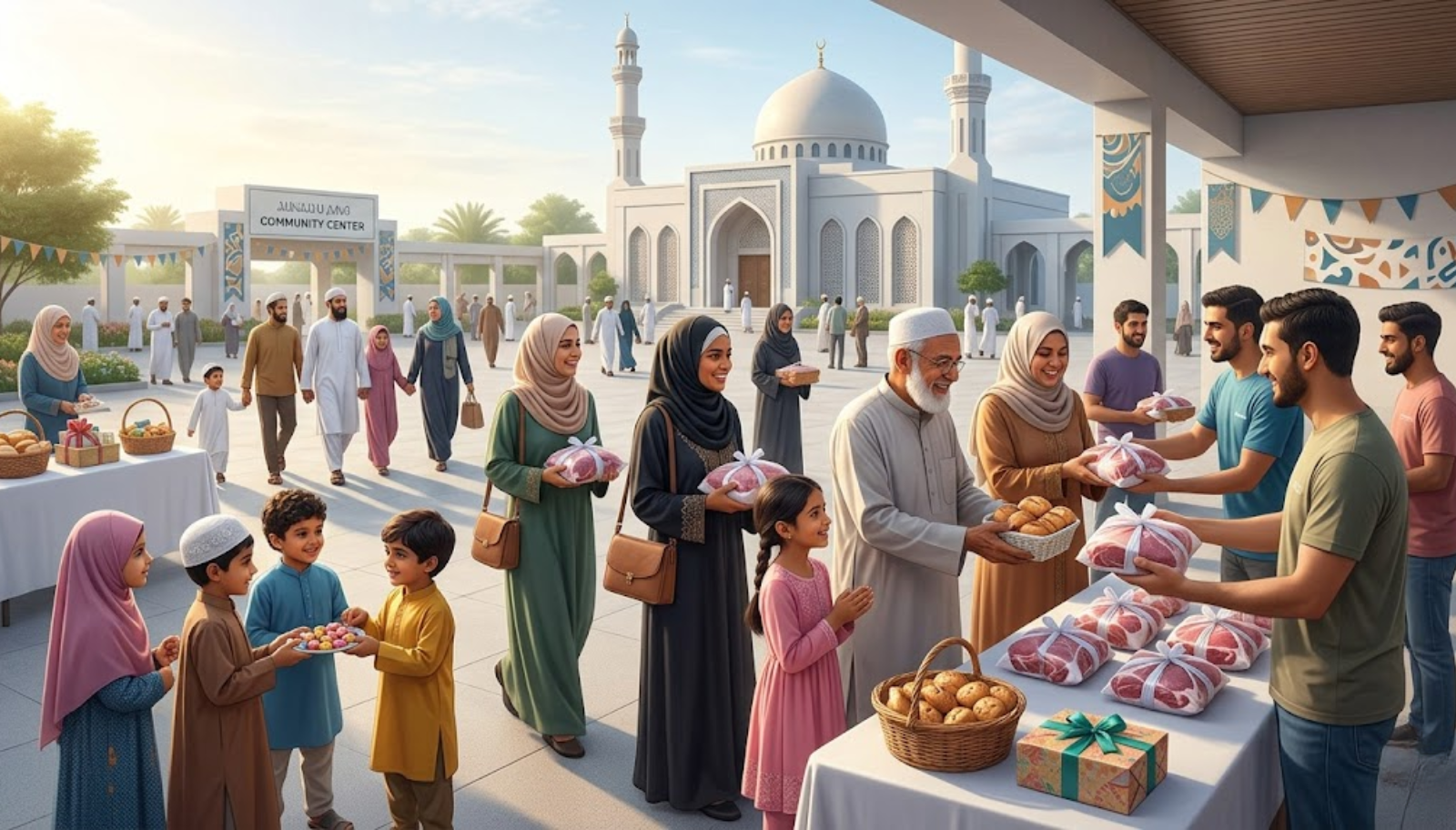
The main event of the day is performing the Eid prayer and then sacrificing a healthy, sound animal according to one’s financial means. Sincerity of intention is crucial here, as a sacrifice made from vanity or social status holds no spiritual value. Once the animal is slaughtered, distributing the meat becomes a significant responsibility. According to Sharia, it is best to divide the meat into three equal parts, one for the household, one for relatives and friends, and one for the poor and needy in the community.
In our current economic and social landscape, this collective practice carries immense weight. It bridges the gap between the rich and the poor, fostering an atmosphere of deep harmony. At the same time, swiftly clearing away sacrificial waste to keep our neighborhoods clean is an essential part of a Muslim’s civic and religious duty.
Ultimately, the true spirit of this festival lies beyond the external rituals, it requires us to sacrifice our inner ego, envy, and baser instincts. May this Eid al-Adha be a renewed pledge to uphold the consciousness of God and the service of humanity, illuminated by the true nobility of sacrifice.