
Nouras Frospek
Independent Media Analyst
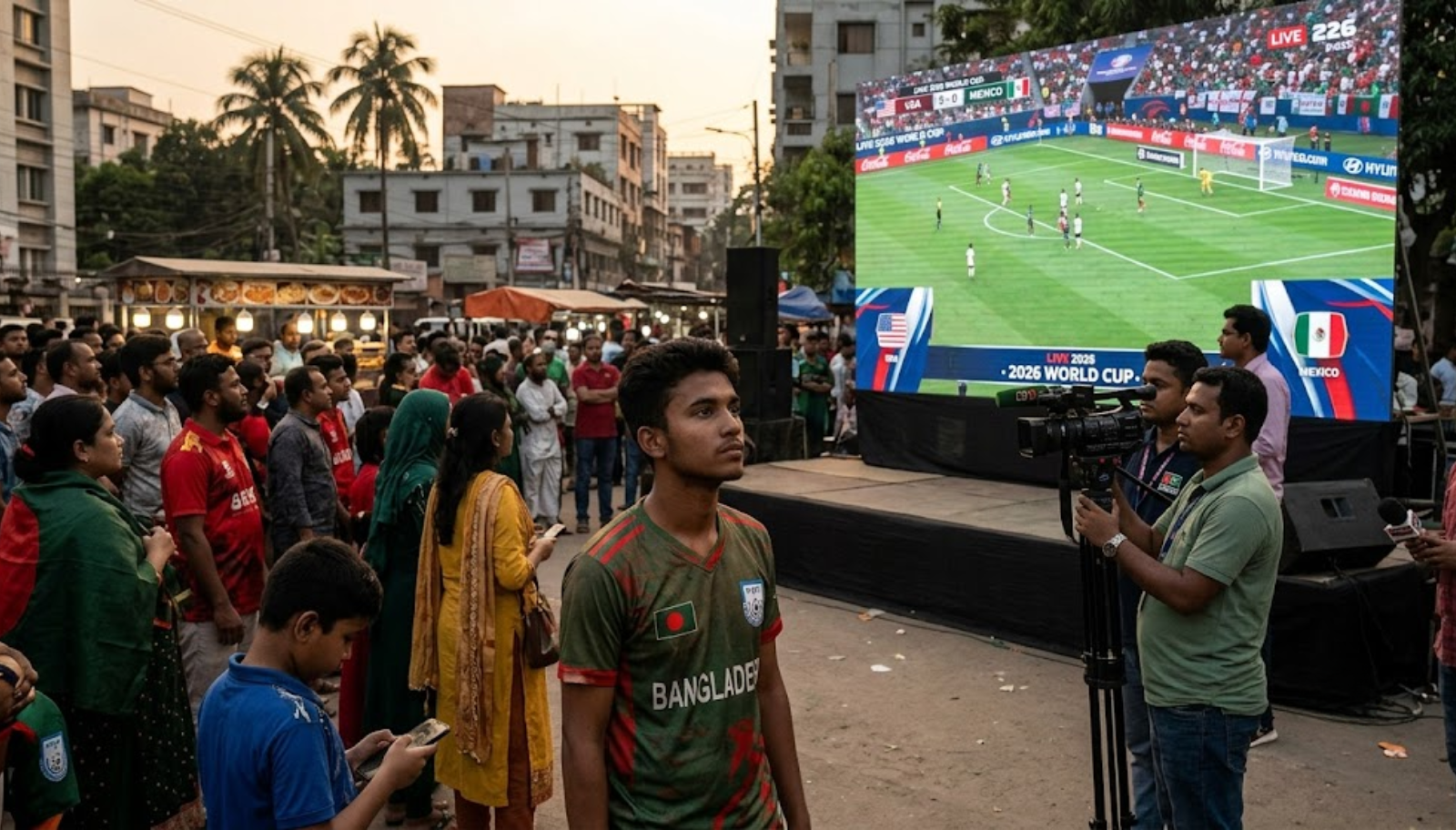
The FIFA World Cup is far more than the world’s biggest football tournament. It is one of the most valuable media properties ever created, generating billions of dollars through broadcasting rights, sponsorships, advertising, and digital content. In football-loving Bangladesh, the World Cup captivates millions of viewers every four years, transforming television screens, restaurants, shopping malls, and social media into centres of national excitement. Yet behind the celebrations lies a complex business challenge: securing television rights in a commercially sustainable manner.
The FIFA World Cup 2026, the largest edition in the tournament’s history with 48 participating nations and an expanded match schedule, has once again highlighted the opportunities and risks facing Bangladesh’s broadcasting industry. For television networks, acquiring broadcasting rights is no longer simply about prestige; it is a high-stakes commercial investment that requires careful planning, strategic partnerships, and innovative revenue generation.
Sports broadcasting rights have become increasingly expensive over the past two decades. International sports governing bodies have come to recognize the significant commercial value of live sporting events and the auctioning of media rights across different regions. As global competition among broadcasters and streaming platforms intensifies, licensing fees continue to rise. This creates a difficult business equation for broadcasters in developing markets such as Bangladesh. While audience demand is exceptionally high, advertising revenue alone may not always justify the escalating acquisition costs.
Bangladesh presents a unique paradox. Despite its relatively minor role in the global football arena, the country boasts a profound enthusiasm for the sport, making it a notable market in South Asia. The World Cup consistently draws massive television audiences, with millions of viewers supporting countries such as Argentina, Brazil, Germany, England, France, and Portugal. This enthusiasm generates exceptional advertising opportunities for consumer brands, telecommunications companies, financial institutions, beverage manufacturers, and electronics retailers.
However, monetising this audience remains challenging. Advertising rates increase during major tournaments, but broadcasters must recover substantial licensing fees while also covering production costs, studio programming, technical operations, satellite distribution, and promotional campaigns. If audience measurement systems are weak or advertising markets soften, broadcasters face significant financial risks.
The emergence of digital streaming has further transformed the business landscape. Younger audiences increasingly consume sports content through smartphones, tablets, and connected televisions rather than traditional broadcasting. Global streaming platforms have demonstrated that consumers are willing to pay for premium sports content delivered with superior picture quality, multilingual commentary, personalised viewing experiences, and interactive features.
Bangladesh’s television industry must therefore rethink its traditional business model. Exclusive dependence on free-to-air advertising is becoming increasingly untenable. Instead, broadcasters should develop integrated distribution strategies that combine terrestrial television, digital streaming, mobile applications, subscription services, and social media engagement. Multi-platform broadcasting has the potential to expand audience reach and generate additional revenue through digital advertising and premium subscriptions.
Another important issue is the fragmented nature of sports rights acquisition in Bangladesh. Individual broadcasters often negotiate independently, limiting their bargaining power in international markets. Strategic partnerships among broadcasters, telecommunications operators, internet service providers, and digital platforms could strengthen Bangladesh’s negotiating position while reducing financial risks. Shared investment models have already been adopted successfully in several international markets for expensive sporting events.
Government policy also has an important role to play. While commercial broadcasters operate as private businesses, events of exceptional national interest such as the FIFA World Cup often have significant public value. Policymakers should establish clear regulations regarding access to nationally significant sporting events while ensuring that broadcasters retain sufficient commercial incentives to invest in premium content. Transparent regulatory frameworks encourage market confidence and attract long-term investment in sports broadcasting.
Equally important is the fight against digital piracy. Illegal streaming websites and unauthorised broadcasts deprive legitimate rights holders of advertising and subscription revenue. Piracy not only undermines broadcasters’ financial viability but also discourages future investment in premium sports content. Stronger copyright enforcement, public awareness campaigns, and improved digital monitoring systems are essential to protect the value of broadcasting rights.
The World Cup also demonstrates the broader economic impact of sports broadcasting. Major tournaments have been shown to have a positive impact on advertising expenditure, television sales, internet usage, and commercial activity across multiple sectors. They also stimulate growth in the hospitality industry. During international tournaments, restaurants, sports cafés, shopping centers, and retailers often experience higher customer traffic. These indirect economic benefits justify viewing sports broadcasting not merely as an entertainment business but as part of the wider digital economy.
Looking ahead, Bangladesh should prepare a long-term national strategy for acquiring global sports rights. Rather than negotiating separately for each tournament, broadcasters and investors should develop multi-year commercial plans covering the FIFA World Cup, continental football championships, international cricket tournaments, the Olympic Games, and other premium sporting events. Such planning would improve financial forecasting and create stronger relationships with international rights holders.
Investment in broadcasting technology is equally critical. High-definition production, ultra-high-definition transmission, cloud-based broadcasting, multilingual commentary, artificial intelligence-driven highlights, and personalised digital services are rapidly becoming industry standards. Bangladeshi broadcasters must continue modernising their technical capabilities to remain competitive in an increasingly digital marketplace.
The FIFA World Cup 2026 offers an important lesson for Bangladesh. Passion alone cannot sustain the business of sports broadcasting. Success requires commercial discipline, technological innovation, strategic partnerships, effective regulation, and strong protection of intellectual property. If these elements are combined effectively, Bangladesh can transform global sports broadcasting from a costly seasonal investment into a profitable and sustainable media business.
As global demand for live sports continues to grow, the winners will not simply be those who secure broadcasting rights first, but those who build innovative business models capable of delivering value to viewers, advertisers, investors, and the wider economy. Bangladesh has the audience, the enthusiasm, and the market potential. The next step is developing a broadcasting strategy that matches that ambition.