
Dr Jamil Shahed
Brunel University
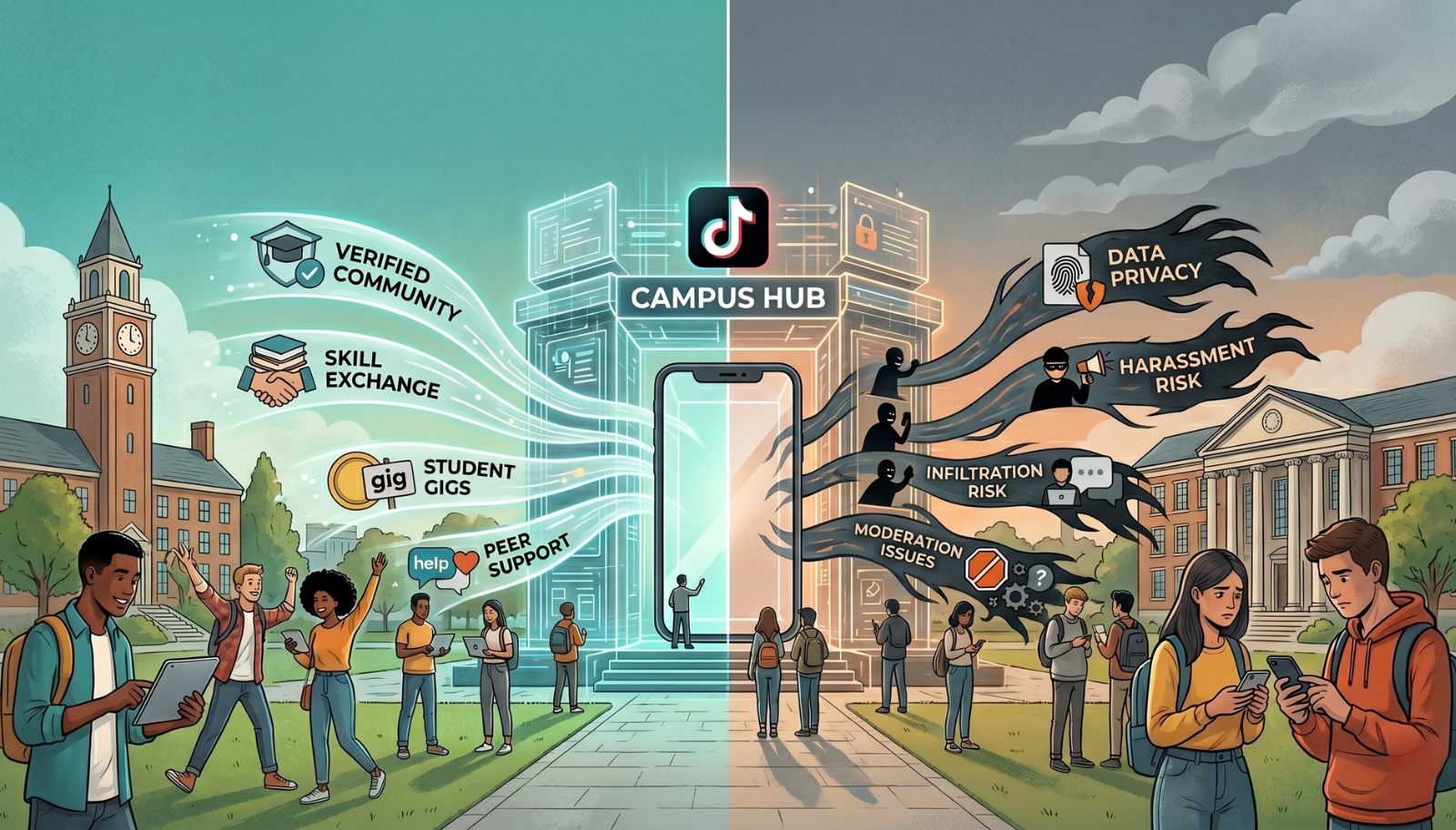
TikTok, one of the world’s most influential social media platforms, has recently announced the launch of a new feature for students, “Campus Hub”. Open to verified students from over 6,000 universities worldwide, the feature comprises institutional group chats and a personalised, university centric content feed. By offering group chat facilities for up to 300 members and a dedicated feed for content from their own institution, TikTok is essentially proposing a new framework for forming digital communities within academia.
This initiative has raised a significant question in academic and tech circles. Is it a genuinely helpful educational technology tool for students, or a new dimension of the old dangers lurking in the latest evolution of an entertainment focused platform?
Positive potential: Connection, Collaboration and Community
The most significant advantage of the Campus Hub is that it creates a structured and verifiable digital space, where only students registered with the same institution can participate. This institutional boundary significantly reduces the risk of intrusion by strangers or unwanted individuals, ensuring a familiar and relatively safe environment.
First-year students will be able to connect with their peers before they even set foot on campus, which will accelerate their psychological adjustment process and help to alleviate the typical anxiety and loneliness of the first semester.
From an academic perspective, the value of this feature is also undeniable. The opportunity to have all this class note sharing, exam preparation discussions, research paper exchanges, and real-time updates on campus events on a familiar platform can contribute to fostering a collaborative learning environment for students.
The psychological importance of collaborative learning is well-established in educational research. It is proven to aid students in achieving a deeper understanding of subject matter, enhancing problem-solving skills, and improving academic continuity. The opportunity to remain connected with the campus community, even during holidays, will also play a role in maintaining students’ sense of institutional identity and psychological belonging.
Reasons for Concern: Algorithms, Data Security and Psychosocial Risks
However, alongside the potential of the Campus Hub, its structural risks require more serious analysis. TikTok’s core algorithm is designed as an addictive entertainment engine. It continuously provides personalised content to retain the user’s attention for as long as possible.
The Campus Hub will exist within this same algorithmic environment. Consequently, even if a student enters the platform to view class notes, the algorithm will not be any less inclined to pull them towards entertaining content.This blurring of the line exponentially increases the risk of student distraction, which can directly harm academic performance.
The question of data privacy demands the utmost attention in this analysis. Through the university verification process, students’ institutional identities, educational information, and behavioural data will be integrated into TikTok’s central database. Considering the international regulatory concerns surrounding data collection and usage by TikTok’s parent company, ByteDance, the protection of students’ sensitive academic information becomes a serious policy question. Furthermore, social risks such as rumour-mongering, cyberbullying, group conflicts, and power imbalances in a 300-person group chat cannot be overlooked.
Observations and Recommendations
Campus Hub is an ambitious educational technology experiment. However, long-term research is required to evaluate its effectiveness impartially. University administrations and education policymakers should formulate clear guidelines on the use of this platform and foster students’ capacity for mindful use through digital literacy education. Technology offers opportunities, but the responsibility to transform that opportunity into a genuine service for education lies with students, institutions, and policymakers alike.

