
Mohammad Aminul Islam
Vice President (A Private Commercial Bank)
285+
Bangladeshi civilians killed by BSF between 2014 and 2026
34
Deaths in 2025 alone, including 24 by gunfire and 10 by torture
2,479
People pushed into Bangladesh between May 2025 and January 2026
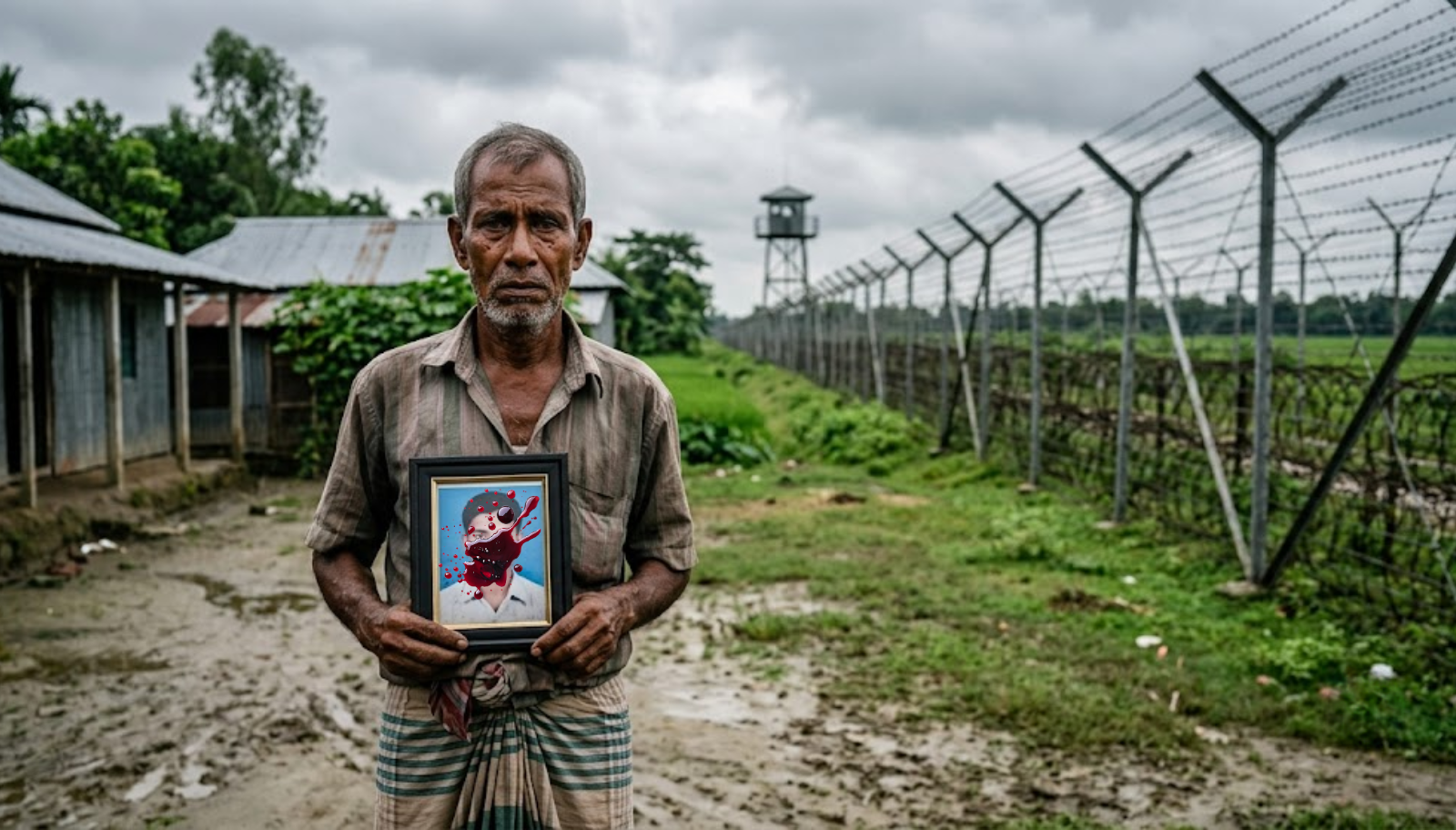
On May 14, 2026, twenty-five-year-old Khademul Haque was shot dead by India’s Border Security Force (BSF) at the Amjhol border in Lalmonirhat. Days earlier, two more Bangladeshis were killed and several others were injured in BSF firing at the Pathariadwar border in Brahmanbaria. Along the Bangladesh–India frontier, the sound of gunfire has become a grim and recurring reality.
These are not isolated incidents. They are repeated episodes in a long-running crisis that has claimed hundreds of lives over the past two decades and remains unresolved. According to the rights organisation Ain o Salish Kendra, 34 Bangladeshis were killed by the BSF in 2025 alone, including 24 deaths from gunfire and 10 from physical torture. The yearly toll has remained consistently alarming: 30 deaths in 2024, 31 in 2023, 23 in 2022, and 18 in 2021.
Between 2014 and early 2026, at least 285 Bangladeshi civilians were killed in BSF shootings, averaging nearly 24 deaths every year. At least 27 Bangladeshi minors were killed between 2009 and 2025, including six children in 2024 alone. The crisis extends beyond killings. A separate humanitarian concern has emerged through forced push-ins. Between May 2025 and January 2026, the Border Guard Bangladesh (BGB) recorded 2,479 people being pushed into Bangladesh across 32 districts, including at least 120 individuals identified as Indian nationals. The most troubling reality remains unchanged: Not a single BSF personnel member has ever been prosecuted for killing a Bangladeshi civilian along this border.
The BGB Response
In response to growing tensions, Border Guard Bangladesh has significantly increased operational preparedness. Following the West Bengal elections, the BGB was placed on its highest alert level along the entire frontier.
In the Benapole sector, strict security measures have been introduced across approximately 102 kilometres of border under the jurisdiction of Jessore 49 BGB and Khulna 21 BGB. Additional personnel have been deployed in Raghunathpur, Shikarpur, Putkhali, and Daulatpur. Similar high-alert measures remain active in Chapainawabganj, where commanders are maintaining increased vigilance against illegal push-ins.
In the northern border regions, the BGB has strengthened security across approximately 558 kilometres covering Lalmonirhat and Kurigram, two districts that have experienced a disproportionate number of killings and push-in incidents. Radar systems, thermal imaging cameras, high-speed boats, and drone surveillance have been deployed to improve monitoring across remote river areas, forests, and the Sundarbans. Authorities have also warned civilians against unnecessary movement near border areas, especially after dark.
These measures are necessary. However, they largely address the visible symptoms of the crisis, particularly illegal crossings, rather than the deeper issue: the use of lethal force against those who cross.
The Failure of Accountability
The core reason behind the continuation of these killings is the complete absence of accountability. No BSF personnel member has ever been prosecuted for killing a Bangladeshi civilian along this border.
The only case that reached trial was the killing of Felani Khatun, whose body was left hanging on the barbed wire fence for hours. The case ended in acquittal. Without accountability, diplomatic protests, flag meetings, and director-general-level discussions have failed to change realities on the ground.
The BSF does not alter its conduct based on changes in political leadership in Dhaka. Its actions are shaped by whether there are consequences, and so far, there have been none.
The recent 57th BGB–BSF Director-General conference in June 2026 produced familiar commitments about “strengthening border security mechanisms” and “enhancing joint patrolling”, but no binding agreement on accountability or clear rules governing the use of force.
India’s resistance, documented through official channels, has itself become a diplomatic instrument.
What Bangladesh Must Do Now
Internationalise the crisis with unprecedented urgency
Routine protest notes sent to the Indian High Commission have repeatedly disappeared without meaningful resolution. Bangladesh should submit detailed documented cases to the UN Special Rapporteur on extrajudicial killings, formally engage with the Human Rights Council’s Universal Periodic Review process, and explore an International Criminal Court referral.
Even if these mechanisms do not produce immediate legal outcomes, they would increase the diplomatic and political cost of silence in ways that bilateral communications have failed to achieve.
Institutionalise accountability in binding bilateral agreements
Bangladesh should formally propose a joint independent commission to investigate every fatal shooting along the border. Such a commission should operate with impartial witness protection mechanisms and a mandate to publish findings within defined timelines. The proposal should be placed before every director-general-level meeting and recorded in official proceedings.
Demand culturally connected BSF personnel
BSF personnel deployed along the Bangladesh border are largely recruited from states such as Punjab, Haryana, Uttar Pradesh, and Rajasthan. Many have little linguistic or cultural connection with the communities they are assigned to monitor.
That distance can contribute to dehumanisation that makes excessive force more likely. Bangladesh should formally demand that border units include significant numbers of Bangla-speaking personnel from West Bengal and Assam.
Formalise legal cross-border trade as a security strategy
Border haats and regulated trade mechanisms can directly reduce informal economic activities that place civilians at risk. The cattle export ban from India remains the single largest category of alleged offence used by the BSF to justify lethal force. Legalising and properly regulating such trade could remove one of the most common triggers behind border shootings.
Confront domestic complicity
Smuggling networks operate on both sides of the border, often involving local law enforcement and political actors. Frequently, those at the lowest level become the targets of violence while the larger networks remain untouched. The economic marginalisation of border districts such as Lalmonirhat, Kurigram, Chuadanga, and Chapainawabganj must be addressed as a structural risk factor. Poverty and desperation push civilians towards the zero line and into the path of bullets.
The Imperative
The BGB’s increased operational readiness is an important immediate response, but it cannot replace long-term legal, diplomatic, and strategic reforms. Until the border is governed by consequences rather than silence, until accountability replaces impunity, and until the economic conditions that force civilians towards danger are transformed, deaths will continue to arrive as routine events.
The government has a limited opportunity before hardened border infrastructure and hardened political narratives become permanent features of the frontier. The choice is not between action and inaction. The choice is between shaping the future of the border now or accepting a future where it continues to take lives without accountability or record.