
Samira Tasnim
Teacher
The dumping of municipal and medical waste across mountain streams and agricultural land in Lemuzhiri, Bandarban, is more than an environmental disaster. It is deeply connected to local governance, citizens’ rights, public health, livelihoods, and social harmony in the Chittagong Hill Tracts. The lives and livelihoods, culture, and religious practices of indigenous hill communities are closely tied to nature and land. Any such assault on the environment therefore threatens their daily lives while potentially deepening the existing crisis of trust between state institutions and local communities. This article examines the Lemuzhiri incident through the broader lens of environmental justice, citizens’ rights, and the prospects for long term regional harmony in the Chittagong Hill Tracts.
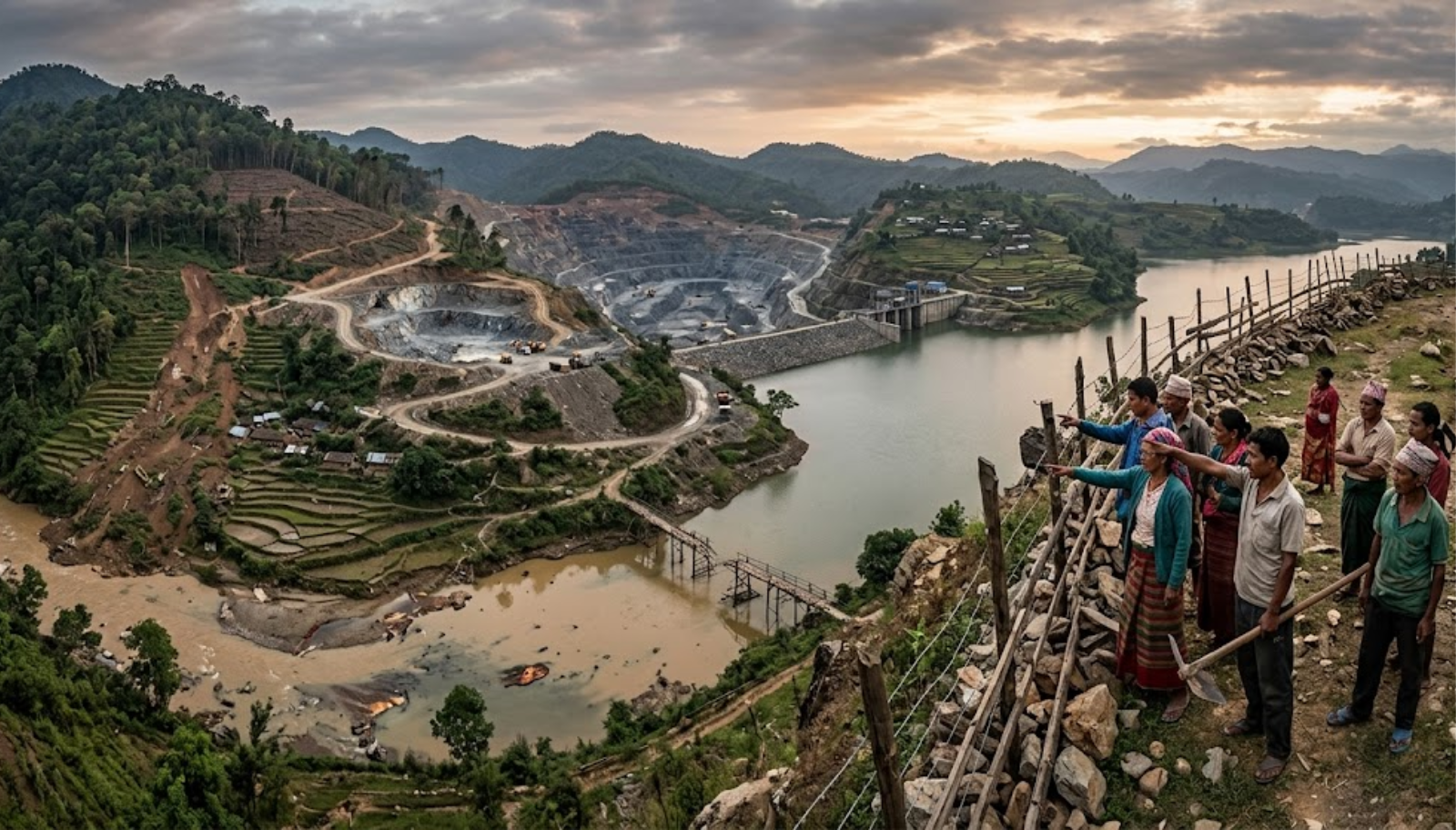
During the floods from 6 to 13 July, waste from a temporary municipal dumping site beside the Bandarban Rowangchhari road was carried into a mountain stream. The waste was subsequently carried downstream and spread across agricultural land in the Aga Ghona Para area of Lemuzhiri. Nearly 10 acres of farmland have been affected, while farmers have reported finding syringes, injection needles, broken glass, and plastic waste in the soil. Residents have also experienced skin irritation and other health problems after using water from the stream. At the same time, religious activities at a nearby Buddhist monastery have been disrupted by foul odours and pollution.
The incident demonstrates how poor waste management can quickly turn an environmental problem into a public health, economic, and social crisis. Most concerning is the apparent tendency among the relevant authorities to avoid responsibility despite the problem having persisted for a considerable period.
Failure of Waste Management and Environmental Disaster
The root cause of the Lemuzhiri crisis is not simply excessive rainfall or flooding. Unsafe waste management is a major factor behind the problem. The incident has made clear how risky temporary waste disposal on mountain slopes can become during the monsoon season. Medical waste mixed with other waste has contaminated water sources and agricultural land. The damage to nearly 10 acres of farmland also represents a significant blow to the local economy. According to farmers’ estimates, annual income losses could reach between Tk 500,000 and Tk 600,000. If the land cannot be restored, the economic consequences could persist for years.
From Environmental Crisis to Social Distrust
The Chittagong Hill Tracts have a long history of complex disputes and concerns surrounding land, resources, and administrative rights. Although the 1997 Chittagong Hill Tracts Peace Accord established a framework for peace and reconciliation, its full implementation remains an important subject of public and political debate. Against this backdrop, the prolonged accumulation of waste near the settlements, agricultural land, or religious institutions of an indigenous community cannot be viewed simply as a failure of local administration. It also raises questions about public trust in state institutions.
When a Buddhist monastery is reportedly surrounded by a polluted environment for years, it is understandable that local communities may develop a sense of neglect. The absence of environmental justice can therefore place additional pressure on social harmony. In a region where relations between the state and hill communities have historically been sensitive, perceptions of discrimination or neglect in the delivery of public services can contribute to deeper social divisions.
Citizens’ Rights and Public Health
Access to clean water, a safe environment, healthy living conditions, and secure livelihoods are not luxuries. They are fundamental components of public welfare. The contamination of water sources in Lemuzhiri is directly affecting people’s daily lives. The presence of medical waste makes the potential risks of infection and exposure to hazardous materials even more serious.
Finding needles, syringes, and broken glass in agricultural fields is not only an agricultural concern. It also poses a direct physical risk to farmers and agricultural workers. Similarly, disruption to religious institutions and the daily lives of local residents because of foul odours raises questions about human dignity and the freedom to practise religion in a safe and healthy environment.
Accountability and Administrative Coordination
Another critical aspect of the crisis is the question of administrative responsibility. No authority should be able to avoid responsibility simply by arguing that an affected area falls outside the jurisdiction of a municipality, particularly when waste generated by one institution is causing harm to people and the environment in another area.
Environmental disasters do not respect administrative boundaries. A coordinated response from the municipality, district administration, Department of Environment, and health authorities is therefore essential. Rather than focusing primarily on who bears responsibility, the immediate priority should be ensuring the safety and wellbeing of the affected communities.
What Needs to Be Done
First, all contaminated waste, including medical waste, must be removed safely using scientifically appropriate methods. Second, the temporary dumping site should be closed and an environmentally sound waste management system established. Third, the losses suffered by affected farmers should be assessed, followed by compensation and measures to restore damaged agricultural land.
Fourth, scientific testing of water and soil is necessary to determine the extent and level of contamination. Fifth, health screenings and medical assistance must be provided to affected communities. Sixth, authorities must establish an integrated emergency response mechanism that prevents administrative agencies from shifting responsibility during future incidents.
Conclusion
The Lemuzhiri incident carries a much larger warning than the pollution of a single mountain stream. It demonstrates that environmental protection, citizens’ rights, public health, livelihoods, and regional harmony are deeply interconnected. In a sensitive region such as the Chittagong Hill Tracts, environmental neglect can further deepen social distrust.
The Lemuzhiri crisis should therefore not be treated as an isolated local incident. It should be viewed as a test of environmental justice and responsible local governance. Alongside the immediate removal of waste, compensation, and healthcare support, effective waste management and accountable administration must be established to prevent similar incidents in the future.
Protecting the water and soil of the hills is not merely a matter of environmental conservation. It is also a prerequisite for protecting people’s rights, livelihoods, and the long-term peace and harmony of the Chittagong Hill Tracts.