
Farah Zahir
Editor, Oniket Research Group
Food is among the most potent soft power tools a nation can wield. Chinese restaurants operate in virtually every city on earth, Indian curry is a comfort staple from London to Melbourne, and Turkish doner culture has rapidly conquered European street food markets. Still, Bangladeshi cuisine, despite its extraordinary depth, regional diversity, and centuries of culinary tradition, remains almost entirely invisible on the world stage.
This invisibility is not an accident of taste. It is the product of structural failures in branding, diaspora strategy, institutional support, and national cultural confidence. To transform Bangladeshi food into a globally recognized culinary force, we must critically examine the gaps in our past approach and design a modern blueprint for international success.
The Identity Dilemma: Stepping Out of the Indian Shadow
Perhaps the most damaging obstacle to the global recognition of Bangladeshi cuisine is the problem of identity absorption. The Bangladeshi diaspora, particularly from the Sylhet region, played a foundational role in building the British curry house industry from the 1960s onward. At its peak, Bangladeshi-owned establishments constituted the overwhelming majority of South Asian restaurants in the United Kingdom. They even popularised staples like chicken tikka masala. However, almost every dish was historically marketed under the “Indian” label.
Why Chefs Adopted a Foreign Banner
The decision to use the “Indian” brand was initially driven by straightforward commercial survival. When early Bangladeshi immigrants arrived, India already possessed established international brand recognition, while Bangladesh did not. For resource-strapped entrepreneurs, educating a foreign public on a new culinary geography felt like an unaffordable economic risk. Over decades, this has created a psychological lock-in effect. Restaurant owners feared that changing their signage to “Bangladeshi” would alienate customers who associated the word “curry” exclusively with India.
The long-term consequence of this risk aversion was catastrophic for the nation’s cultural capital. Generations of global consumers have enjoyed Bangladeshi-cooked food without ever realizing its true origin. This represents a profound structural failure to convert diaspora labor into national branding. While countries like Turkey deliberately tie their food culture to tourism and state-supported media exports, Bangladesh has historically allowed its culinary genius to be commoditized under a foreign banner.
The Codification Crisis: Finding a Gateway Dish
A second vulnerability is the absence of codified, internationally legible culinary vocabulary. Most global consumers cannot name a single uniquely Bangladeshi dish because the country has not invested in the kind of culinary diplomacy that turns specific items into global ambassadors. Japan used sushi, Italy optimized pizza, and Mexico championed the taco. These foods are standardized, easily recognizable, and serve as accessible entry points into a broader cultural universe.
To build a similar path, Bangladesh can structure its culinary diplomacy around a strategic three-tier approach:
Level 1: Accessible Gateway Dishes (e.g., Bhorta and Fuchka): These vibrant, street-food-style items offer punchy, unforgettable flavors that serve as low-barrier, highly engaging entry points for curious international diners.
Level 2: Comfort Food and Mainstays (e.g., Kacchi Biryani): Hearty, aromatic rice and meat dishes that display technical mastery and possess the universal appeal necessary to build long-term consumer loyalty.
Level 3: Fine Dining and Heritage (e.g., Traditional Ilish): Premium, seasonal delicacies steeped in history and ritual, perfect for anchoring high-end, upscale gastronomic narratives.
Bangladesh possesses exceptional culinary assets within these categories. The hilsa (Ilish) is a revered fish deeply embedded in Bengali heritage, poetry, and seasonal rituals. The comfort repertoire features unique mustard-based fish preparations, slow-cooked beef rezala, and rich bhuna dal. Finally, the botanical genius of the delta shines through an unmatched variety of mashed dishes (bhortas) and rice-centered preparations. The main problem is that these items have never been packaged or standardized for an international audience. The flavor of vocabulary remains internal, celebrated at home but unmapped for the global palate.
Overcoming the Scalability and Fast-Food Gap
The modern global food economy rewards consistency, speed, and ease of mass production. Bangladeshi cuisine faces unique hurdles here because its most defining dishes are labor-intensive and highly dependent on exact, scratch-made spice balances.
Turkish and Chinese cuisines translate seamlessly into quick-service formats through skewered meats, stir-fries, and noodles. Indian food found its scalable fast-food footing via robust items like samosas and biryanis. Bangladesh has failed to position its own street food heroes, such as chotpoti and fuchka, into global quick-service markets. Without institutional innovation to adapt these complex recipes for efficient, modern kitchens, the cuisine remains locked out of the lucrative fast-casual sector.
A Strategic Framework for Global Recognition
To transition from non-participation to international prominence, Bangladesh must treat its food culture as a core component of its economic and soft power strategy.
1. Establish a National Culinary Heritage Board
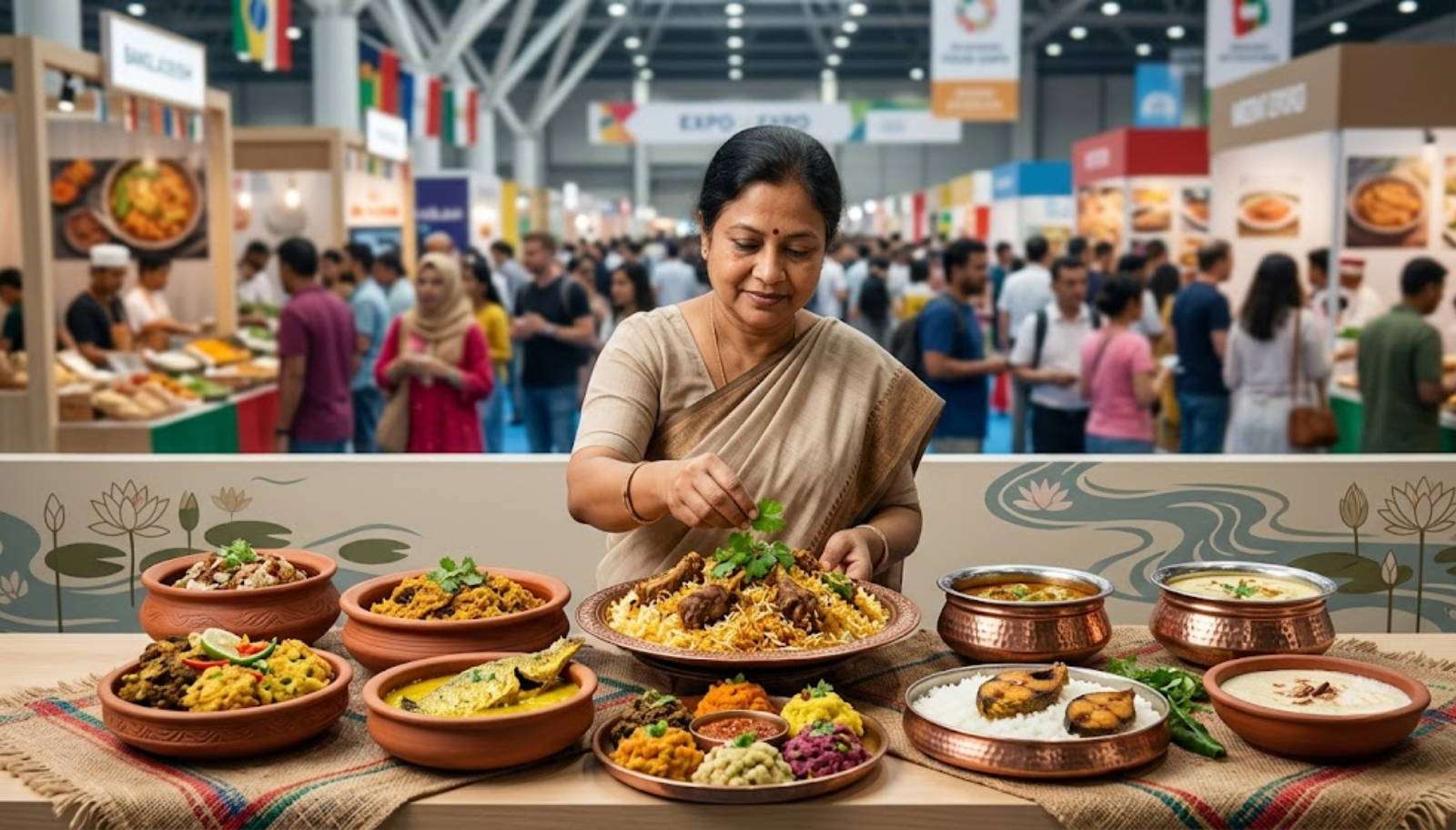
The government should launch a dedicated institutional body to coordinate international food promotion. This board must curate a portfolio of flagship dishes, such as kacchi biryani, beef rezala, and authentic sweets like mishti doi. These items should be systematically showcased through targeted global food festivals, high-profile diplomatic dinners, and international culinary trade shows.
2. Launch the “Taste of Bangladesh” Certification
Following the successful blueprint of Thailand’s Thai SELECT program, Bangladesh should offer official government certification, marketing grants, and supply-chain support to diaspora restaurants that explicitly rebrand themselves as Bangladeshi. Incentivizing owners to drop the generic “Indian” label will help the country reclaim its culinary narrative.
3. Mobilize Diaspora 2.0 and Culinary Education
The newer generations of the Bangladeshi diaspora are uniquely positioned to act as brand ambassadors. Unlike their predecessors, they possess the marketing savvy and capital to launch high-end, contemporary dining concepts. To support them, Bangladesh must upgrade its domestic hospitality academies. Investing in world-class training centers and international chef exchange programs will cultivate a new generation of culinary professionals capable of introducing Bangladeshi flavors to global fine-dining circuits.
4. Integrate Food into Media and Tourism
The worldwide popularity of Turkish cuisine is closely tied to its presence in top-tier television dramas. Bangladesh’s expanding film and streaming industries should be incentivized to highlight local food culture prominently. Creating international visual media showcases our culinary arts builds curiosity and an appetite for our restaurants.
The Bottom Line: The world’s culinary landscape is highly competitive, but the table has already been set with Bangladesh’s rich flavors. By replacing invisible labor with strategic, assertive branding, Bangladesh can finally invite global diners to experience its authentic culinary identity.