
Dr. Nuruzzaman Khan
Adelaide University, Bangladesh
This article examines India’s recommendation of antidumping duties on Bangladeshi PET film, following recent duties on jute products. It assesses the impact on Bangladesh’s economy and on bilateral trade with India, and it outlines the policy reforms Bangladesh could initiate and the dialogues it can encourage India to join.
A Pattern, Not an Isolated Case
India’s trade body has recommended antidumping duties up to $218 per tonne on Bangladeshi PET film for five years, coming just days after duties up to $445 per tonne on jute and a possible $140.04 countervailing duty on jute goods. These take effect only once India’s finance ministry notifies them, leaving room for diplomacy. Five Bangladeshi exports now face measures from one neighbor, warranting serious strategic attention.
Economic Impact on Bangladesh
PET film is a young export. Shipments rose from 12 tonnes in fiscal 2021 to 2022 to 2,763 tonnes in fiscal 2024 to 2025, roughly 3.4 percent of India’s imports. The immediate revenue loss is modest, but the signal matters more than the volume. Investors in packaging and plastics who planned regional expansion now see a market that can close quickly, and that uncertainty raises the cost of capital for new export ventures.
Jute is a different story. It is a legacy sector supporting farmers, mill workers and traders, and stacked duties squeeze margins in one of the few industries with deep domestic value addition. Bangladesh also risks losing its diversification pathway. Policymakers want exports beyond garments, yet every emerging product that meets a trade remedy discourages other firms from trying. As Bangladesh prepares for life after LDC graduation, with fewer preferences to lean on, predictable access to a large neighboring market becomes even more valuable.
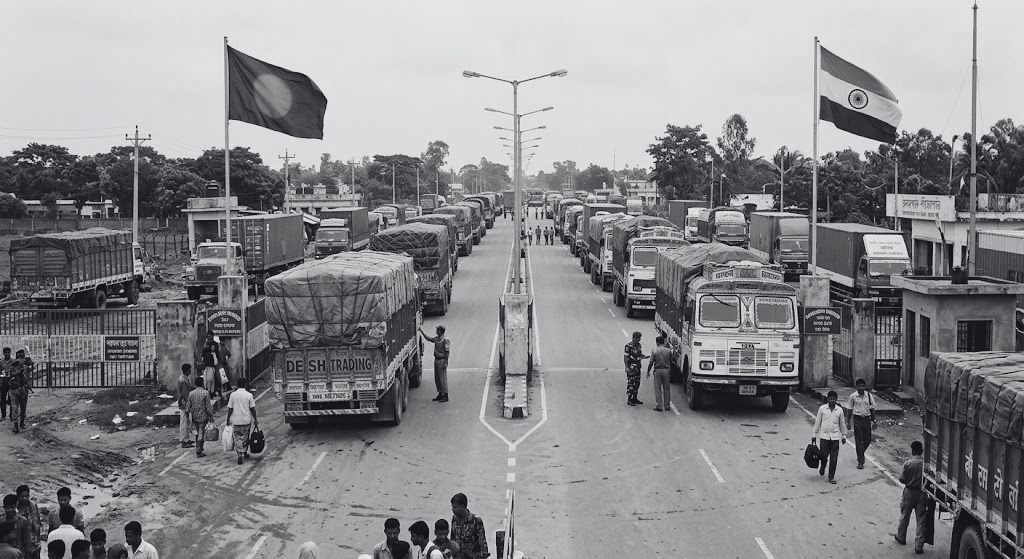
India is a major destination for Bangladeshi goods and an even larger supplier to Bangladesh, leaving a wide deficit on the Bangladeshi side. Repeated defensive measures from India deepen the perception of imbalance and could push Bangladeshi buyers to reconsider Indian inputs, which would hurt Indian exporters too. Trade remedies are legitimate tools under WTO rules, but when they multiply against a smaller partner, they erode the trust needed for deeper cooperation in energy, connectivity and transit.
Policy Reforms Bangladesh Could Initiate
Bangladesh should build trade remedy capacity. In this probe only one Bangladeshi firm, AKIJ Biax Films, cooperated, and it received a rate of $58 per tonne against $218 for others. The lesson is plain: participation pays. The Commerce Ministry and the Bangladesh Trade and Tariff Commission should establish a rapid response unit that trains exporters in questionnaire responses, cost accounting and legal defense, and supports joint representation for smaller firms.
Bangladesh should improve cost and pricing transparency. The Indian authority found that the cooperating firm’s home market sales were below cost and declined to adjust for export incentives. Bangladesh should review its incentive schemes, align cash incentives and duty drawbacks with WTO subsidy disciplines, and encourage exporters to maintain audit ready cost records.
Exporters must move up the value chain. Firms competing mainly on low prices are the easiest targets for dumping claims. Support for quality certification, product differentiation, branding and research can reduce that exposure.
Bangladesh should diversify markets and inputs. Expanding sales of PET film and jute goods to the European Union, Japan and Southeast Asia lessens dependence on a single buyer. Bangladesh should also review its own use of trade remedies so that it negotiates from a consistent and credible position.
Dialogues Bangladesh Can Encourage India to Join
Bangladesh could push for a standing bilateral dialogue on trade remedies between the commerce ministries and investigating authorities of both countries, sharing data and clarifying methodology while cases are still open rather than raising objections after duties are already in place.
A Joint Working Group on nontariff barriers, building on the existing Joint Consultative Commission, would give both sides one forum to work through port restrictions, testing requirements, and the growing list of trade measures instead of handling each dispute separately.
Industry to industry talks between chambers and associations, particularly in jute and packaging, open the door to joint ventures, supply chain integration, and price arrangements that Indian producers may prefer over drawn out disputes. Bangladeshi firms feeding raw materials or semifinished goods into Indian value chains, rather than competing head on, makes for a more durable relationship than adversarial trade cases.
Reviving momentum on a comprehensive economic partnership agreement, with built in clauses for advance notification, consultation, and proportionality in trade remedy actions, gives both countries a rulebook to work from. Bangladesh can pursue this alongside parallel channels through BIMSTEC, SAARC, and the WTO, keeping the bilateral track as the main lever throughout.
Conclusion
The PET film recommendation is small in tonnage but large in meaning. Together with the jute measures, it shows that Bangladesh’s growing presence in Indian markets will be met with legal and commercial resistance. Retaliation would only damage a relationship in which Bangladesh has more to lose. A better response combines domestic reform, active participation in investigations and a structured dialogue that turns trade friction into negotiated solutions. If Bangladesh prepares its exporters and offers India partnership rather than rivalry, it can protect emerging industries and keep the bilateral trade relationship on a stable footing.