
Naima Onamika
Oniket Research Group
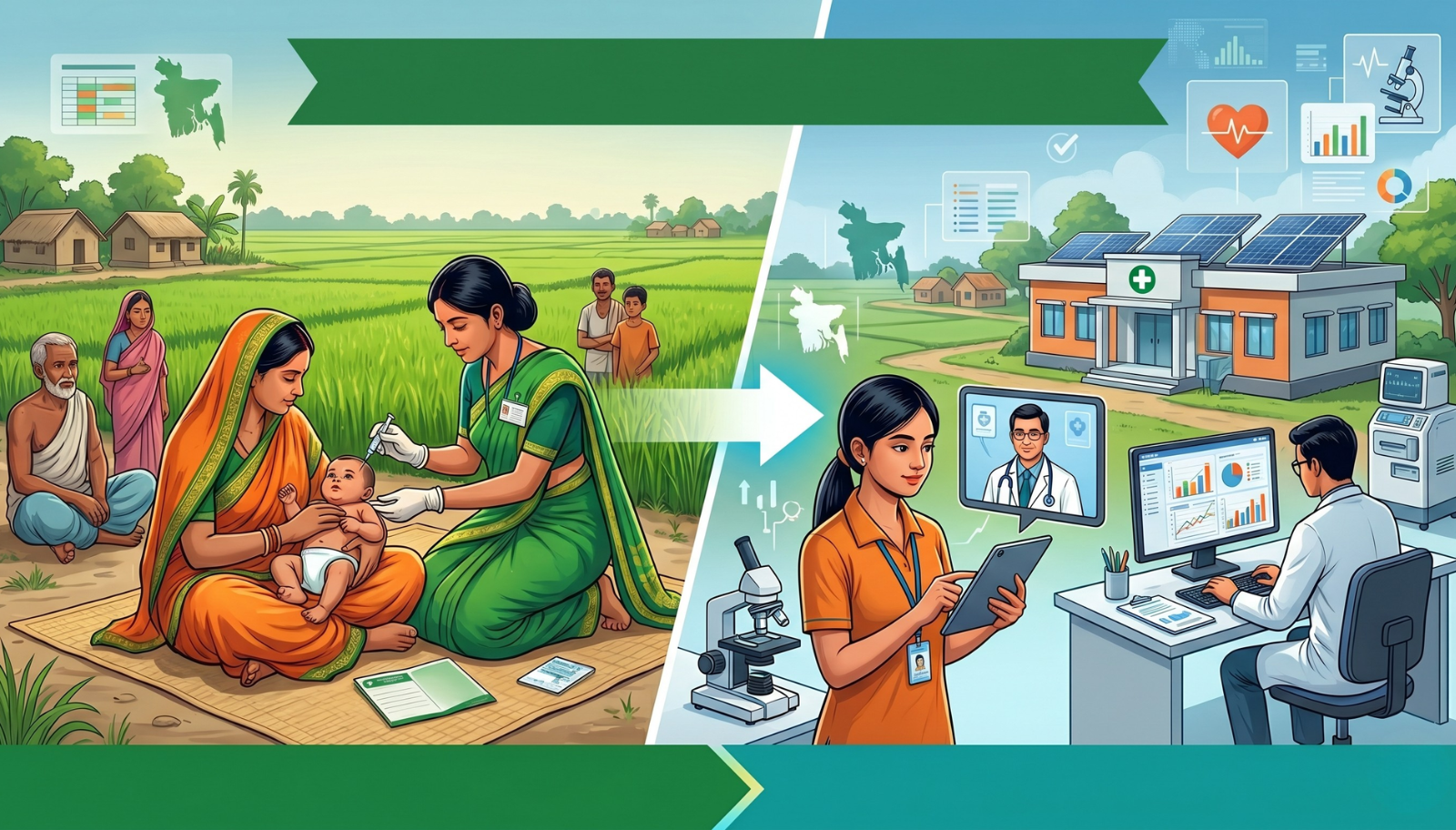
Over the past five decades, Bangladesh’s public health sector has set multiple success precedents on the international stage. Reducing child and maternal mortality rates, polio eradication.
The expansion of immunisation programmes and progress in controlling tuberculosis and malaria have presented the country as a successful example in the developing world. However, overshadowing these achievements is a structural weakness that could pose a serious threat to Bangladesh’s health system in the future.
Currently, Bangladesh’s Universal Health Coverage (UHC) Service Coverage Index is just 52, lagging many countries in South-East Asia. More worryingly, citizens must pay out-of-pocket for approximately 67 per cent of the country’s total health expenditure. As a result, many families are pushed into poverty each year trying to cope with medical costs. At the same time, government spending on the health sector is only 2.9 per cent of GDP, which is extremely low by global standards.
The impact of these financial constraints is directly affecting the quality of healthcare. The shortage of doctors and trained health workers in rural areas is a long-standing problem. Many union-level health centres are non-functional, forcing ordinary people to travel to districts or capital cities. This is causing an abnormal increase in patient pressure on tertiary hospitals.
On the other hand, Bangladesh’s health sector is now facing a new reality: the dual burden of infectious and non-communicable diseases. Where infectious diseases were once the primary concern, heart disease, stroke, cancer, diabetes, and chronic respiratory diseases are now rising rapidly. According to 2019 data, 14 of the country’s top 20 causes of death were non-communicable diseases. A changing population lifestyle, urbanisation, and dietary changes are exacerbating this crisis.
Compounding this is the health impact of climate change. The risk of cyclones, floods, heatwaves and waterborne diseases is increasing. In coastal and disaster-prone areas, health infrastructure is now more vulnerable than ever before. All in all, the on-the-ground reality is truly alarming.
Experts say that simply increasing the budget is not enough to tackle this situation; policy reforms are needed. Firstly, there is a growing call to recognise healthcare as a constitutional right. This would increase government accountability. Secondly, alongside increasing public investment in the health sector, it is necessary to introduce social health insurance to reduce citizens’ out-of-pocket expenses. Thirdly, it is urgent to establish an independent regulatory framework to curb corruption and administrative inefficiency in the health sector. Without transparency in recruitment, procurement, and service management, even increased funding will not yield the desired results.
At the same time, strengthening primary healthcare is now a matter of urgency. Modernising health centres at the union and upazila levels would ease the pressure on larger hospitals. Furthermore, telemedicine, digital health records and AI-based healthcare could create new possibilities for the future.
In conclusion, while the past successes of Bangladesh’s public health sector are undoubtedly commendable, the current reality shows that the foundation of these achievements is still not sufficiently strong. A combination of a limited budget, high out-of-pocket medical expenses, a shortage of healthcare workers, the spread of non-communicable diseases, and climate-related health risks places the sector at a complex juncture.
If effective policy reforms, accountable administration, and long-term investment in primary healthcare are not ensured now, the achievements gained will soon become meaningless. Health should be viewed not as an expense, but as a fundamental investment in human capital development. For a nation’s economic progress is only meaningful when its citizens are assured of being healthy, safe, and receiving quality healthcare.
keep reading… Health and Outdoor Sports in Adolescence
Alarming spread of measles: why is transmission not stopping despite ongoing vaccination

