
Naima Onamika
Commissioning Editor, The Oniket Bulletin
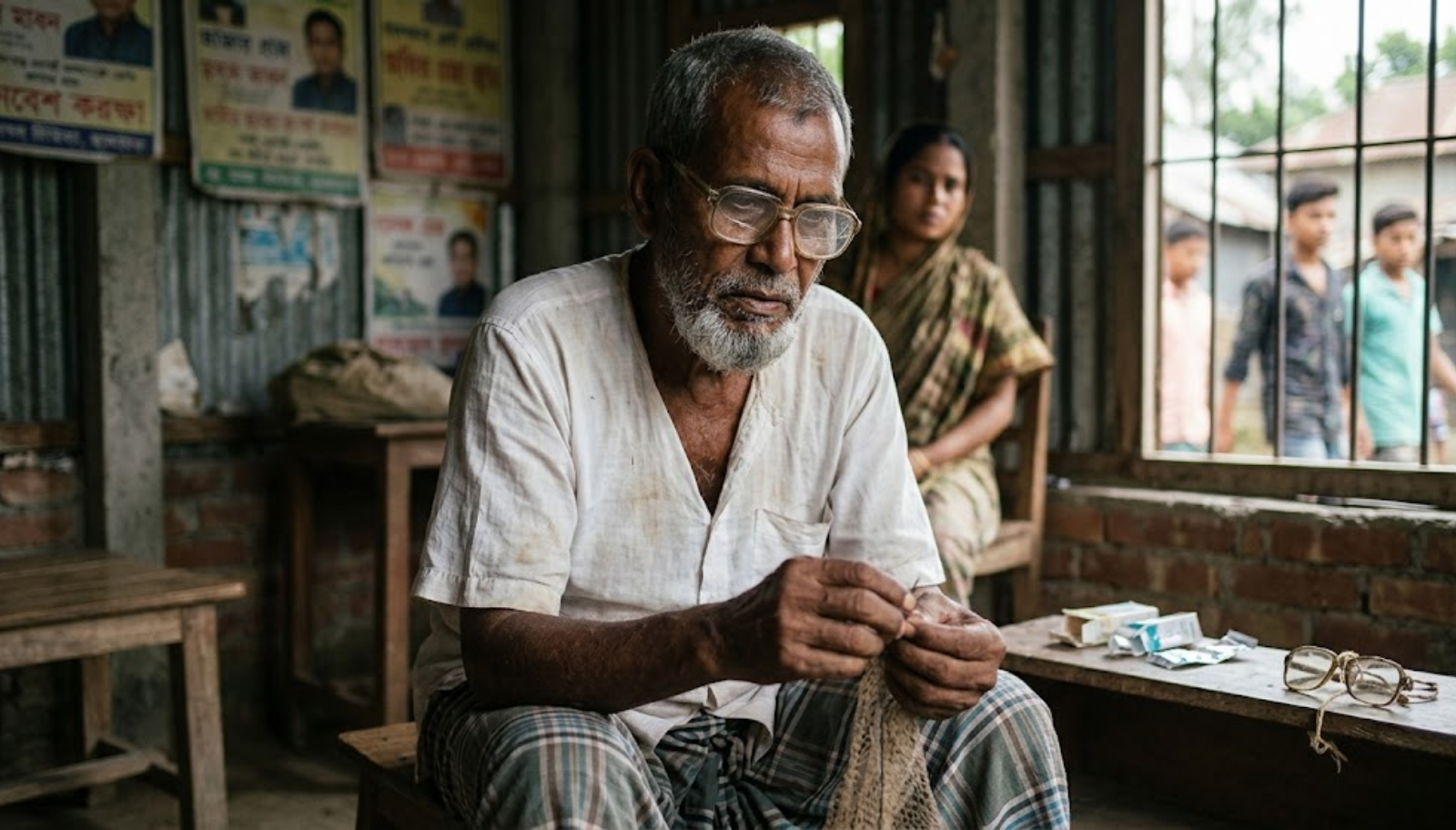
As life expectancy continues to rise in Bangladesh, the country’s elderly population is growing rapidly. Alongside age related illnesses and health complications, the risk of vision loss and eye disease is also increasing. Yet Bangladesh’s healthcare system remains insufficiently prepared to meet the eye care needs of older citizens. As a result, hundreds of thousands of people continue to lose sight of conditions that are largely preventable or treatable if diagnosed and managed in time. According to health experts, ensuring accessible, affordable, and equitable eye care for older adults has become one of the country’s most pressing public health challenges. To understand the scale of the problem, it is important to examine the current state of eye care services for senior citizens and the barriers that continue to prevent many from receiving timely treatment.
The Current Reality of Elderly Eye Health
Cataracts remain the leading cause of blindness in Bangladesh. According to national survey data, cataracts account for nearly 80 percent of bilateral blindness in the country. Among the estimated 650,000 blind people aged 30 and above, the majority suffer from cataracts that can be treated through surgery. However, access to treatment remains alarmingly limited. Only around one third of patients who require cataract surgery can receive it. In other words, nearly two out of every three patients who need treatment do not have access to the necessary services.
The situation is particularly severe in some regions, including Barisal Division, where access to eye care services remains comparatively low. Women, rural residents, people with limited education, and low-income workers are disproportionately affected. Studies also show that blindness rates among women are significantly higher than among men.
Weak Infrastructure and Limited Services
One of the most significant weaknesses in Bangladesh’s eye care system is the concentration of services in urban centres. At the rural level, effective eye care services are largely absent from community clinics and many upazila health complexes. Most specialised services are concentrated in district hospitals, many of which lack modern diagnostic equipment and advanced surgical facilities.
For a population of more than 170 million people, Bangladesh has only around 626 ophthalmologists and approximately 618 mid-level eye care professionals. The country also has only 2,822 hospital beds dedicated to eye care. Treatment for complex conditions such as glaucoma, retinal diseases, and age-related macular degeneration is primarily available in Dhaka and Chattogram. Consequently, patients from distant districts often have no choice but to travel long distances for specialist care.
Financial and Geographic Barriers
The cost of treatment presents another major obstacle. More than 90 percent of healthcare expenses in Bangladesh are paid directly by patients and their families. Without universal health insurance, elderly citizens must cover consultation fees, diagnostic tests, medicines, surgery costs, spectacles, transportation, accommodation, and food expenses on their own.
Research suggests that 38 percent of people have never received any form of eye treatment, while 45 percent cite financial hardship as the primary reason. Women, rural populations, and people with limited education are also less likely to obtain the spectacles they need after surgery, reducing the effectiveness of treatment and rehabilitation. Geographic challenges further worsen the situation. Studies indicate that approximately 74 percent of outpatients and 83 percent of post-operative patients attending tertiary hospitals travel an average of 67 kilometres to receive care.
Bangladesh currently has only two government tertiary eye hospitals, one in Dhaka and another in Gopalganj. For elderly patients suffering from serious eye conditions, accessing treatment can be physically demanding, financially burdensome, and during the monsoon season, particularly difficult.
Reforms That Cannot Wait
Experts argue that several important reforms are urgently needed to ensure equitable and effective eye care for senior citizens. First, a universal health insurance or financial protection programme should be introduced to cover eye examinations, spectacles, medicines, and common surgical procedures. Second, primary eye care services should be expanded by establishing permanent eye care units at the upazila level and recruiting trained personnel.
Third, satellite eye clinics should be developed in remote and underserved regions to ensure regular access to specialist services. Fourth, teleophthalmology services should be expanded to enable remote screening, diagnosis, and consultation for patients living far from major hospitals.
Fifth, special financial incentives could encourage ophthalmologists and healthcare professionals to work in rural and underserved communities. Sixth, travel allowances or transportation assistance should be provided to elderly patients living in poverty so that financial constraints do not prevent them from seeking treatment. Seventh, rehabilitation services following cataract surgery should be strengthened. Patients should receive affordable or free spectacles, along with proper follow-up care to maximise the benefits of surgery.
Eighth, specialist treatment for glaucoma, retinal diseases, corneal disorders, and other complex conditions should be expanded to regional medical college hospitals outside Dhaka and Chattogram. Ninth, Bangladesh should introduce a national geriatric eye health programme for citizens aged 50 and above, with particular attention given to women and rural populations.
Finally, long-term investment is needed to strengthen the eye care sector through increased government funding, modern equipment, expanded hospital capacity, and the training of additional healthcare professionals.
Conclusion
Vision is closely linked to independence, dignity, and quality of life. Yet thousands of elderly Bangladeshis continue to live with blindness and visual impairment caused by conditions that could often be prevented or successfully treated. Financial hardship, weak infrastructure, and unequal access to healthcare have restricted many citizens from exercising their fundamental right to health.
Recognising elderly eye care as a national priority is essential not only for public health but also for social justice and human development. With timely reforms and sustained investment, Bangladesh can significantly reduce preventable blindness and improve the quality of life of its ageing population. Protecting the eyesight of senior citizens is not simply a healthcare issue. It is an urgent responsibility for any society committed to building a fair, inclusive, and compassionate healthcare system.




Comment on “Eye Care for Bangladesh’s Elderly Citizens: Crisis, Inequality and the Need for Reform”