
Rudaina Bashir
Brunel University, UK
The Bangladesh-India border has once again become a site of significant violence. On May 14, 2026, Khademul Haque, aged 25, was fatally shot by the Indian Border Security Force at the Amjhol border in Lalmonirhat. In the days leading up to the incident, two Bangladeshi citizens were killed and several others sustained injuries in a cross-border shooting incident involving the Border Security Force (BSF) in the Pathariadwar area of Brahmanbaria.
These events are not isolated incidents. These are recurring chapters in a crisis that has claimed hundreds of lives over two decades and remains obstinately unresolved. According to the human rights organization Ain o Salish Kendra, 34 Bangladeshis were killed by the BSF in 2025 alone, including 24 who were shot and 10 who died from physical torture. The annual figures have exhibited a marked degree of stability, as evidenced by the following data: In the given sequence, the numbers 30, 31, 23, and 18 are successively encountered in the years 2024, 2023, 2022, and 2021, respectively.
From 2014 to early 2026, at least 285 Bangladeshi civilians lost their lives in BSF shootings, with an average of nearly 24 deaths per year. It is estimated that at least 27 Bangladeshi minors lost their lives between 2009 and 2025, with six of these casualties occurring in the year 2024 alone. The death toll is exacerbated by the ongoing crisis. From May 2025 to January 2026, the BGB documented 2,479 individuals who were forcibly relocated to Bangladesh via border crossings across 32 districts. At least 120 of these individuals were identified as Indian nationals.
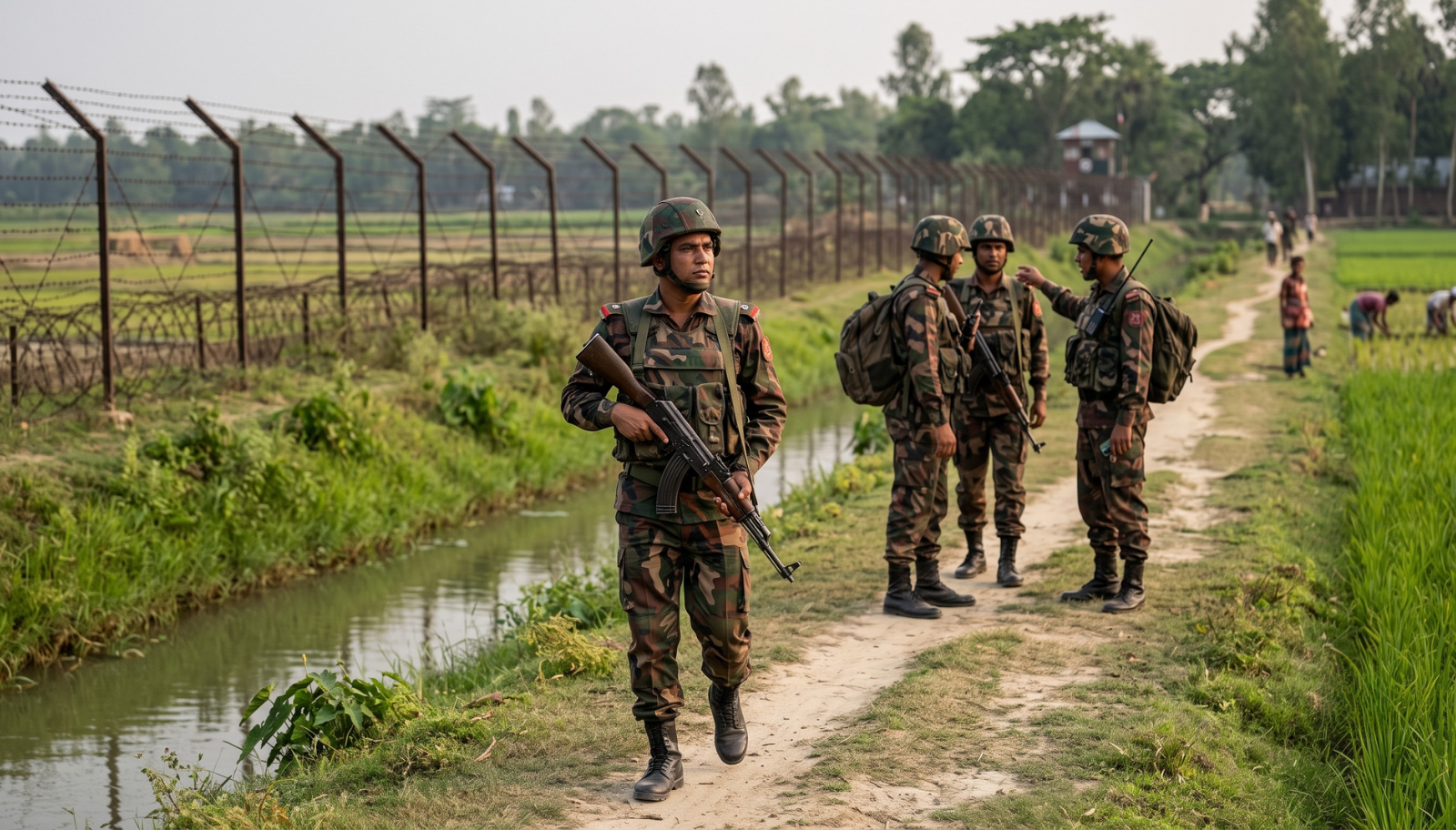
The Border Guard Bangladesh (BGB) has responded with a substantial operational escalation. In the aftermath of the West Bengal elections, BGB has been placed on its highest state of alert along the entire frontier. In the Benapole sector, stringent security measures have been implemented across approximately 102 kilometers of border under the jurisdiction of Jessore 49 BGB and Khulna 21 BGB, with additional personnel deployed at multiple points including Raghunathpur, Shikarpur, Putkhali, and Daulatpur. In Chapainawabganj, analogous high alert measures are currently in effect. Local commanders are maintaining strict vigilance against any potential illegal push insurgent activities.
In the northern belt, the BGB has augmented security measures along a 558-kilometer expanse encompassing the Lalmonirhat and Kurigram districts, which have been disproportionately impacted by armed conflict and insurgent activities. The force has initiated the deployment of radar systems, thermal imaging cameras, high-speed boats, and drone surveillance to enhance monitoring capabilities in remote riverine regions, dense forests, and the Sundarbans. Authorities have cautioned the public against unnecessary movement in border areas, particularly during nighttime hours.
While these measures are imperative, they chiefly target the symptom of illegal crossings rather than the underlying issue of lethal force employed against those who cross. The central enabling factor behind the continued killings is absolute impunity. Not a single Border Security Force (BSF) personnel member has ever been prosecuted for killing a Bangladeshi civilian at this border. The sole case that proceeded to trial, involving the death of Felani Khatun, culminated in an acquittal. Absent a system of accountability, diplomatic notes, flag meetings, and director general-level conferences are unable to alter the prevailing circumstances on the ground.
The BSF does not modify its operations in accordance with the political administration in Dhaka. The adjustment is contingent upon the presence of consequences, a circumstance that has never been observed. The 57th BGB BSF director general conference, held in June of 2026, reiterated established discourse concerning the imperative to fortify border security mechanisms and to augment collaborative patrolling efforts. However, the conference yielded no legally binding commitment regarding accountability or the utilization of force protocols.
Bangladesh needs to pursue the internationalization of the border killings with the utmost urgency. The government can submit detailed, documented cases to the United Nations Special Rapporteur on extrajudicial killings. The government can also formally engage with the Human Rights Council’s Universal Periodic Review process and pursue an International Criminal Court referral. While these measures may not result in immediate legal outcomes, they underscore the diplomatic and political repercussions of maintaining a silence that bilateral notes are ineffective in achieving.
In addition, accountability mechanisms must be institutionalized in the form of binding bilateral agreements. Bangladesh must formally propose the establishment of a joint independent commission to investigate every fatal shooting. This commission would be required to operate with impartial witness protection and be mandated to release public findings within fixed timelines. This proposal should be formally presented at each director general level meeting and meticulously documented in the official minutes. India’s documented resistance is transformed into a diplomatic instrument.
Bangladesh must also assert its position by insisting that BSF units operating within the confines of this border incorporate a substantial number of personnel who are proficient in the Bangla language and hail from the regions of West Bengal and Assam. Presently, the composition of BSF contingents is predominantly from Punjab, Haryana, Uttar Pradesh, and Rajasthan, with personnel lacking both linguistic and cultural familiarity with the communities they are entrusted to police. This cultural distance fosters an environment conducive to dehumanization, thereby rendering the act of casual killing psychologically plausible.
The establishment of formal legal protocols for cross-border trade should be regarded as a security strategy, rather than merely an economic one. The implementation of border haats has been demonstrated to directly reduce informal trading, which has been identified as a factor that places civilians in the line of fire. The prohibition on cattle exports from India to Bangladesh constitutes the most prevalent offense category that the BSF utilizes to substantiate the use of lethal force. The legalization and regulation of this trade would serve to structurally reduce the pretext for shootings.
The operational escalation of the BGB is a necessary holding action; however, it is not a substitute for strategic, legal, and diplomatic reform. The ongoing arrival of fatalities must be understood in the context of the prevailing border governance structure, which is characterized by a lack of consequences and the prevailing silence that accompanies it. The impunity that prevails must be addressed, and the economic conditions that motivate civilians to take risks must be transformed. Only through such actions can we expect to bring an end to the deaths that continue to arrive with such regularity.
The government is operating within a limited timeframe before border infrastructure and political rhetoric become entrenched features of the frontier. It is imperative to act promptly in order to mitigate the adverse consequences of climate change. This approach stands as a crucial alternative to a future in which border control measures result in the indiscriminate killing of individuals without the documentation of such occurrences.