
Md. Awlad Hossain
University of West London, UK
Discussion of Bangladesh’s blue economy usually turns to the Bay of Bengal, with its ports, shipping and deep-sea fishing. Yet most districts have no sea frontage, and they are not short of water. Sunamganj and Kishoreganj hold vast haors, Jashore and Kushtia have oxbow lakes called baors, Natore and Pabna have beels, and rivers thread through Mymensingh, Rangpur and Rajshahi. Millions of ponds dot the countryside, and monsoon floods turn farmland into temporary fisheries. These waters are an economic asset the blue economy idea can help unlock.
This article argues that the blue economy in Bangladesh is not only a coastal opportunity. It examines how the rivers, haors, baors, beels, ponds and floodplains of districts far from the sea can generate food, jobs and income, and what policy choices are needed to turn that potential into reality.
Fish as the Foundation
Inland fisheries and aquaculture already supply most of the nation’s fish, and landlocked districts are central to that story. Pond culture in Mymensingh, Jashore and Bogura has made carp, tilapia and pangas household staples. The prospect now lies in raising productivity and value rather than volume alone.
Quality seed from certified hatcheries, better feed and techniques such as biofloc and recirculating systems can lift yields from small plots. Cage culture in rivers and reservoirs offers landless families a way into aquaculture. Solar powered pumps and aerators can cut energy costs and make farming viable where electricity is unreliable.
Wetlands as Living Assets
Haors, baors and beels support fish, ducks, aquatic plants and tourism at once. A well-managed haor yields fish in the monsoon, rice in the dry season and ducks all year, while community managed baors share income with local people. Water chestnut, makhana and ornamental fish add further earnings, and sanctuaries and seasonal bans protect breeding stock. Wetlands must be treated as productive ecosystems, not land awaiting drainage.
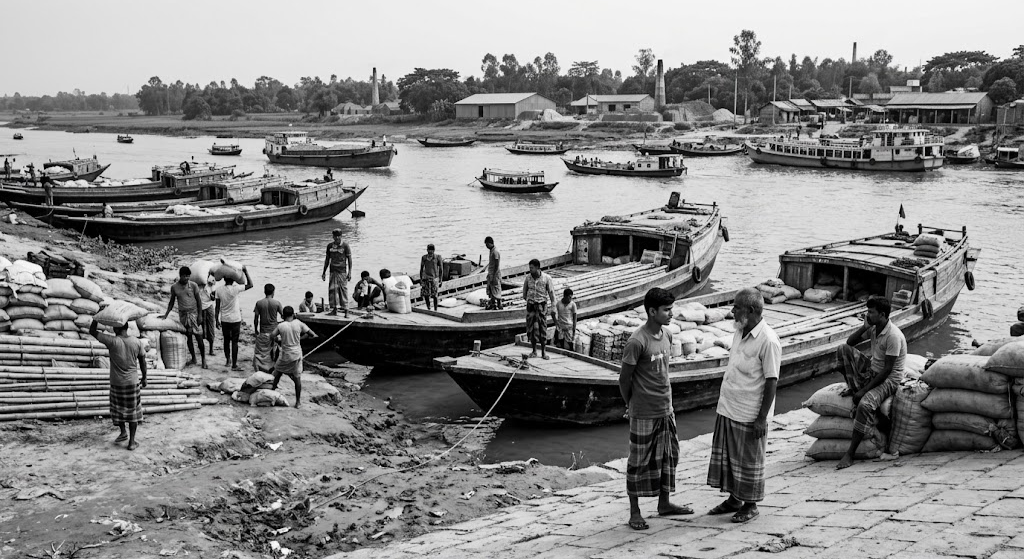
Inland waterways also remain a cheap way to move bulk goods, and dredging and modern river terminals would cut costs and ease pressure on highways. Monsoon boat stays, winter birdwatching and village trails can bring visitors, and income, to places off the tourist map.
Jobs Along the Value Chain
The blue economy inland does not end at the pond. Feed mills, hatcheries, ice plants, cold storage, processing units, packaging and transport all create work, often for women and young people who might otherwise migrate to cities. Dried and processed fish, frozen products and ornamental fish can reach urban and export markets if quality is assured. Digital platforms can connect producers directly with buyers, reducing the share captured by middlemen.
Obstacles to Overcome and the Measures Needed
The barriers are real. Pollution from tanneries, factories, untreated sewage and agrochemicals degrades rivers and kills fish. Encroachment and siltation shrink water bodies, and many rivers run low in the dry season. Leasing systems for public waters too often favor influential bidders over the fishing communities who depend on them. Climate change brings flash floods, drought and heat stress. Weak cold chains, limited credit and thin technical training hold back small producers, while overuse of antibiotics and chemicals threatens food safety and export acceptance.
Several measures stand out. Leasing of public water bodies should be reformed so that genuine fishers and cooperatives receive priority access on transparent terms. Pollution laws must be enforced, with industrial effluent treated before it reaches rivers. Wetlands and rivers need legal protection and restoration, including removal of illegal encroachment. Investment in research, extension and training, especially for women, would spread better practices. Affordable credit and insurance, tied to good management rather than collateral, would help smallholders withstand shocks. Cold chains and processing facilities should be built close to production areas. Finally, planning must bring fisheries, water, transport and tourism agencies together, since a river serves all four purposes at once.
Conclusion
Bangladesh’s blue economy will not be built on the coast alone. Its interior waters already feed the nation, and with better management they could employ more people, earn more export income and strengthen climate resilience. A haor that holds flood water protects downstream towns, a restored baor recharges groundwater and cools its surroundings, and a living river carries sediment that renews farmland. Counted alongside the fish they produce, these services make the true value of inland waters far greater than market prices suggest.
The opportunity depends on a change in mindset: seeing rivers, haors and ponds not as obstacles to be drained or neglected, but as living assets to be protected and used wisely. In practice, this means valuing wetlands in planning decisions, rewarding communities who conserve them, and measuring success by sustained yield and household income rather than land reclaimed. It also means placing fishing communities, women and youth at the center, since those who depend daily on a water body are its best guardians when their access is secure and fair.
Timing favors action. Rising demand for safe, traceable and responsibly farmed fish is opening export doors that certification can widen, and climate pressures make water management a matter of national security. If the country makes this shift, landlocked districts may prove to be among the most promising frontiers of its blue economy.



