
Farah Zahir
Managing Editor, The Oniket Bulletin
This year, the pass rate in the SSC and equivalent examinations fell to 62.25 percent, from 68.45 percent last year. Whatever the result, students soon face the same question: what comes next?
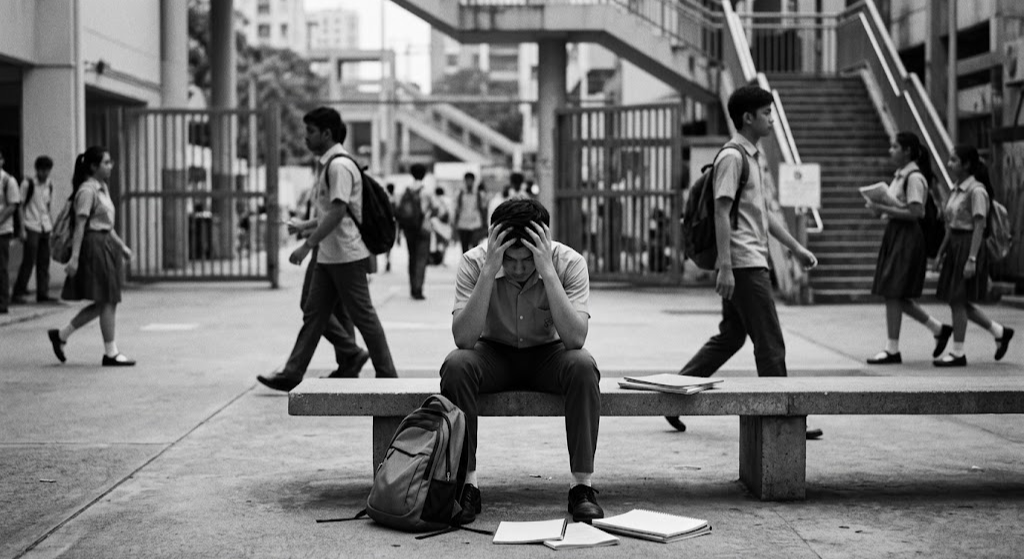
At a young age, they must decide which college to attend, whether to choose science, humanities or business studies, or pursue technical education. After the HSC, another major choice follows university, technical training or employment. Bangladesh has no regular, government-led and universal career guidance or mentoring system at the secondary or higher secondary level. Students often rely on advice from relatives, friends or coaching centres when making decisions that can shape their future.
The Numbers Behind the Gap
The main weakness of the present arrangement is that the Ministry of Education and its agencies concentrate on curriculum, examinations and administration. Some institutions hold career clubs or invite guest speakers, but this depends on the personal interest of the head of the institution. Hiring trained counselors is not mandatory. Media reports note that even well-known schools in Dhaka have no full-time career counsellor.
The effects show in the data. According to the annual report of the Bangladesh Bureau of Educational Information and Statistics (BANBEIS), the dropout rate at the secondary level was 32.85 percent in 2023, with 30.63 percent for boys and 34.87 percent for girls. That is a clear improvement on the 55.26 percent recorded in 2010, but more than one in three students still leave before completing secondary education. Draft BANBEIS figures show the dropout rate at the higher secondary level rising from about 18 percent to above 21 percent in four years. The same data show that secondary enrolment fell from over 9.23 million in 2019 to about 8.17 million in 2023.
Child marriage is another concern. A 2025 report by UNICEF, UN Women and Plan International found that 51.4 percent of women aged 20 to 24 were married before the age of 18, the highest rate in Asia. A sample survey by the Bangladesh Bureau of Statistics (BBS) put the figure lower, at 41.6 percent for 2023. The two surveys use different methods, so the numbers differ, but the direction is the same.
In technical education, the government aims to raise enrolment to 30 percent by 2030. Analysis by the Centre for Policy Dialogue (CPD) shows that the rate came close to 16 percent in 2020 and has barely moved since. At the SSC (vocational) level, more than 300,000 of 497,000 seats went unfilled last year. Without reliable information and advice, parents and students do not see this path as a safe one.
Lessons from Abroad and the Sustainable Development Goals
Many countries have filled this gap through law and institutions. In Finland, educational and career guidance is a compulsory part of basic education, and trained study counsellor work in schools. Singapore’s Ministry of Education runs a graded programme of education and career guidance starting from primary school. In England, schools are legally required to provide impartial careers guidance, each school has a designated Careers Leader, and performance is measured against the Gatsby Benchmarks.
Within the Sustainable Development Goals (SDGs), the issue connects most directly to SDG 4, quality education. Target 4.3 calls for equal access to technical, vocational and higher education, and Target 4.4 seeks more young people with skills for employment and entrepreneurship. Target 8.6 under SDG 8 aims to reduce the share of young people outside education, employment or training. ActionAid Bangladesh, citing BBS data, reports that about 39.88 percent of the country’s young people are neither studying nor working, rising to more than 60 percent among young women. Target 5.3 under SDG 5, on ending child marriage, and Target 3.4 under SDG 3, on mental health and well-being, are also relevant.
What Can Be Done: A National Framework in Steps
First, a national guidance policy is needed under the Ministry of Education, assigning responsibilities for each stage from Class VI to Class XII. Classes VI to VIII could focus on identifying interests and aptitudes, Class IX on advice before choosing a stream, and Classes XI and XII on information about higher education, technical pathways and jobs.
Second, trained staff must be built up. Teachers already in service could be selected and given certificate training through teachers’ training colleges and the National Academy for Educational Management. Appointing mobile counsellors at the upazila level would keep costs low in remote areas. Third, a national digital portal should bring together labour market demand, admission rules, scholarships and technical institutions in one place.
Fourth, a mentoring network can be built with industry, universities, technical education boards and alumni. For a rural student, a conversation with a successful engineer or entrepreneur can inspire more than a textbook. Fifth, because families make most of these decisions, school management committees and parents’ meetings should hold regular sessions to correct misconceptions about technical education and alternative careers. The shortage of teachers in the technical sector also needs attention, as CPD reports that more than half of the 15,000 sanctioned teaching posts are vacant.
Finally, pilot programmes in a few districts should measure dropout rates, technical enrolment and indicators of student mental health. If BANBEIS and university researchers take part in the evaluation, expansion can rest on evidence.
Timely and sound advice should not be a matter of personal luck for a teenager. It should be part of what the state guarantees. Alongside examination results, the education system must also take responsibility for helping students find their way.
References
1- IANS, “Bangladesh tops in child marriage rate in Asia: UNICEF” (report by UNICEF, UN Women and Plan International, March 2025). https://morungexpress.com/bangladesh-tops-in-child-marriage-rate-in-asia-unicef
2- Asia News Network, “An alarming uptick in child marriage in Bangladesh” (Bangladesh Sample Vital Statistics 2023). https://asianews.network/an-alarming-uptick-in-child-marriage-in-bangladesh/
3- Centre for Policy Dialogue, “Technical education hit by teacher shortage, falling enrolment.” https://cpd.org.bd/?p=51340
4- Finland: Eurydice, “Guidance and counselling in early childhood and school education: Finland” (https://eurydice.eacea.ec.europa.eu/eurypedia/finland/guidance-and-counselling-early-childhood-and-school-education); Finnish National Agency for Education, “Criteria for Good Guidance” (2023), summarised at https://www.iccdpp.org/criteria-for-good-guidance-finland/. Singapore: Ministry of Education, “Education and Career Guidance” (https://www.moe.gov.sg/education-in-sg/our-programmes/education-and-career-guidance/overview) and SkillsFuture Singapore, “ECG FAQ” (https://www.skillsfuture.gov.sg/ecg/education-and-career-guidance-faq). England: Department for Education, “Careers guidance and access for education and training providers” (statutory guidance, May 2025), as summarised by Careers & Enterprise Company and other sources.
5- ActionAid Bangladesh, “Reimagining primary and compulsory education in Bangladesh,” 16 May 2024. https://actionaidbd.org/post/default/reimagining-primary-and-compulsory-education-bangladesh
6- United Nations, Transforming Our World: The 2030 Agenda for Sustainable Development (SDGs 3, 4, 5 and 8).