
Shamima Manzoor
University of Fredericton
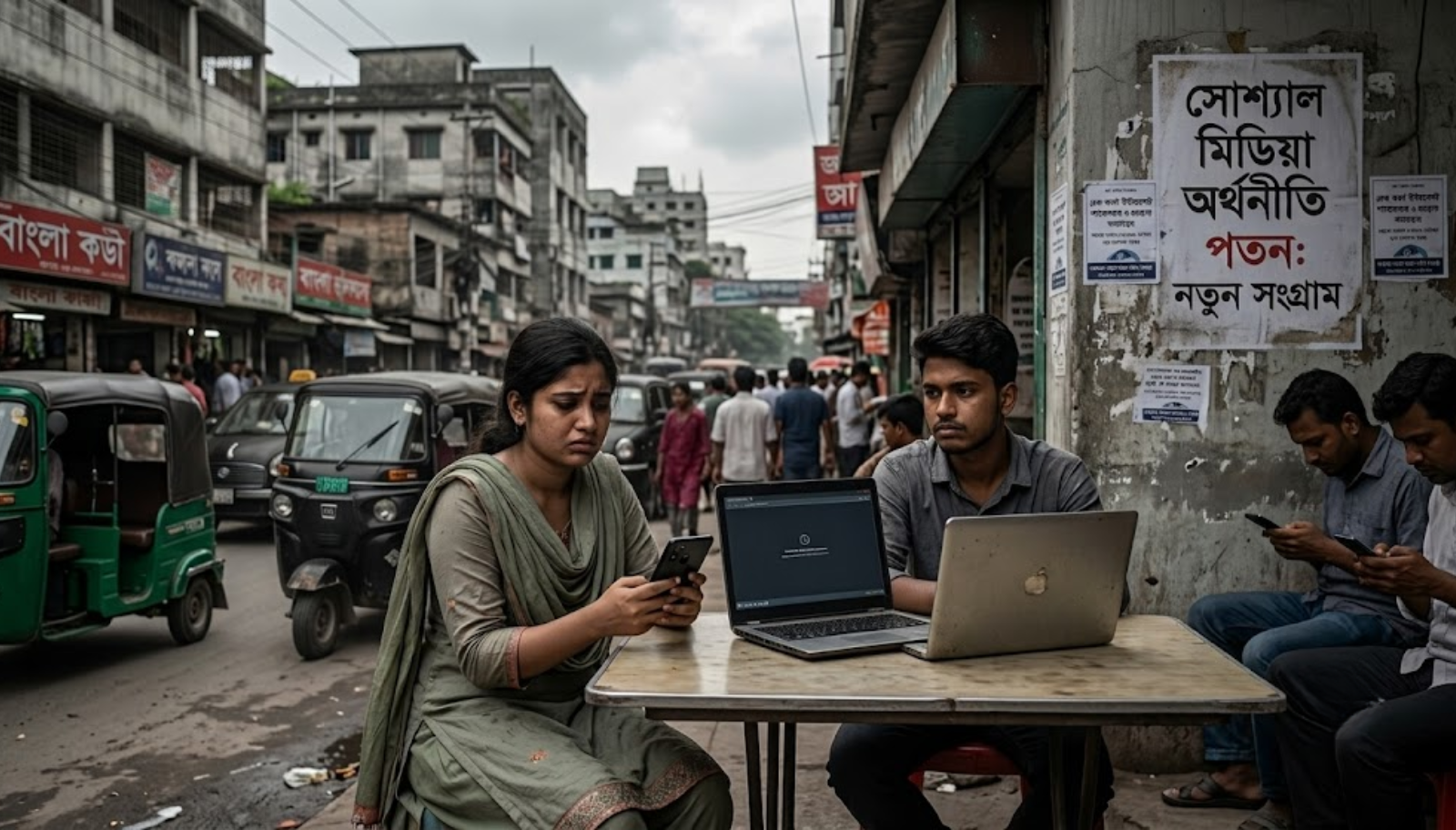
Scroll through any social media feed in Bangladesh today, and the signs are unmistakable: fewer viral brand campaigns, dwindling engagement on sponsored posts, and a growing chorus of content creators questioning whether the influencer economy still pays. The glow that once surrounded digital influencing has faded considerably. But what exactly is driving this downturn? Is it the heavy hand of state regulation tightening around online expression, or is the market itself correcting an inflated ecosystem? The answer lies in both.
Between 2019 and 2024, the internet user base of South Asia, which includes Bangladesh, surged by 70%, growing from 662.7 million to over 1.12 billion users. However, this rapid digitalization vastly outpaced the development of secure, rights-respecting infrastructure, allowing the governments in Bangladesh to systematically weaponize digital regulation and convert social media from a space of grassroots mobilization into a tightly monitored apparatus.
The Persistence of “Techno-Authoritarianism”
Bangladesh’s legal framework governing online content has become progressively restrictive, reflecting a broader shift toward “techno-authoritarianism” where state-centric laws prioritize control over individual liberties. The Digital Security Act (DSA) of 2018 cast a long shadow over the country’s digital landscape, enabling authorities to arrest individuals for social media posts deemed critical of the government. Over 7,000 cases were filed, and an astonishing 21,770 individuals were charged under the DSA, turning law enforcement agencies into active “digital overseers”.
The interim government replaced the heavily criticized Cyber Security Act (the DSA’s successor) with the Cyber Protection Ordinance (CSO), which introduced some positive provisions, notably new safeguards against online harassment and sexual exploitation. Consequently, according to a 2025 report by Freedom House, Bangladesh posted an improvement in internet freedom out of the 72 countries assessed, with five points climb to 45 out of 100.
This score places Bangladesh ahead of Pakistan (which scored 27 and is categorized as “Not Free”), but it still trails behind Sri Lanka (53 points) and India (51 points). The attempt at recovery gradually proves to be a fragile one, not having resolved the entrenched structural challenges. Rather, according to an assessment by UNDP and UNESCO, the paralyzing grip on the digital landscape has persisted, as the CSO has retained concerning rules regarding content removal, surveillance, and criminal penalties for online speech.
The Market Correction
Yet policy alone does not explain the diminishing returns of the digital content and media economy. Bangladesh’s influencer advertising market experienced a rapid expansion that outpaced the infrastructure needed to sustain it. What began globally as a celebratory “revenue-sharing partnership” has settled into a highly exploitative industry where creators operate as vulnerable gig-workers suffering from low or non-existent wages and a lack of formal contracts.
Moreover, the digital advertising market is fundamentally distorted by state-controlled advertising, which is distributed opaquely to favor political loyalty over independent creation. Arbitrary licensing processes have created an “artificial” media market that stifles fair competition and repels foreign investment. Social media feeds have experienced a forced “political conformity” or homogenization of information, leading 64.05% of users to note a sharp decline in the diversity of opinions shared online.
The Deepening Divides
Compounding both the regulatory and market pressures is the inherent fragility of platform dependency. Algorithm changes can devastate a creator’s reach overnight. Account suspensions, often arbitrary and without recourse, wipe out years of audience building. Bangladesh’s creators operate without the safety nets available in more mature markets: no formal unions, no contractual protections, no platform accountability standards, and no dispute resolution mechanisms. The media economy operates here on a highly stratified design of platforms, a mechanism of tiered governance, offering different users entirely different sets of rules, material resources, and procedural protections.
Thus, the divide is deepened between the winners and losers of the digital economy market. A small fraction of elite influencers continues to command premium rates. Because of their scale, they are granted algorithmic “medals” or benefit levels, giving them direct access to human Partner Managers and backdoor lines of recourse to contest platform decisions. In contrast, relegated to the bottom tiers of platform governance, smaller creators are excluded from human review processes and are entirely at the mercy of automated, flawed machine-learning algorithms. For the worst part, women face systemic marginalization, widespread harassment, and a stark absence of protective, gender-sensitive policies.
A critical factor accelerating the collapse of the local ecosystem is the deep information asymmetry between platforms and creators. Faced with automated demonetization and a lack of human explanation, Bangladeshi content creators are trapped in an anxiety-laden environment of second-guessing and continuous tweaking.
The Path Forward
The critical insight is that policy and market forces are not separate forces but reinforcing ones. Therefore, stabilizing the industry requires a shift from reactive, fragmented approaches toward integrated, anticipatory governance that embeds human-rights safeguards. Without reform on both fronts, the attention economy in Bangladesh will continue its slide from cultural force to cautionary tale.
On the policy side, the government must replace punitive legislation with enabling regulation that distinguishes between malicious misinformation and legitimate creative expression, and move toward a transparent, principles-based framework grounded strictly in international human rights standards. The state must establish transparent, fair, and accountable criteria for the distribution of state advertising subsidies and licenses to prevent anti-competitive behavior.
On the industry side, creators must diversify their platforms and revenue streams, brands must shift from one-off sponsorships to sustained partnerships built on authenticity, and financial institutions must develop products that recognize digital income as legitimate. The industry must cultivate recognized professional bodies to combat tiered platform exploitation through publishing standardized contract templates that enforce the Wage Board, formalize labor rights, and implement stringent, gender-sensitive newsroom policies.
To combat the proliferation of low-quality, polarized content and rebuild eroding audience trust, the industry must institutionalize internal ethical standards. This includes appointing dedicated ombudspersons and deploying rigorous fact-checking tools. Also, the industry must independently invest in robust cybersecurity infrastructure, such as mandatory data backups, network segmentation, and advanced employee training, to protect its digital assets and prevent catastrophic operational disruptions.
References & Strategic Reading List
- Access Now & The #KeepItOn Coalition. The Impact of Restrictive Cyber Legislation and Network Disruptions on Digital Economies in South Asia. (Crucial for contextualizing the structural chilling effects of digital laws).
- Aggarwal, A. (2026). Cybersecurity and Human Rights in South Asia: A Legal and Governance Perspective Through Case Studies. IGI Global Scientific Publishing. (Details the regional surge in internet adoption and the evolution of “techno-authoritarianism”).
- Caplan, R., & Gillespie, T. (2020). Tiered Governance and Demonetization: The Shifting Terms of Labor and Compensation in the Platform Economy. Social Media + Society, 6(2), 1-13. (The foundational text detailing how asymmetric platform rules and tiered governance generate structural labor precarity).
- Freedom House. (2025). Freedom on the Net 2025. (Referenced via “report 2.pdf”, detailing Bangladesh’s five-point score improvement amidst global declines and noting the dual nature of the CSO).
- UNDP & UNESCO. (2025). An Assessment of Bangladesh’s Media Landscape: Free, Independent and Pluralistic Media. (A critical, post-uprising assessment detailing the failings of the Cyber Protection Ordinance, distorted advertising markets, and severe labor precarity for journalists).
- Zafarullah, H., & Nughat, S. (2026). Regulatory Control and Self-Censorship in Social Media: Stifling Freedom of Expression in Bangladesh. Journal of Asian and African Studies. (An essential study demonstrating how deep-seated state surveillance forced user self-censorship and homogenized digital public discourse).