
Dr. Naima Parvin
Coventry University, UK
A Silent Constraint on Growth
Bangladesh’s development story is often told through its export success, demographic dividend, and steady poverty reduction. Yet beneath this progress lies a quieter, structural challenge, one that risks constraining the country’s future trajectory. Each year, more than two million young people enter the labour market, but only a fraction (roughly half a million) receive any formal training.
This imbalance is not simply a matter of educational access. It reflects a deeper disconnect between how skills are produced and how the economy functions. The International Labour Organization estimates that only about 5 per cent of the labour force has received formal technical or vocational training, leaving the vast majority either informally trained or entirely unskilled. The result is a labour market where unemployment, underemployment, and skill shortages coexist paradoxically.
A Training System Out of Sync with Reality
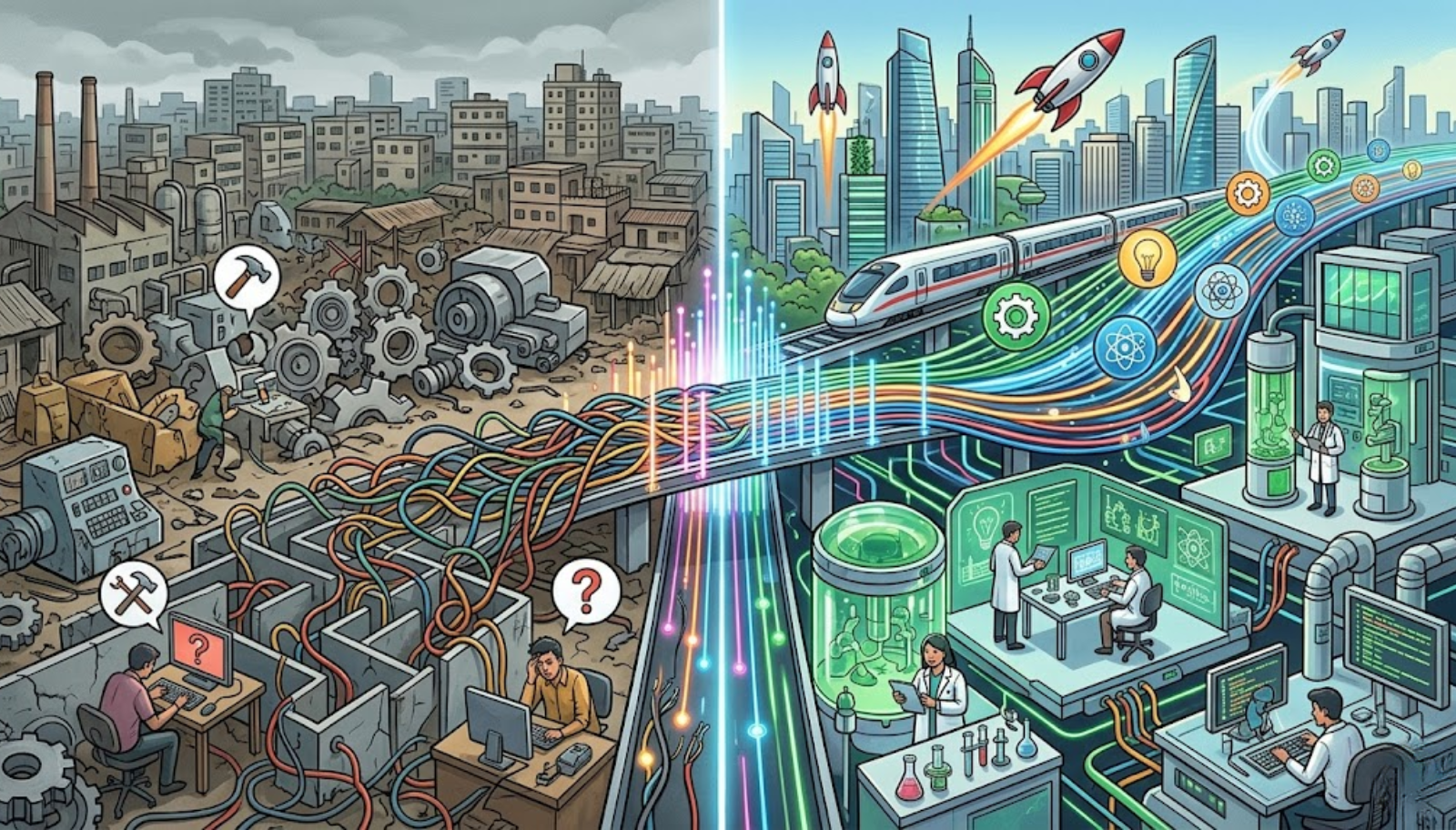
What makes the situation particularly striking is not just the shortage of training, but its misalignment. Bangladesh’s vocational education system appears to be producing skills for an economy that no longer exists.
The readymade garments sector, which dominates export earnings and continues to evolve toward higher-value production, receives a disproportionately small share of formal training capacity. Construction, fuelled by urbanisation and infrastructure expansion, faces massive shortages of skilled workers, even as training provision in core engineering trades remains minimal.
Perhaps the most telling example lies in the digital economy. While employers struggle to fill ICT roles due to lack of specialised expertise, nearly half of all vocational training remains concentrated in basic computing skills such as word processing and spreadsheets. These are competencies that no longer command significant labour market value, particularly in a globalised and technologically evolving economy.
This pattern reveals a systemic flaw: the vocational training ecosystem is not demand-driven but supply-led, shaped more by institutional convenience than by economic necessity.
The Financial and Institutional Gap
Compounding the problem is chronic underinvestment. The World Bank estimates that Bangladesh requires approximately USD 600 million annually to train its incoming workforce, an amount expected to double in the coming years. Yet actual spending remains far below this threshold, at around USD 150 million per year.
Public investment has also lost priority within the broader education system. The technical and vocational stream receives only a small fraction of the national education budget, even as policy declarations emphasise its importance. The consequence is visible across the system: outdated equipment, limited training capacity, and a startling vacancy rate in teaching positions that undermines quality from the outset. Institutionally, fragmentation further complicates reform. More than two dozen ministries and agencies are involved in skills development, often with overlapping mandates and limited coordination. While the National Skills Development Authority has been tasked with coordination, its effectiveness depends on whether it is empowered to move beyond advisory roles into enforceable authority.
Ambition and Its Limits
Bangladesh has not lacked ambition. Targets to expand technical and vocational enrolment to 25 per cent by 2025 and beyond reflect a recognition of the challenge. Political commitments have also expanded, with increasing emphasis on skills, entrepreneurship, and digital readiness. But ambition, in the absence of alignment and implementation capacity, can create its own risks. Expanding enrolment without addressing quality, relevance, and labour market linkage may simply scale inefficiency. The real issue is not the number of trainees, but whether training translates into productive employment.
Reframing the Skills Agenda
What emerges from this analysis is the need to fundamentally reframe how vocational skills are understood, not as a peripheral education stream, but as a core economic policy instrument. Skills development shapes productivity, export competitiveness, and income mobility. It determines whether technological adoption creates jobs or displaces workers. It also plays a critical role in enabling Bangladesh to transition from labour-intensive growth to more diversified, higher-value economic activity. This requires moving beyond incremental reform toward systemic transformation.
Towards a Coherent Reform Strategy
A credible reform agenda must begin with alignment; between training systems, labour market demand, and economic strategy. This implies placing employers at the centre of curriculum design and ensuring that training provision responds dynamically to sectoral needs. It also means embedding work-based learning models, such as apprenticeships, that bridge the persistent gap between classroom instruction and practical skills.
Equally important is financing reform. Without sustainable and predictable funding, even the best-designed systems cannot scale. International experience suggests that diversified financing models combining public investment, private sector contributions, and performance-based funding offer a viable path forward.
Information also matters. In the absence of reliable labour market data, training providers operate in a vacuum. A robust Labour Market Information System can transform this landscape by linking training decisions to real-time demand signals.
Finally, institutional coherence is essential. Fragmentation must give way to coordination, with a central authority capable of aligning policies, monitoring outcomes, and enforcing standards across the system.
Conclusion: From Demography to Productivity
Bangladesh’s demographic dividend remains a powerful opportunity. But it is not automatic. Without the right skills, a large youth population can just as easily become a source of economic strain.
The challenge, therefore, is not simply to expand vocational training, but to make it work to ensure that every investment in skills translates into employability, productivity, and economic resilience.
Policy Synthesis: What Needs to Change
In essence, Bangladesh’s vocational skills system must move from fragmentation to coordination, from supply-driven training to demand-led systems, and from underinvestment to sustainable financing. The priority is not merely to train more people, but to train the right people, in the right skills, with measurable employment outcomes.
This requires three overarching shifts:
- Aligning skills with economic sectors that drive growth and exports
- Embedding industry into the training ecosystem, particularly through apprenticeships and curriculum design
- Strengthening governance and financing frameworks to ensure accountability, quality, and scalability
Only by integrating these elements can Bangladesh convert its demographic pressure into productive power and ensure that its next phase of development is driven not just by labour, but by skilled labour.
Sources
- International Labour Organization (ILO), labour force and training estimates
- World Bank, Skills Development in Bangladesh
- National Skills Development Authority (NSDA), Bangladesh
- UNICEF skills development initiatives
- Government of Bangladesh, TVET Implementation Plan (2025–2030)
- “The Growing Demand for Vocational Skills in Bangladesh” [The Growin…ls-NP-ECON | Word]




Comment on “Rewiring Bangladesh’s Skills Economy: From Mismatch to Momentum”