Naima Onamika
Commissioning Editor, The Oniket Bulletin
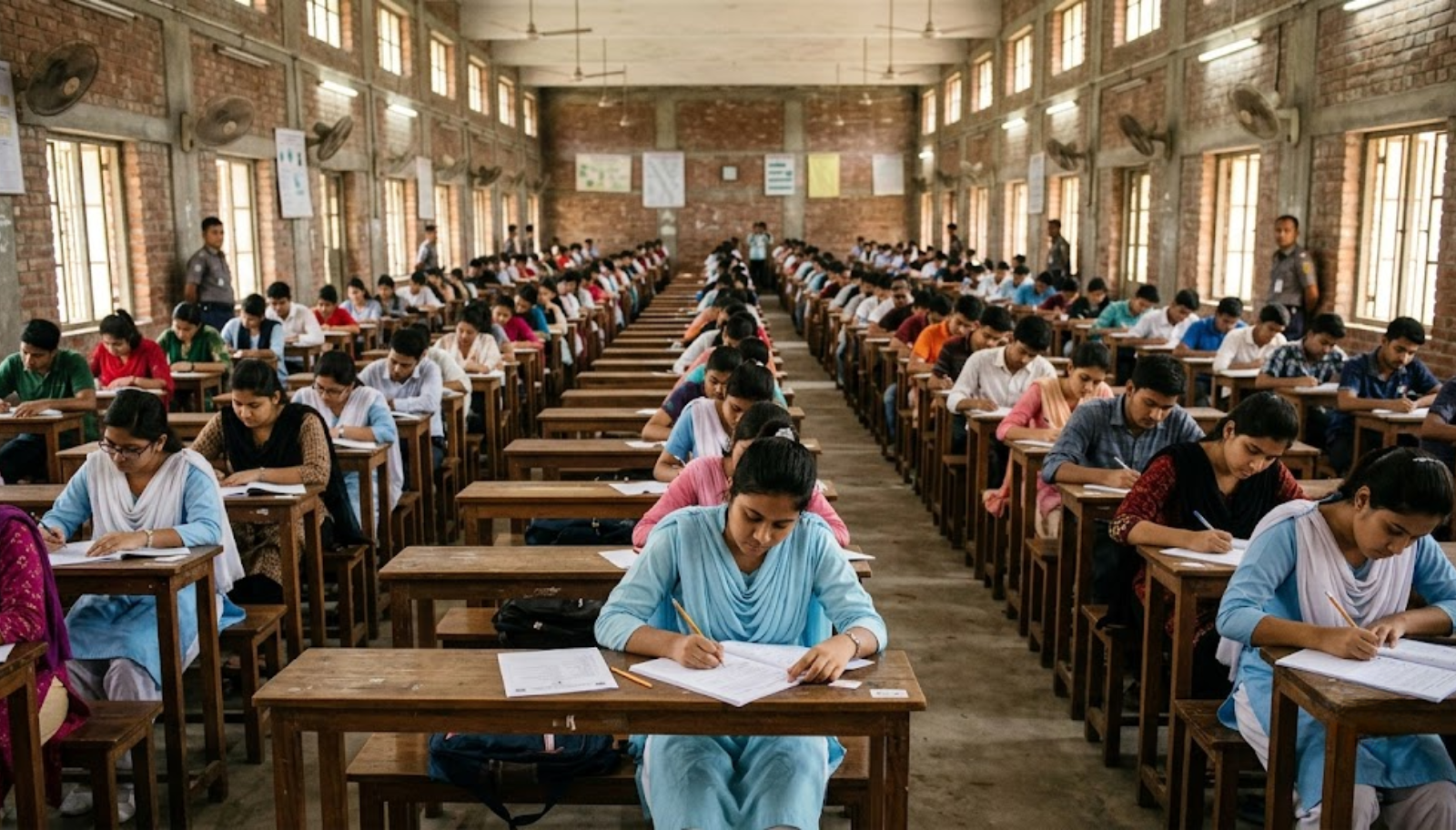
University admission examinations in Bangladesh are far more than a gateway to higher education. Every year, they determine the future of hundreds of thousands of students and play a crucial role in shaping the country’s human capital. Over the years, however, dissatisfaction with the existing admission system has continued to grow among students, parents, teachers, and education experts. In many cases, success depends less on genuine academic ability, analytical thinking, and sustained educational achievement than on test taking strategies, rapid response techniques, and coaching centre-based preparation. As a result, university admission has gradually evolved into a highly competitive industry that not only increases students’ psychological stress but also raises important questions about the fundamental purpose of the education system.
If Bangladesh is to build a more effective, inclusive, and internationally competitive higher education system, comprehensive and long-term reform of university admission examinations has become essential. A modern admission process should assess students’ true abilities, reduce social inequalities, and make access to higher education more equitable and trustworthy. Against this backdrop, examining the current admission system, its limitations, and the reforms needed have become increasingly important.
A Fragmented Admission System Places an Unnecessary Burden on Students
One of the most significant weaknesses of the current system is its fragmented structure. Public universities, engineering universities, medical colleges, and other higher education institutions conduct separate admission examinations under different rules, question formats, and schedules. Consequently, students often prepare for several examinations simultaneously, travel to different cities, and repeatedly pay application fees and transportation costs.
This system places students from rural areas and low-income families at a much greater disadvantage than those from financially secure households, widening inequalities in access to higher education.
A coordinated admission framework could offer an effective solution. Such a system would not require universities to sacrifice their academic independence. Instead, a common preliminary admission examination, a coordinated examination schedule, or a shared evaluation framework could reduce administrative complexity while allowing individual universities to conduct subject specific assessments at later stages. This approach would save considerable time, money, and effort for students, parents, and universities alike.
Admission Examinations Should Measure Genuine Ability
Another major limitation of the current admission process lies in the quality of its examination questions. In many cases, achieving high scores depends less on deep subject knowledge than on shortcut techniques, memorisation, and coaching centre study materials. This undermines the primary purpose of admission examinations, which is to identify genuine talent and academic potential.
Modern admission systems should assess analytical thinking, problem solving ability, conceptual understanding, and the capacity to apply knowledge in practical situations. Where appropriate, greater emphasis could also be placed on written assessments and reasoning-based questions.
Such reforms would also improve the quality of school and college education. Students would be encouraged to develop a deeper understanding of academic subjects instead of relying on memorisation and coaching. At the same time, the role of school and college teachers would become stronger and more meaningful.
Recognising Long Term Academic Achievement
University admission should not depend entirely on performance in a single examination. Physical illness, psychological stress, travel fatigue, or unexpected personal circumstances on the examination day can significantly affect the performance of even the most capable students.
For this reason, students’ academic achievements in the Secondary School Certificate (SSC) and Higher Secondary Certificate (HSC) examinations could be incorporated into the admission process through a balanced weighting system. This would recognise long term dedication, consistent academic performance, and sustained effort.
At the same time, differences in grading standards among education boards and the possibility of grade inflation must be carefully addressed through a transparent moderation system and consistent evaluation policies. Such measures would strengthen fairness while reinforcing the importance of school-based education.
Strengthening Transparency and Accountability
Public confidence in any admission system depends on transparency and accountability. A lack of clear information regarding score calculation, merit list preparation, quota allocation, tie breaking procedures, and final admission decisions can create confusion and undermine trust.
Every university should publish a comprehensive admission guide written in clear and accessible language. This guide should explain eligibility requirements, question formats, marking criteria, evaluation methods, and every stage of the admission process. Effective appeal and review mechanisms should also be available to correct administrative errors.
The appropriate use of digital technology can further improve the admission process. Online applications, secure publication of results, digital admit cards, and timely information services can significantly reduce the difficulties faced by applicants. At the same time, technology-based systems must be designed to ensure equal access for students living in both urban centres and remote regions.
Ensuring Equal Opportunity in University Admission
Students in Bangladesh do not begin the admission process with equal opportunities. Those from rural communities, low-income families, and first-generation university going households often face structural disadvantages long before they sit for an examination. Reforming examination formats alone will not address these deeper inequalities.
Keeping admission fees affordable, establishing sufficient examination centres across the country, publishing free government supported preparation materials, providing online classes, offering model tests, and expanding career guidance programmes can all reduce dependence on coaching centres while narrowing opportunity gaps.
University admission should be based on merit, determination, and potential rather than a student’s financial circumstances, geographical location, or social background.
Conclusion
University admission examinations in Bangladesh do not need to become more difficult. They need to become fairer, more scientific, and more humane. The purpose of higher education is not simply to select a limited number of students. It is to identify genuine talent and potential from every part of the country and provide equal opportunities for academic advancement.
Through a coordinated admission framework, improved examination methods, recognition of long-term academic achievement, transparent administration, and stronger commitments to social equity, Bangladesh can build an admission system that earns the confidence of students, universities, and society alike.
Higher education is one of the strongest foundations for developing a nation’s human capital. Reforming university admission examinations should therefore be viewed not merely as an administrative adjustment but as one of the most important priorities in Bangladesh’s broader education reform agenda.