
Desk Report
Oniket Desk
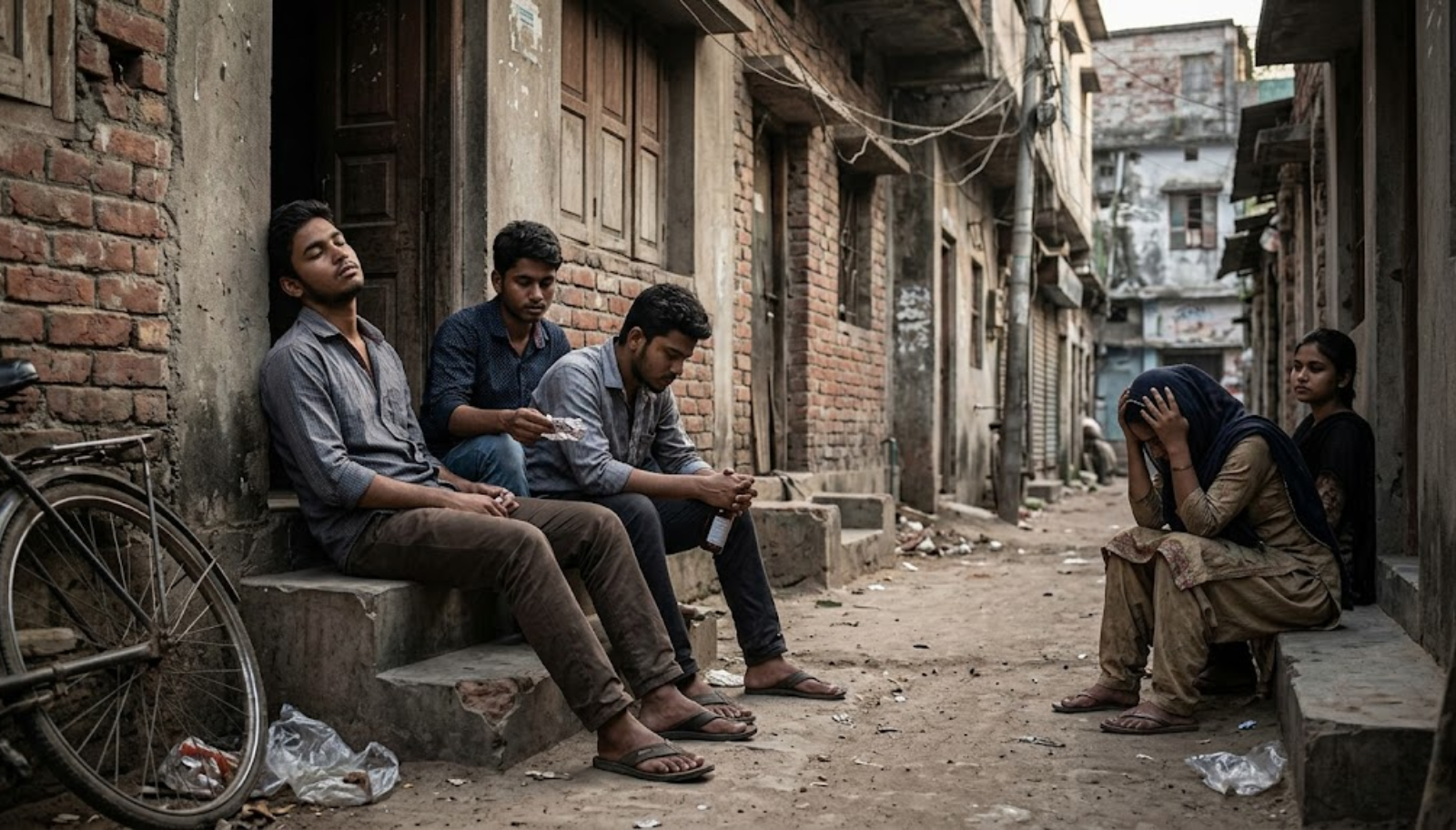
Bangladesh has witnessed a sharp and alarming escalation in drug abuse over the past decade, cutting across age, gender, and socioeconomic boundaries. What was once perceived as a peripheral social concern has evolved into a full-blown public health and national security crisis, disproportionately afflicting teenagers, youth, and an increasingly visible population of women.
The Landscape of Drug Abuse in Bangladesh
Among the most destructive substances ravaging Bangladeshi youth is Yaba, a methamphetamine-caffeine compound smuggled predominantly from Myanmar, which has become deeply entrenched in urban and semi-urban communities. Heroin, phensedyl (a codeine-based cough syrup), and injectable drugs also remain widely circulated.
Over the last ten years, however, the demographic profile of drug users has shifted profoundly. Adolescents as young as twelve years old are now being initiated into substance use, with studies pointing to peer pressure, domestic dysfunction, academic failure, and unemployment as primary catalysts.
The situation among women deserves scrutiny. Traditionally obscured by social stigma and cultural silence, female drug addiction in Bangladesh has grown substantially. Women, particularly those from lower-income households, are increasingly drawn into drug use through intimate partner influence, sexual exploitation networks, and trauma-induced self-medication. Women in sex work are especially vulnerable, often compelled into substance dependence as a psychological survival mechanism. The dual burden of addiction and social ostracism renders their recovery path significantly more treacherous than that of their male counterparts.
Socio-Psychological Consequences
The socio-psychological fallout of youth drug addiction in Bangladesh is profound and multi-layered. At the individual level, prolonged substance abuse precipitates severe anxiety disorders, clinical depression, psychosis, and suicidal ideation. Cognitive deterioration among adolescent users leads to school dropout, skill stagnation, and long-term economic marginalization.
At the family and community level, addiction corrodes the foundational structures of Bangladeshi social life. Families experience financial ruin, domestic violence, and intergenerational trauma. Children raised in households with addicted parents are statistically more likely to replicate patterns of substance abuse, creating a cyclical poverty of both means and mental health. Women who develop addictions often face abandonment, divorce, and loss of child custody. These consequences compound their psychological deterioration and further entrench their dependence.
The broader societal implications include a measurable rise in drug-related crime, including theft, trafficking, and gender-based violence. Youth radicalization and gang affiliation are also increasingly tied to drug networks, threatening the nation’s social cohesion and long-term developmental goals.
The Role of Crime Serials, Thrillers, and OTT Content
A dimension of the drug problem that has received inadequate policy attention is the role of media. Specifically, crime serials, crime thrillers, and content distributed through OTT platforms are widely considered as the biggest form of social distortion. Over the last decade, the proliferation of Bangladeshi and South Asian crime drama content, accessible via platforms both domestic and international, has introduced impressionable young viewers to narratives that often glamorize or normalize drug use, criminal lifestyles, and illicit power. Characters who traffic drugs or operate within criminal ecosystems are frequently depicted as charismatic, powerful, and romantically desirable.
For adolescents navigating identity formation in a context of limited opportunity, these portrayals carry a seductive narrative logic. Research in media psychology consistently demonstrates that repeated exposure to glamorized depictions of substance use lowers perceived risk and increases curiosity-driven experimentation.
In Bangladesh, where media literacy education is still nascent and parental digital supervision is minimal, this exposure operates largely unchecked. The absence of robust content regulation for OTT platforms, which fall outside traditional broadcast licensing frameworks, has created a significant governance gap.
Policy Challenges and Social Responsibilities
Bangladesh’s legislative framework addressing drug abuse, anchored by the Narcotics Control Act of 1990 and its subsequent amendments, remains enforcement-heavy and rehabilitation-light. The criminal justice approach, while necessary, has proven insufficient in addressing the psychological and sociological roots of addiction. Treatment centers are chronically underfunded, geographically concentrated in urban areas, and culturally inaccessible to women, who face profound shame in seeking formal care.
Policy reform must pursue several fronts simultaneously. First, gender-sensitive rehabilitation infrastructure must be urgently expanded, with dedicated facilities for women that integrate mental health care, vocational training, and legal support. Second, community-based early intervention programs must be embedded within schools, mosques, and local government structures to identify at-risk youth before addiction takes hold. Third, a national media content policy must be enacted that establishes clear guidelines for OTT platforms operating in Bangladesh, mandating content warnings, restricting glorification of drug use, and incentivizing productions that depict the genuine consequences of addiction.
Social responsibility cannot rest solely with government. Educational institutions, religious leaders, civil society organizations, and families each bear a stake in dismantling the cultural normalization of drug use. Media producers and platform operators must voluntarily adopt ethical storytelling standards that reflect public health priorities. Without a coordinated, whole-of-society response (one that combines legal deterrence, mental health investment, media accountability, and cultural dialogue), Bangladesh risks surrendering an entire generation to a crisis that is as much psychological as it is pharmacological.
The drug epidemic in Bangladesh is no longer a background social ill but a front-line national emergency that demands immediate, evidence-based, and compassionate action. As teenagers, young people, and women bear an ever-increasing burden of addiction and its consequences, the failure to act decisively across policy, media, and community spheres amounts to a collective moral failure. The next decade must be defined not by the expansion of the crisis, but by the resolve to contain and reverse it.




Comments on “Drug Problem Among Youth and Women in Bangladesh”